
The WEIRDest People in the World (2020) by Joseph Henrich explores how unique historical developments made Western societies more individualistic, pro-social, and cooperative, fostering a WEIRD psychology that drove commerce, innovation, and expansion.
Exec Summary
- Individualism and weaker family ties enhance societal progress by fostering larger cooperation, impartial institutions, democratic governance, universal moral norms, long-term thinking, conscientiousness, and hard work.
- Clannish cultures with strong family ties impede progress by prioritizing in-group loyalty at the detriment of universal justice, trust, and broader cooperation.
- Culture profoundly shapes psychology in as many disparete areas like spatial reasoning, memory, patience, risk tolerance, and fairness norms, with WEIRD populations occupying the extreme end of these spectrums.
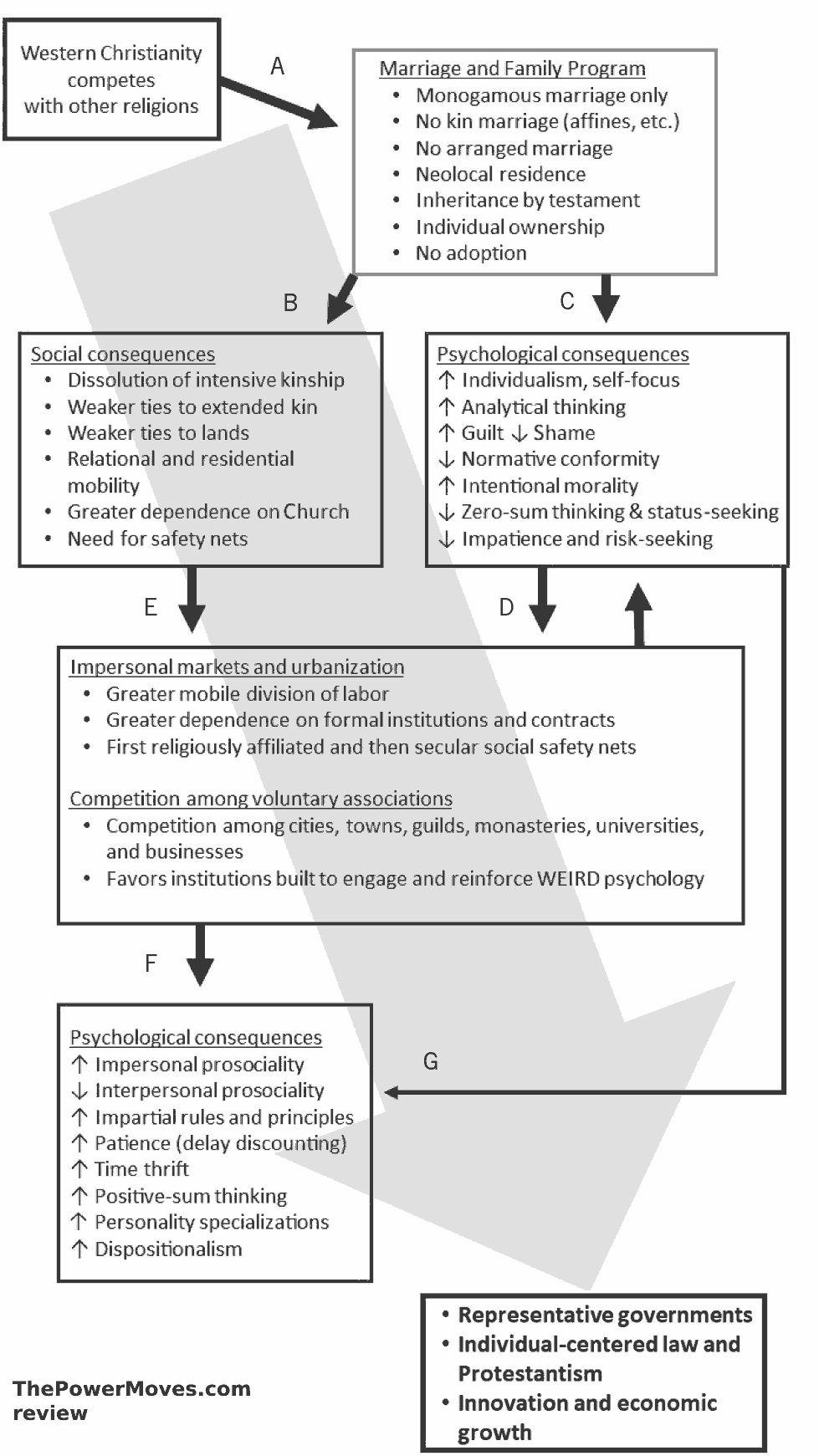
In one picture:
FULL SUMMARY
About the Author:
Joseph Henrich is an American anthropologist and professor of human evolutionary biology at Harvard University.
Henrich is also a former engineer by trade and education, and former professor of psychology and economics at the University of British Columbia.
He also wrote ‘The Secret of Our Success‘, which grabbed a top spot in our popular ‘best evolutionary psychology books‘ list.
How the West got weirder, richer, & dominant
The West advanced faster by breaking family ties and ‘clannishness’ to become more individualistic and more cooperative with larger networks of strangers.
That connected larger pools of men while increasing commerce, innovation.
These larger societies could explore the world, raise larger and better-equipped armies, and expand.
The author says the main contributors to that shift were:
1. Catholic Church’s Marriage Policies Broke Kinship-Based Clans
The Church discouraged cousin marriage, polygamy, and arranged marriages, which weakened extended family ties and reduced reliance on clans.
This shift promoted nuclear families, creating a more individualistic society where people had to rely on institutions rather than kinship, and monogamy that decreased intrasexual conflict among men.
The longer a population was exposed to the Western Church, the weaker its families and WEIRDer its psychological patterns are today.
Later, Protestantism embodied the blossoming individualistic culture, and accelerated its spread, together with the ethics of literacy and hard work.
2. Market Economies
Economic interactions with strangers decreased kinship reliance, and fostered impersonal prosociality.
Such as, people learned to cooperate with non-kin for mutual benefit.
People’s psychology changed with motivations for trust, fairness, patience, cooperation, and punishment of free-riders.
This is why in various economic games we see WEIRD people cooperate more than rational game theory would suggest, while we don’t see as much cooperation in other populations.
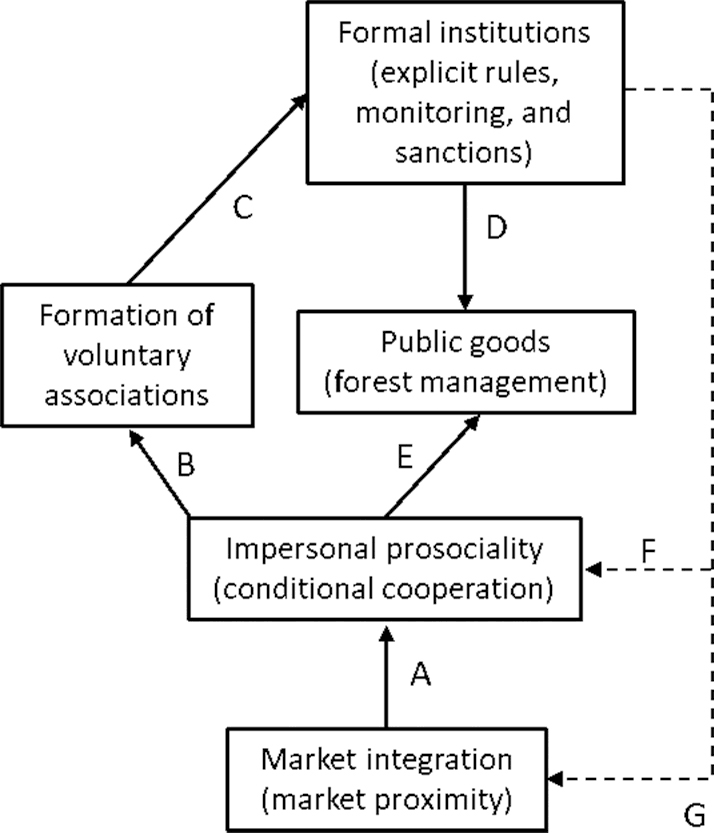
Greater market integration increases impersonal prosociality, fosters the creation of voluntary associations, and supports more effective formal and non-kinship-based institutions.
2.2. Urbanization
European urbanization was different, driven by commerce and the creation of voluntary associations such as merchant guilds, cities, stock market trading, and universities that spurred innovation, growing wealth, and progress.
3. Changing Psychology to Individualism & Larger Cooperation
Larger societies free of clans slowly changed people’s psychology to our current WEIRD psychology.
A self-reinforcing cycle of psychology, impersonal institutions and growing commerce led to ever-accelerating progress.
How Westerners differ
WEIRD people are:
- Highly individualistic: Focus on ourselves—our attributes, accomplishments, and aspirations—over our relationships and social roles. We see ourselves as unique beings, not as nodes in a social network that stretches out through space and back in time
- Ownership of ideas to the first who stated them
- Self-obsessed: We aim to be “ourselves” across contexts and see inconsistencies in others as hypocrisy rather than flexibility
- Self-esteem based on honoring our values and ‘staying true to ourselves’
- Self-enhancement, learning and progress
- Control-oriented: we prefer a sense of control and the feeling of making our own choices
- Belief in free-will
- Democracy premium, with people working harder when they contributed to a resolutino
- Nonconformist: we are less willing to conform to others when this conflicts with our own beliefs, observations, and preferences
- Less obedient to authorities
- Analytical: look for universal categories and rules with which to organize the world, and look for patterns trends. We simplify complex phenomena by breaking them down into discrete constituents and assigning properties or abstract categories to these components—whether by imagining types of particles, pathogens, or personalities.
- Less holistic: We often miss the relationships between the parts or the similarities between phenomena that don’t fit nicely into our categories. That is, we know a lot about individual trees but often miss the forest.
- Endowment effect—overvaluing our own stuff
- Overconfident (of our own valued abilities)
- Positive-sum thinking and having the potential to win-win
- Patient: with self-regulation, we can defer gratification—in financial rewards, pleasure, and security—well into the future in exchange for discomfort and uncertainty in the present
- Hard-working: WEIRD people sometimes take pleasure in hard work and find the experience purifying
- Law-abiding: WEIRD people tend to stick to impartial rules or principles and fetishize abstract principles over context, practicality, relationships, and expediency.
- High impersonal prosociality, including norms, expectations, and motivations for impartial fairness, probity, and cooperation with strangers, anonymous others, or even abstract institutions like the police or government.
- Honest, fair, & cooperative: trusting, honest, fair, and cooperative toward strangers or anonymous others. Show relatively less favoritism toward our friends, families, co-ethnics, and local communities than other populations. We think nepotism is wrong
- Less inclined to revenge for personal slights
- Punishing cheats Impersonal prosociality also includes motivations, heuristics, and strategies for punishing those who break impartial norms of fairness or honesty, even if the violation isn’t directly against themselves.
In turn, punishment of cheats increases cooperation and trust in institutions and cooperative networks - Emphasis on intentions and mental states, not just on behavior and results.
So if someone had bad intentions, he is bad. If he had good intentions but he made a mistake, he is less ‘bad’ - Less (nasty) ingroup-outgroup: more individualistic countries are less inclined to distinguish in-groups from out-groups, more willing to help immigrants
- Guilt instead of shame: Guilt depends on one’s own standards and self-evaluation, while shame depends on societal standards and public judgment.
Shame is group-related, when we, our relatives, or even friends fail to live up to the community’s standards. Guilt is failing to live up to culturally inspired, but largely self-imposed, standards and aspirations (ie.: skipping gym or indulging sweet food) - Open to new experiences and friendships, with new people and strangers, rather than ‘remaining stuck’ with the clan
- More calculative in relationships, also readier to end those new relationships if they don’t serve their mutual interest
Clannish psychology
By contrast, clannish psychology tends to be:
- Tradition and custom-centered
- Conforming to fellow in-group members
- Autocracy premium, contributing more when a law is externally imposed
- Deferring to authorities like elders or sages
- Policing kin’s behavior
- Not policing strangers
- Avoidance-oriented, closed to new friendships outside the in-group
- Sharply distinguishing your in-group from everyone else
- Promoting your network’s collective success whenever possible, which the author doesn’t say but comes at the detriment of everyone else and society at large, including justice and progress for all
My Note: I love WEIRD psychology because it powers effective and ever-improving societies
To me this is not a case of being ‘different’, these are traits that propel civilization forward and can make for a better society for all.
This is something the author doesn’t expressly say, but his conclusion shows:
More individualistic countries are also richer, more innovative, and more economically productive. They possess more effective governments, which more capably furnish public services and infrastructure, like roads, schools, electricity, and water
And on impersonal prosociality:
Countries where people show more impersonal prosociality have greater national incomes (GDP per capita), greater economic productivity, more effective governments, less corruption, and faster rates of innovation.
What else do you need?
The Weirder -and most individualistic- countries
The Hofstede’s s scale aggregates several elements in the individualism package and the rankings are:
- Americans 91
- Australians 90
- Brits 89
- EU, especially North and West
- Canada 80
- New Zealand 79
Social-cultural evolution spreads the winning models
So, how did the West dominate the world and influence the world’s culture?
With cultural evolution:
those with the best combinations of institutions and technologies expand and gradually replace or assimilate those with less effective cultural packages.
Intergroup competition operates with 5 different processes:
- War and raiding: as groups with more competitive institutions drive out, eliminate, or assimilate those with less competitive institutions
- Differential migration: from less prosperous to more prosperous ones and more successful communities grow at the expense of less successful ones
- Prestige-biased group transmission: as people learn from the more powerful and prestigious groups
- Differential group survival without conflict: more effective groups survive and thrive, less effective ones disappear or shrink
- Differential reproduction: fertility-friendly culture, beliefs, and religions can boost a group’s expansion
The author reminds though that we must put this into perspective and realize that intergroup competition is just one force among may.
Central authority provides an advantage
authorities allow societies not only to respond decisively to changing circumstances, such as encroaching neighbors, dwindling resources, and natural disasters, but also to strategically pursue the conquest of other societies. Any society that managed to centralize authority could potentially have an advantage in intergroup competition
Powerful Gods promote cooperation
Religions with powerful Gods that punished miscreants and cheats increased cooperation.
Adding a contingent afterlife with heaven or hell also discouraged violence and improved societies’ cooperation.
And these more God-driven cooperative societies became more successful than other societies.
Tribes lose against individualistic societies
Says the author:
Clans provide a psychologically potent means to generate solidarity among members, in part by reducing internal conflicts. But (…) clans often can’t get along, so scaling up to larger societies requires either unifying them or dissolving them.
That is key for me and our TPM values.
And clans and tribalism stand in the way of higher progress:
In fact, the more effectively norms galvanize cooperation within subgroups, the more challenging it can be to unite them and scale up.
Kin-based institutions increase conflict
(…) tribal populations with segmentary lineages still experience significantly higher rates of violence and civil war (…)
chronic conflict in Africa are (…) populations organized by segmentary lineages
(…)
researchers have argued that the character of “Islamic terrorism” may be best explained by the honor psychology fermented in segmentary lineages.
(…) their kin-based institutions may have shaped the particular religious creeds adopted by these groups.
Even proto-states fall apart when they’re built on clans
Without individualistic psychology and impersonal pro-sociality kin-based premodern states tend to fracture and fall apart under the constant tension among the different clans:
Once intergroup competition wanes, which often happens when states or empires manage to eliminate their competition, things slowly fall apart.
Without the looming threats (…) competition among ruling families will intensify and gradually tear the state-level institutions apart.
Cracks (…) appear even in the best institutions (…) as lineages, clans, and sometimes entire ethnic communities devise ways to exploit state institutions for their own ends.
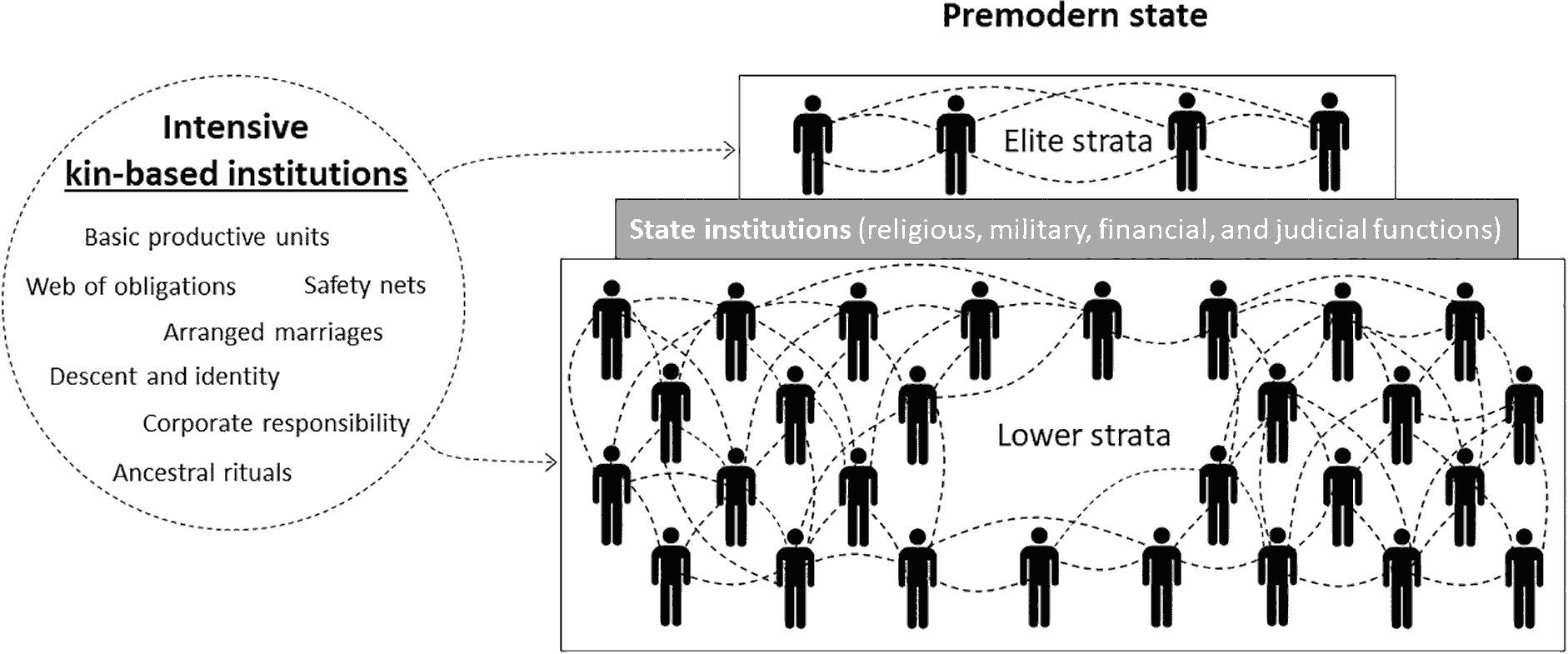
But proto-states built on top of several clans are always shaky because the clans never fully cooperate with each other and can resume conflict at any time.
Small doses of competition are good
Both mild inter-group and intra-group competition can be beneficial within certain limited, or within certain regulation of conducts:
Inter-group competition foster pro-sociality & maintain healthy markets
‘Domesticated’, non-destructive inter-group competition in the form of businesses increases interpersonal trust.
Says Henrich:
When properly yoked, moderate levels of nonviolent intergroup competition can strengthen impersonal trust and cooperation.
The author even shows that more competition in deregulated markets increases interpersonal trust.
Hover, it must be balanced and elevated levels of intergroup competition are harmful at a humanity level:
Of course, elevated levels of intergroup competition are also what drive firms to exploit workers in foreign lands and trash the environment.
(…)
Unregulated and unmonitored, firms facing intense intergroup competition will start violently sabotaging each other while exploiting the powerless. We know this because it has happened repeatedly over many centuries, and continues today
So healthy integroup competition presented an optimum balance.
And, I guess, it must be tempered by respect for impartial norms of ‘fair competition’ and a sense of belonging and loyalty to humanity as a whole.
The author adds that inter-group competition may be necessary:
This means that modern companies, like ancient societies and chiefly institutions, eventually implode in the absence of intergroup competition.
Norms and institutions, of course, provide some stability and can inhibit or suppress rampant self-interest for a time. But, eventually individuals and coalitions within firms or other organizations, especially monopolies, devise ways to exploit the system to benefit themselves.
My note: Not convinced that collapse is unavoidable without inter-group competition
I agree with the general principle and tendency. But I don’t think that collapse without inter-group competition is unavoidable.
I’d be curious to hear more from the author on this topic.
For example, I don’t see modern European nations competing with other nations, but collapse isn’t imminent.
The West developed faster than other geographical areas because it harnessed the benefits of nonviolent intergroup competition.
Political inter-group competition maintains effective democracy
The same is true in the political sphere, says the author:
multiparty democracies also harness the power of intergroup competition.
All political parties, were they to become the single governing party, would eventually fall into corruption, collusion, and cronyism.
(…) However, faced with competitors and well-functioning democratic institutions, political parties must vie for members and votes (…) competition among parties will tend to spread practices, beliefs, and values that promote a party’s success in attracting members and votes.
The author adds that of course that’s no guarantee of healthy politics, but it at least inhibits the inevitable slide into despotism.
Intra-group competition increases individuals’ output
Regulated within-group competition can increase cooperation within the group, but also benefit the larger group -and society- with increased creativity and perseverance:
Similarly, extreme forms of within-group competition encourage selfish behavior, envy, and zero-sum thinking. Yet when disciplined by intergroup competition, moderate levels of within-group competition can inspire perseverance and creativity.
How to Increase Impersonal Trust & Cooperation
This section is more of a note to self:
- Abolishment of kinship-based clans
- Greater relational mobility, which covers all the factors that constrain or promote the formation of new relationships or the dissolution of old ones
- Impersonal institutions
- Punishment of free riders & cheats
- Regulated inter-group competition
- Regulated intra-group competition, or mild competition if unregulated
- Moving geographically – ‘residential moves strengthen people’s preferences for egalitarianism (…) flattens the in-group vs. out-group distinction and shift people away from relying too heavily on their long-enduring social networks‘
- Greater geographical mobility
Practical Applications
Quit the democratic leadership in conformist countries
This was a new wisdom nugget that got into Power University:
some populations will contribute more to the group and stick more strictly to the group’s rules when they have had a say—typically a vote—in decision-making.
(…)
however, a couple of recent studies failed to find a democracy premium in Mongolia and China.
(…)
Psychologically, those with stronger inclinations to defer to authority and less desire for control cooperated more in response to externally imposed laws and less with the results of democratic votes.
The ‘democracy premium’ is an emergent piece of psychology when the conformists are few.
MORE WISDOM
Cultural Evolution ‘Beats’ Genetic Evolution
by adaptively “fitting” people—psychologically—to their institutional environments, cultural evolution will often (but not always) deplete the strength of natural selection acting to address the same adaptive challenges
The author mentions lactose-digesting genes.
The genes developed after the cultural diffusion of animal herding (cows, goats, etc.).
But populations that culturally learned to make cheese and yogurt never had to develop any genes.
Two more examples of culture beating genes are school attainments/IQ and urbanization:
studies in both the United States and Iceland reveal (…) That genes that make people less likely to continue their schooling have increased in frequency (…).
This genetically induced push against schooling, however, was rolled over by cultural evolution, which was speeding in the opposite direction.
Over the same period, culture drove up people’s educational attainment by 25.5 months (and IQ by 6 to 8 points) per generation.
Over the entire 20th century, culture has raised Americans’ educational attainment by 9 to 11 years, while natural selection has lowered it by less than 8 months
Early urban centers were disease-ridden graveyards.
Natural selection would have been operating against a psychology adapted to dense populations, impersonal markets, individualism, specialized occupational niches, and anonymous interactions.
But they all won -so far, I’d add-.
Poverty Impairs People’s Prosociality & Intellect
Shocks like famines and food shortages, if they occur before about age five, inhibit the development of self-control, positive-sum thinking, and the acquisition of mental skills related to abstract problem-solving and pattern recognition.
Promote Literacy to Advance Humanity
The impact of Protestantism on women’s literacy is particularly important, because the babies of literate mothers tend to be fewer, healthier, smarter, and richer as adults than those of illiterate mothers.23
Polygyny’s Math Problem Creates Social Tension
Polygynous marriage tends to generate a large pool of low-status unmarried men with few prospects for marriage or even sex. Responding to this situation, men’s psychology shifts in ways that spark fiercer male-male competition and, under many conditions, foment greater violence and more crime.
Individualism Increases With Education & ‘Westernization’
Hard to say which one matters more, but I suppose it may be a mix of both, plus students’ self-selection bias and aspiration to be ‘more Westerner’:
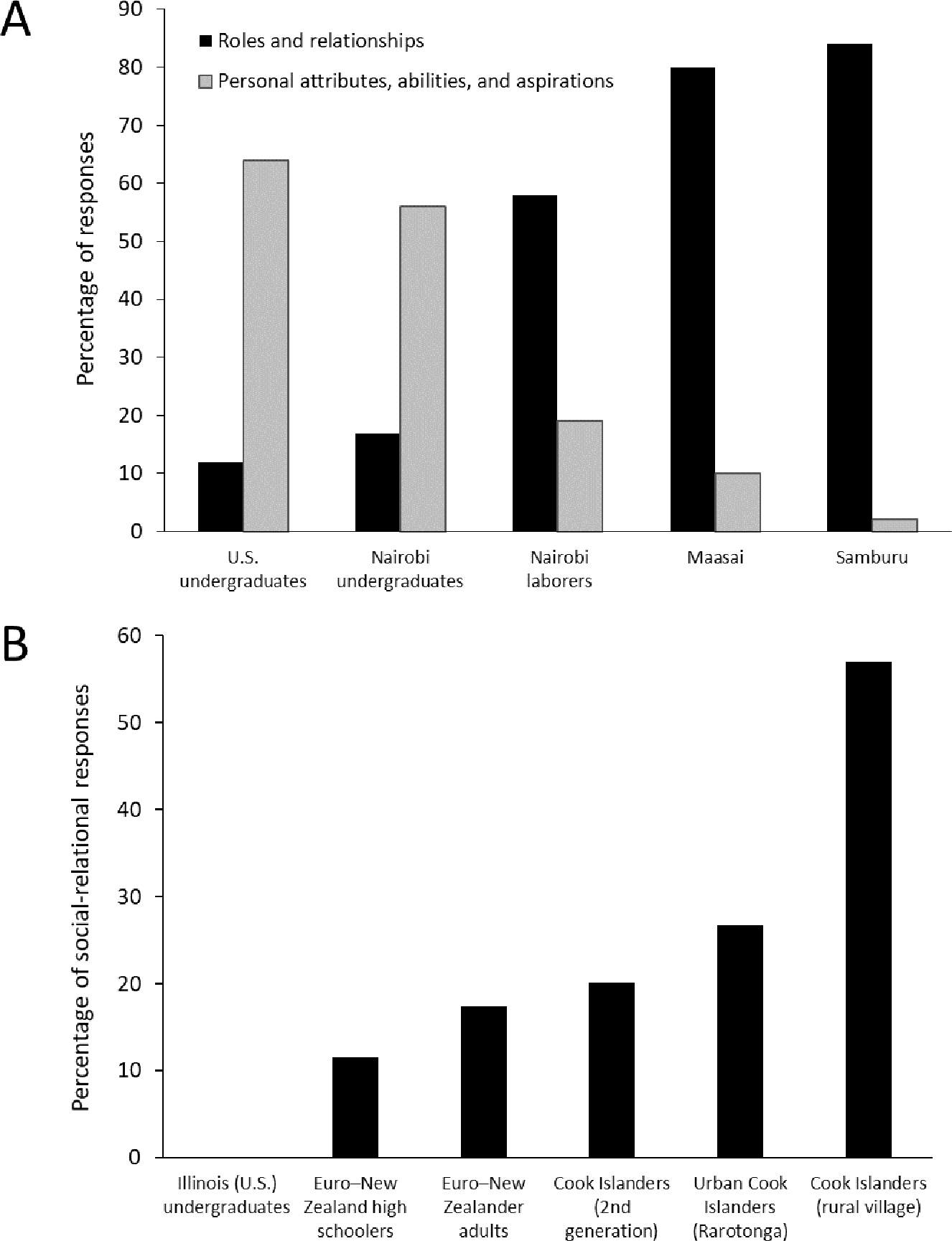
Personal identity across diverse populations. (A) Using the “Who am I?” task, the upper figure the average percentage of responses between the focus on their roles and relationships vs. their personal attributes and achievements. (B) the average percentage of socially-relationally answers
Why Japan, South Korea, & China Quickly Caught Up
These three countries had a ‘culture of hard work’ and their stronger centralized governments could more quickly copy and impose Western customs:
these societies had all experienced long histories of agriculture and state-level governments that had fostered the evolution of cultural values, customs, and norms encouraging formal education, industriousness, and a willingness to defer gratification. These are, in a sense, preexisting cultural adaptations that happened to dovetail nicely with the new institutions acquired from WEIRD societies.
Second, their more powerful top-down orientations permitted these societies to rapidly adopt and implement key kin-based institutions copied from WEIRD societies. <— Note: likely a mistake and meant ‘kin-bashing’ or similar
(…) the Chinese Communist government initiated a program in the 1950s to abolish clans, polygyny, arranged marriages, unions between close relatives, and purely patrilineal inheritance
However, both Japan and Korea are still rather insular and ‘clannish’, which raised some questions for me.
Why Some Societies Struggle To Catch Up
Because they’re still ‘clannish’ culturally and psychologically:
populations with particularly long histories of agriculture, like those in Egypt, Iran, and Iraq, haven’t fully integrated with the modern formal political and economic institutions that first arose in Europe. These societies have maintained quite intensive forms of kinship, probably for religious reasons.
Self-esteem Work & Benefits Depend On Culture And Context
Consistency does matter, but it matters much more in the West:
the correlation between personal consistency across relationships and measures of both life satisfaction and positive emotions was much stronger among Americans than among Koreans. Overall, being consistent across relationships—“being yourself”—pays off more in America, both socially and emotionally
The Koreans, smarter in my opinion and just like the Machiavellians, know that there is no pay-off in ‘consistency’.
And says the author:
Such evidence suggests that the immense importance assigned by the discipline of psychology to notions of self-esteem and positive self-views is probably a WEIRD phenomenon.
(…) non-WEIRD societies (…) having high self-esteem and a positive view of oneself are not strongly linked to either life satisfaction or subjective well-being (…) it’s other-esteem (“face”) that matters, not self-esteem rooted in (…) unique personal attributes that capture one’s “true self.”
My Note: But you can be successful or unsuccessful in both cultures and that still feeds into self-esteem
I think the author may miss here that having ‘high other-esteem’ is still a marker of success just like self-esteem is. That probably affords high status and makes the individual feel better and more confident.
Cognitive Dissonance Is WEIRD
Individualists see behavior as anchored in personal traits -dispositions- across all contexts (dispositionalism).
That makes individualists uncomfortable with inconsistencies and forces individualists into mental gymnastics to reconcile the inconsistencies -cognitive dissonance-.
As mentioned above, Machiavellians don’t experience much cognitive dissonance instead because they don’t fall for that trap.
The Big 5 Is Not Universal Psychology, It’s WEIRD
The author claims that Westerners developed more personality sub-facets to better the growing niches of more complex societies.
However, societies with less occupational specialization and fewer social niches will show higher intercorrelations among the WEIRD-5 dimensions until some dimension will cease to exist.
Inter-group Competition VS Within-group Competition
intergroup competition favors beliefs, practices, customs, motivations, and policies that promote the success of groups in competition with other groups.
(…) (it) often promotes trust, cooperation, and the efficient allocation of pay to employees (e.g., CEOs aren’t overpaid).
As per above, it must be a milder and regulated competition, or it turns destructive.
Within-group competition instead:
within-group competition is the competition among individuals, or small coalitions, that occurs within firms, organizations, or other groups. This form of competition favors the spread of behaviors, beliefs, motivations, practices, etc., that promote the success of individuals within a firm relative to others at the same firm. These are practices that benefit some employees at the expense of the firm.
However, even here, there is an optimum balance:
within-group competition is also not entirely unproductive. At moderate levels, it can inspire diligence and productivity.
Patience & Gratification Delay Is Crucial To Civil Society & Progress
Patient people are willing to wait longer to earn more
Impatient people focus on the short-term, even if it costs in future earning.
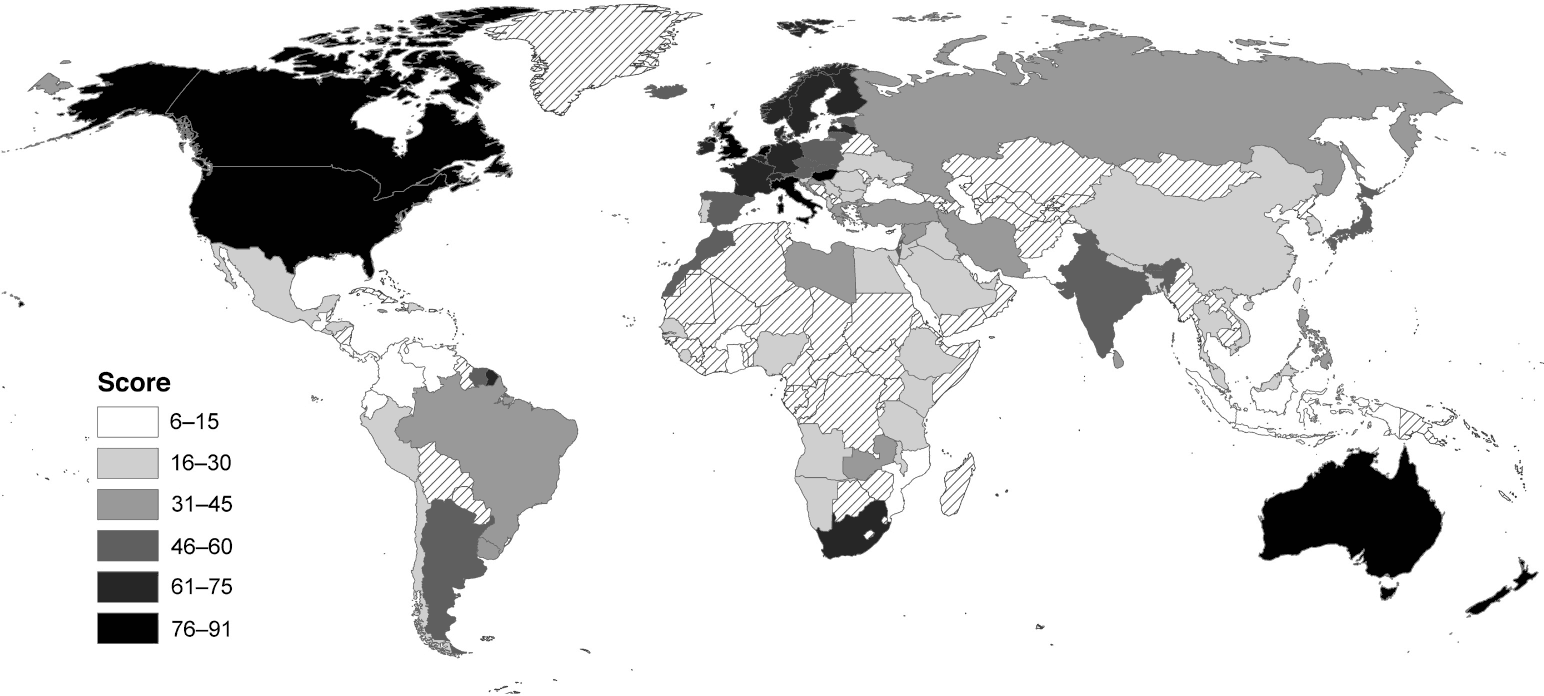
The most patient countries are:
- Sweden
- Netherlands
- United States
- Canada
- Switzerland
- Australia
- Germany
- Austria
- Finland
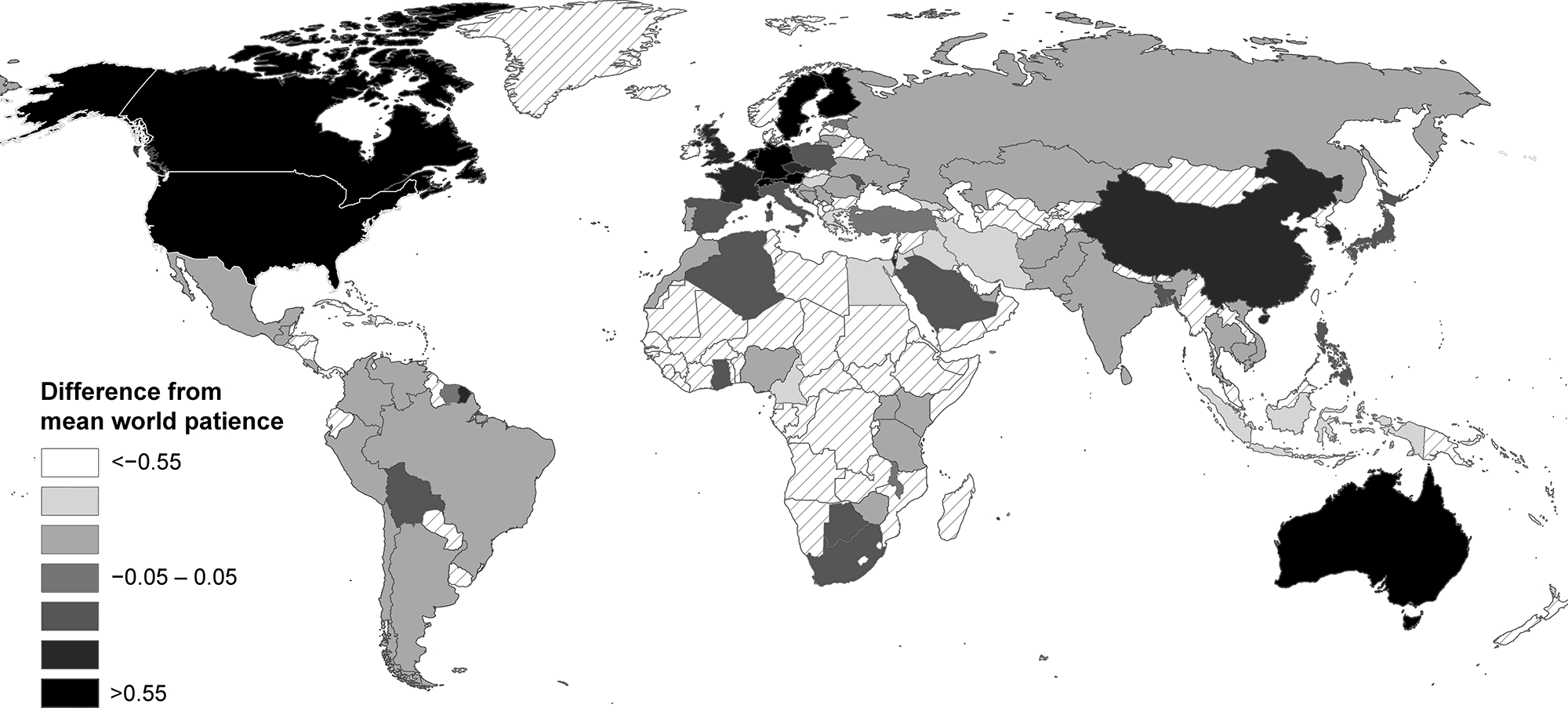
Global distribution of patience across 76 countries. Darker shades indicate greater patience. Hatched regions indicate a lack of data
Greater patience is associated with better economic, educational, and governmental outcomes and among individuals.
Immigration Policies Should Note That ‘Clan Psychology’ Is Persistent
The effect of kin-based institutions on people’s psychology is culturally persistent. The adult children of immigrants, who grow up entirely in Europe, still manifest the psychological calibrations associated with the kin-based institutions linked to their parents’ native countries or ethnolinguistic groups.
Inalienable Rights Are Weird Psychology
Claims about “unalienable rights” seem self-evident if one (a) tends to analytically explain or justify things with reference to internal and enduring attributes (not relationships or descent) and (b) prefers impartial rules that apply broadly to distinct categories or classes (e.g., “landowner”; “human”).
By contrast, from the perspective of most human communities, the notion that each person has inherent rights or privileges disconnected from their social relationships or heritage is not self-evident.
I experienced this first-hand.
A woman in a kinship-based society wanted to conceive my child to gain a respise from the oppressive obligation to support her family -something that left her poor and drained-.
Of course, she hadn’t thought that within that culture her child would then inherit the same obligations.
No wonder some cultures have many children: it’s like producing free workers and future income.
Wars Make Us More Clannish -Unless You’re Already WEIRD-
War strengthens people’s egalitarian motivations, but only toward their in-groups
However, the author says war had a different effect in Europe because Europe had already moved beyond clans.
So wars coalesced people into more impersonal institutions instead.
QUOTES
The obvious truth that many of the critics of farming seem to miss:
early farming spread not because rational individuals prefer to farm, but because farming communities with particular institutions beat mobile hunter-gatherer populations in intergroup competition.
On Christian genius contribution to Western dominance:
The accidental genius of Western Christianity was in “figuring out” how to dismantle kin-based institutions while at the same time catalyzing its own spread.
On kin-based societies and mafia organizations:
Corruption and Mafia activity reflect the same patterns seen for blood donations and impersonal trust. The greater the rate of cousin marriage in a province, the higher the rates of corruption and Mafia activity. There’s a reason why the Mafia is often referred to as “the family” or “the clan” and the boss is sometimes called “the godfather.” The strength of in-group loyalty and the power of nepotism in societies with intensive kinship create precisely the kind of psychology and social relations that foster graft and fuel organized crime.
On women gaining with polygyny:
the evolved psychological push toward polygynous marriage doesn’t come just from men (…) In a world with polygynous marriage, young women and their families get a much larger selection of potential husbands (…) The best move (….) in a hunter-gatherer society might be to become the second wife of a great hunter instead of being the first wife of a poor hunter;
On the need to rely on institutions, not people:
Visionary founders, like great national leaders, might prevent this for a time, but the unfortunate persistence of death guarantees that their influence is constrained in the long run.
CONS
- Sometimes wished for more data directly stated
For example, in sentences such as ‘he higher the percentage of X residents, the higher the murder rate is today’, I’d like to know how much higher.
But generally speaking Henrich does a great jois presenting his data, including the possible limitations.
- I may have streamlined the book under its main thesis
I believe this book is so good that it deserved even more time spent on editing.
I’d have streamlined and removed some tangents just to leave the book denser around its foundational concepts.
CRITICISM
To first accept something, I seek all possible faults in logic and data.
But Henrich made that job difficult for me.
First off, he addressed a large chunk of my objections himself.
I sometimes thought about a criticism, and he raised it himself little later in the book.
Second, he brings a ton of data, examples, and case studies.
To properly criticize Henrich’s thesis one should go through the data.
And lastly, many of his theses logically added up.
I did have some notes left standing though.
But since I haven’t gone through the data, consider these more like my personal doubts, based on my preconceptions:
Roman & Greek civilizations contradict Christian contribution
Civilization’s timelines don’t square with the church’s role in Western success.
For example:
- Rome had an advanced civilization before Christianity. Many consider the Roman civilization the foundation of the West
- Civic duty was a high virtue in Rome, despite it was a supposedly kinship-based society
- Athens developed democracy before Christianity, despite the author suggesting democracy is a WEIRD institution.
- The Church accompanied Europe into and through the Middle Ages. If the church was such a driver of progress, it certainly did take some time to warm up its engine
- Urbanization started long before WEIRD psychology, starting with the first walled cities like Jericho. And Rome was a large urban center long before the church
The author says:
with their growing willingness to break with tradition, the intellectuals of the early modern period started to realize that the great ancient sages, like Aristotle, could be wrong
But those ancient sages were so willing to break with tradition that they created new traditions.
That was long before the Church laid the groundwork to break traditions.
I’d love for the author to comment on this.
Update:
Simon who recommended this book later also pointed me to Richardo Duchesne who had similar reservations both around Greco-Roman civilizations, and the general role of the Church.
I later found more (here, here, here, here) who had similar reservations about either the outsized role of the church or the difficulties in reconciling Greek and Roman civilization.
It means this may be a valid criticism.
https://t.co/ksiaCbT38J
— Gold (@simono91) January 19, 2025
Hello Lucio this is to add to one of your criticism that European were already WEIRD
Religion’s effects may be over-estimated
I wasn’t too sold on the effect size of religion for some simple reasons:
The religious explanation for cooperation clashes with self-interest, but cooperation doesn’t require religion
The author seems to come from a frame that religion had to overcome selfish drives to foster cooperation.
And while that may be the case, cooperation could evolve and spread even with perfectly self-interested individuals.
Matt Ridley explains that in The Origins of Virtue.
The most productive people are least affected by religion
The author says that various elements of religions “deepen the faith of (…) especially children and adolescents (…) and women.”
But it’s adult males who produce and commerce the most.
Exactly the group that is least impacted by religion.
And I wouldn’t be surprised if we found out that the top 1% who drive the most progress and commerce are high-IQ (for new inventions) and “alpha male types” for commerce, business, and political power.
Religion had a small effect in some studies
For example:
a perfectly unbiased person will allocate 15 coins (…) people who thought their Big God was the fire-and-brimstone type allocated 14.5 (…) Meanwhile, people who thought that their Big God was an all-loving softy allocated only about 13
(…) agnostics (…) with average allocations dropping to between 12.5 and 13 coins.
So we go from 14.5 to 13 or slightly below for agnostics.
It’s an important effect.
And it may add up.
But it’s not a huge effect.
Especially when you consider that religion seems to have been primed -the author used the word “coreligionist” for the allocation-. If they controlled for words such as ‘fellow tribesmen’ or ‘fellow hunters’ I suspect the gap may even narrow.
Charity giving doesn’t seem like a good marker for trust & cooperation
Charity was sometimes used as a proxy for God’s effect on behavior.
And while I believe indeed it can drive up charity, charity does not equal the trust and cooperation that are most central to the book’s main thesis.
From a purely analytical point of view, Christian charity may even waste productive men’s resources for unproductive ends.
Overall, commerce as a force for trust and cooperation seems a potentially better explanation to me than the church.
Culture’s effect may be over-estimated
Culture over genes
For example, the author says:
Intergroup competition has also embedded itself in society through team sports, religious groups (e.g., churches), and other voluntary associations. Participation in team sports such as ice hockey and soccer provides many children and adolescents with their first experience of intergroup competition, which may have lasting psychological effects.
However, in my opinion, it’s the other way around.
It’s genes that drive the formation of ‘sense of belonging’ to team sports, especially in their fanbase.
And I doubt it’s team sports that have lasting effects on psychology. The psychology for tribal banding together was already there.
When the explanation could go both ways, the author seemed to prefer culture.
For example:
cultural transmission can perpetuate a clannish psychology for generations, even after clan organizations have vanished.
How can you be sure it’s cultural transmission, though, and not, at least in part, genes?
Cultural over-relativity
The result is that textbooks that now purport to be about “Psychology” or “Social Psychology” need to be retitled something like “The Cultural Psychology of Late 20th-Century Americans.”
I think this may be an exaggeration.
There are plenty of commonalities among most populations.
It’s disciplines like inter-cultural communication that stress the differences.
The author himself, for example, says that polygyny is the norm and polyandry a rare exception. That’s only but one example of culture following genes and biology.
And often cultural impact is a matter of degrees, rather than presence or absence.
For example, says the author:
People’s inclination to conform to the incorrect answer goes from about 20 percent in societies with the weakest kin-based institutions to 40–50 percent in societies with the most intensive kinship
That’s a large jump, but it’s still an incremental change of an underlying tendency.
Also, looking at the chart, it seemed even closer.
People Don’t Always Copy Successful Culture to Succeed, But To Brag
For example, the author says about people copying the more successful groups:
Since people often cannot distinguish what makes a group successful, this also results in the transmission of many norms and practices that have nothing to do with success, including things like hairstyles and music preferences.
I don’t think that comes down to a failure of ‘understanding what works’.
It’s mostly younger people who copy the culture, and it’s not because ‘it works’, it’s because it’s ‘cool’.
The dominant culture is attractive because it’s subconsciously attractive. So it’s ‘hip’ for many to eat McDonalds because it represents America.
But also because they produce better culture. You learn English because they produce better movies and songs.
We copy successful groups’s culture because of soft power, not because of ‘copying errors’
Capitalism may be under-estimated
Logically, I find any explanation that aligns with self-interest more compelling.
Contrary to the church’s effect, capitalism didn’t have to fight human nature.
Capitalism harnesses selfish human drives to service the collective.
Similarly, I’d logically expect urbanization to play an important role in breaking kin-based institutions.
I look at my own life for that, and the people around me.
Had we stayed in our small villages, we’d still be tied to family customs and traditions. In bigger cities, we’re freer individuals.
Speaking of which:
Community size may be under-estimated
And it may be confused with underlying and more lasting psychological traits.
The author describes his experience of kinship ties undermining market efficiency:
The density of these interpersonal relationships constrained market competition in Chol-Chol.
Their decisions were embedded in bigger and more important enduring relationships. Of course, buying and selling did occur, but this was more interpersonal exchange than impersonal commerce.
In my opinion, this comes down largely to the size of the community.
It’s very similar in the middle-of-nowhere place where I grew up in.
You shop locally sometimes even if the prices are higher because they’re your neighbors.
And you avoid some if there are past grievances.
For example, we didn’t buy homemade pasta locally because they didn’t use our photography services. And I agreed with that boycott because, to me, it was a personal affront.
Even today, decades later, I still think it was a ‘b*tch move’ -and consider I’m a deeply WEIRD and individualistic man-.
However, as soon as I move to the city, I immediately shop rationally.
Some just-so explanations raised questions
- Hot-heads fared better in kinship-based societies?
The author suggests that murder rates dropped with more individualistic societies because the costs for violence raised:
In this expanding individualistic world, a reputation for sudden, violent, and undisciplined responses to minor insults or simple misunderstandings didn’t pay anymore. Who wants to defend, marry, or do business with a hothead? In an open market of strangers where people are shopping for relationships, you can just find another friend, fiancée, or employee, one with better self-control.
This part raised some questions.
How is a violent cousin so much better in a kinship-based society?
Because that violent cousin could defend the tribe?
But then shouldn’t that violent cousin make a great state soldier?
The author himself then says Europe was constantly at war…
- Kinship-based institutions require contextual behavior, but modern societies don’t?
To explain how the Big 5 fails to replicate in certain populations, the author states:
intensive kin-based institutions demand that individuals behave in a range of different ways depending on their relationships to other people. Some relationships explicitly call for joking, while others demand quiet submission. By contrast, the world of impersonal markets and relational mobility favors consistency across contexts and relationships
While the overall theory of niche adaptations adds up, the reason why was less compelling.
Are we really expected to behave the same way with a boss, child, in-law, at a funeral, or in a club?
One could just as easily argue that larger, individualistic societies introduce a broader range of contextually distinct relationships and situations, which may demand even greater behavioral adaptability.
How about Korea and Japan?
They’re wealthy, clean, and safe.
But they’re not very ‘weird’ and they’re both ‘clannish’ in many ways, not very open to immigration or not very welcoming of foreigners -players who visited Korea know that Korean men are the biggest coc*blockers ever, but only towards foreigners :)-.
The reason could be that their clans are as large as nations.
And that to develop, they mostly copied, rather than innovate.
However, this was left unexplained by the author.
Did conflict accelerate civilization, or slow it down
The author states that European wars accelerated the progress towards larger societies:
England alone was at war about half of the time from 1100 to 1900.
This relentless intergroup conflict had the driving effect on societal evolution discussed in Chapter 3: European societies grew bigger, more powerful, and more complex; if they didn’t, they got wiped out or swallowed up.
These wars intensified nationalism.
But an important consequence that’s missing in my opinion is that war increases INTERNAL prosociality to the detriment of human-level cooperation.
The two work as a seesaw: one goes up, the other goes down.
The author knows this, and in my opinion, it was an important note to add -even just to avoid war apology-.
So one could equally say that national conflicts slow the progress towards even larger supra-national bodies, and global trade.
Which is what happened after WWII.
The West said “We’re done with war”, and the EU and many international bodies sprung up.
Is the weirdest people correct?
Henrich is likely correct at the macro level, particularly about the tension between small-scale kinship structures—rooted in tribal and familial bonds—and individualistic societies that foster the psychology and behaviors of broader cooperation, trade, personal freedoms, democracy, innovation, and rapid progress.
THAT, to me, is the core, deep, invaluable insight.
And humanity better learn it, in order to manage our progress as a species and civilization.
While largely correct at the macro level, Henrich was less convincing—and potentially less accurate—at the micro level with causes, connection, and relative impact of each specific factor.
The good guys over at Lesswrong claim the author is 80% correct.
I’d say the author is 50% correct at the micro-level, but 90%+ correct at the far more important macro-level.
PROS
- High critical-thinking skills
Talking about WEIRD, Henrich maybe the perfect example of why ‘WEIRD is good’.
I wish everyone worked with the same level of analysis and critical thinking that Heinrich displays here.
- A dots-connecting book
The Wikipedia editors categorize The Weirdest People as a work of ‘Big History’ similar to Guns, Germs, and Steel and Sapiens.
I can see some links indeed.
But I find Urari’s Sapiens to be more “compilation”, lining up facts in an interesting fashion, but bringing little new insight.
Diamond’s work does seek new insight with its novel emphasis on geography, but by missing on psychology it’s less encompassing and not as enlightening when it comes to human nature -including future developments and possible policy repercussions-.
But because of its wider applicability and higher relevance to psychology and civilization dynamics, The Weirdest People in the World stands above these.
REVIEW
The Weirdest People in The World is a paradigm-shifting read that refined how I view and understand psychology, socialization, and human civilization and progress.
I must thank Simon from our TPM community for recommending this book 🙏🏼:

Simon linked this book to a video on how some conservatives view children as tribal/national power-projection tools, linking it to ‘clannish psychology’—a view I share.
And second I want to thank the author.
Henrich’s work helped me refine and improve the values and mission of this website, and I’m forever grateful and indebted to him for that.
For example, this is what I wrote in our ‘TPM values’ on the Start Here page encouraging men to develop and look at themselves as individuals before joining or psychologically relying on groups’ belonging:
Tribalism is the enemy of civilization and progress because it splinters larger, complex, and rights-based societies into warrying factions based on kinship.
TPM Start Here page
Now Henrich provided the data -and a much better explanation- of why that’s exactly the case.
Check the best psychology books or get this book on Amazon.


