

The Cambridge Handbook of Personality Psychology (2020) provides a summary of personality research in psychology.
SUMMARY
About the Authors:
Various researchers who are experts in specific domains wrote chapters on their areas of expertise.
History & Overview
Definitions
- Dispositions: Temporally stable tendencies of behavior are called disposition
- Traits (AKA: personality traits or personality dispositions): Dispositions that characterize the personality of an individual and tend to be stable over many years. It’s a recurrent tendency to show a particular observable behavior in a particular type of situation
- Habits: a pattern of behavior that is ‘narrow’ in terms of behavior and situations
For example, to say that one has a “trait aggression towards male peers”, it’s necessary to observe the individual display aggressive behavior towards same-sex peers across many social interactions.
However, you cannot be sure that this disposition is a personality trait unless it sets the individual apart from all the rest.
It might be characteristic of every age-mate (pathological exceptions granted). In this case, it would be a universal disposition but not something that sets the observed individual apart from some or all other age-mates.
If the behavior is not repeated, it’s a fluctuating state.
Say the authors:
More prototypic for a trait are constructs such as neuroticism (temperamental), intelligence (cognitive), or the achievement motive (motivational) that comprise many characteristic behaviours in many situations (they are ‘broader’) and that are stable over many years for most adults
Approaches to Personality Psychology
| Perspective | Concepts | Contributors |
|---|---|---|
| Biological | temperament, evolution, adaptation, altruism, sexual jealousy, heredity, neurotransmitter pathways, cerebral hemisphere function | D. Buss, Eysenck, J. A. Gray, C. R. Cloninger, Kagan |
| Cognitive | expectancy, self-efficacy, outcome expectation, schema, cognitive person variable, personal construct, reciprocal determinism, modelling, constructive alternativism, life narrative | Mischel, Bandura, Kelly, Beck |
| Humanistic | self-actualization, creativity, flow, spirituality, personal responsibility, freedom, choice, openness to experience, unconditional positive regard, acceptance, empathy, real self, hierarchy of needs, peak experience, positive psychology | Maslow, Rogers, Seligman, Csikszentmihalyi |
| Learning | reinforcement, punishment, stimulus, response, conditioning, extinction, shaping, discrimination learning, generalization, situation, act frequency, basic behavioural repertoire, labelling, gradients of approach and avoidance | Skinner, Staats, Dollard and Miller |
| Psychodynamic | libido, conflict, id, ego, superego, defence mechanisms, Oedipal conflict, fixation, repression, attachment, object-relations | Freud, Jung, Adler, Erikson, Horney, Klein, Sullivan, Chodorow, Westen, Kohut, Kernberg |
| Trait | trait, type, facet, factors, Neuroticism/ Emotional Stability, Extraversion | Allport, Cattell, McCrae, Costa |
Milestones of Personality Psychology
- 1890 William James publishes Principles of Psychology
- 1900 Sigmund Freud publishes The interpretation of dreams
- 1907 Alfred Adler publishes A study of organic inferiority and its psychical compensation
- 1908 Mary Calkins describes the self (in several papers)
- 1910 Carl Jung publishes The association method (research on complexes)
- 1923 Sigmund Freud publishes The ego and the id (structures of personality)
- 1927 Gordon Allport publishes Concepts of trait and personality
- 1935 Henry Murray publishes the Thematic Apperception Test (TAT)
- 1936 Anna Freud publishes The ego and the mechanisms of defence
- 1937 Gordon Allport publishes Personality: a psychological interpretation
- 1937 Karen Horney publishes The neurotic personality of our time
- 1938 B. F. Skinner publishes The behaviour of the organisms
- 1938 Henry Murray publishes Explorations in personality
- 1939 John Dollard and Neal Miller publish Frustration and aggression
- 1943 Abraham Maslow publishes A theory of human motivation
- 1950 Erik Erikson publishes Childhood and society
- 1951 Carl Rogers publishes Client-centered therapy
- 1952 Hans Eysenck publishes The structure of human personality
- 1954 Abraham Maslow publishes Motivation and personality
- 1955 Lee Cronbach and Paul Meehl publish Construct validity in psychological tests
- 1955 George Kelly publishes The psychology of personal constructs
- 1957 Lee Cronbach publishes The two disciplines of scientific psychology
- 1961 The Journal of Humanistic Psychology begins
- 1961 Albert Bandura and collaborators describe learning of aggression through modelling (Bobo doll study)
- 1962 Founding of the Association for Humanistic Psychology
- 1967 Hans Eysenck publishes The biological basis of personality
- 1968 Abraham Maslow publishes Toward a psychology of being
- 1968 Walter Mischel challenges the trait model in Personality and assessment
- 1971 B. F. Skinner publishes Beyond freedom and dignity
- 1973 Albert Bandura publishes Aggression: a social learning analysis
- 1976 Richard Dawkins publishes The Selfish Gene
- 1978 Mary Ainsworth describes attachment in young children
- 1987 McCrae and Costa present data on the Five-Factor trait Model
- 1987 Daniel Schachter describes implicit memory (alternative view of unconscious cognition)
- 1989 David Buss describes cross-cultural universals in the evolution of mating behaviour
- 2000 Martin Seligman and Mihaly Csikszentmihalyi publish Positive psychology: an introduction
The Issue With Freud, Jung, Adler, etc
Historically, personality psychology advanced via a “grand theorist approach” where individuals laid out theories to explain human behavior and psychology.
Many of these theories are still famous today, including Sigmund Freud, Alfred Adler, Gordon Allport, Carl Rogers, to name a few.
The authors say that these “comprehensive theories have an internal logic, but lack or misunderstand more recent advances that seldom fit their model.
And they say:
The classical grand theories often reflected the professional and life experience of their originators (Monte 1977), and their fundamental assumptions (Skinner’s belief in environmental determination; Maslow’s optimism; Freud’s assumption of conflict) are not universally shared.
(…) Followers of each grand theorist adopted, applied and revised the competing theories in relative isolation, only occasionally reaching across their separate schools of thought to find a common language.
Such as, they were building what we call here “castles in the skies”.

Poor data with post-hoc rationalization based on retro-fitting already existing theories and confirmation biases feed a theory that grows more and more disconnected from reality
And how they grew even more popular without much empirical data:
social factors elevated their influence, including many theorists’ professorships at prestigious institutions, such as Harvard University, where they influenced the next generation of personality psychologists.
Hall and Lindzey’s (1957) influential personality textbook gave enduring recognition to many of these theorists (including Freud and Jung), adding others with new editions
And on the intrinsically different approach from more scientific-minded psychologists:
Throughout the history of psychology, observers have noted a dichotomy between those who emphasize rigorous scientific methods, on the one hand, and those who are more open to subjective experience and a holistic study of the person
(…)
This dichotomy has been variously called the ‘two disciplines of scientific psychology’, experimental and correlational (Cronbach 1957) and the ‘two cultures’, scientific and humanistic (Kimble 1984)
I think the authors are even being too nice and cautious not to directly call these “grand theorists’ theories” unscientific and lacking empirical evidence.
Which makes them closer to storytelling than empirical science.
Intuition Does Have a Place In Science
This is not to say, of course, that intuition has no place in science.
As the authors say, some argue that an approach more open to intuition is needed for the earlier phase of developing theory.
For example, to come up with the constructs and their relationships to other constructs.
It does then must always be tested, grounded, and move forward with empirical testing and data, though.
Bridges Between Grand Theories & Empiricism
Say the authors:
Bridges are being forged, however, as theorists and researchers try to apply rigorous empirical methods to the ‘big picture’ issues like consciousness, religion and free will that early psychology left to the tender-minded (e.g. , Greenberg, Koole and Pyszczynski 2004; Rychlak 1997)
Which, in my opinion, is the good way to go.
The theories must always stand on solid empirical data, and the two approaches feed into each other to make for better and better “grand theories” that include exceptions and nuances.
How Theories Relate to Empirical Data
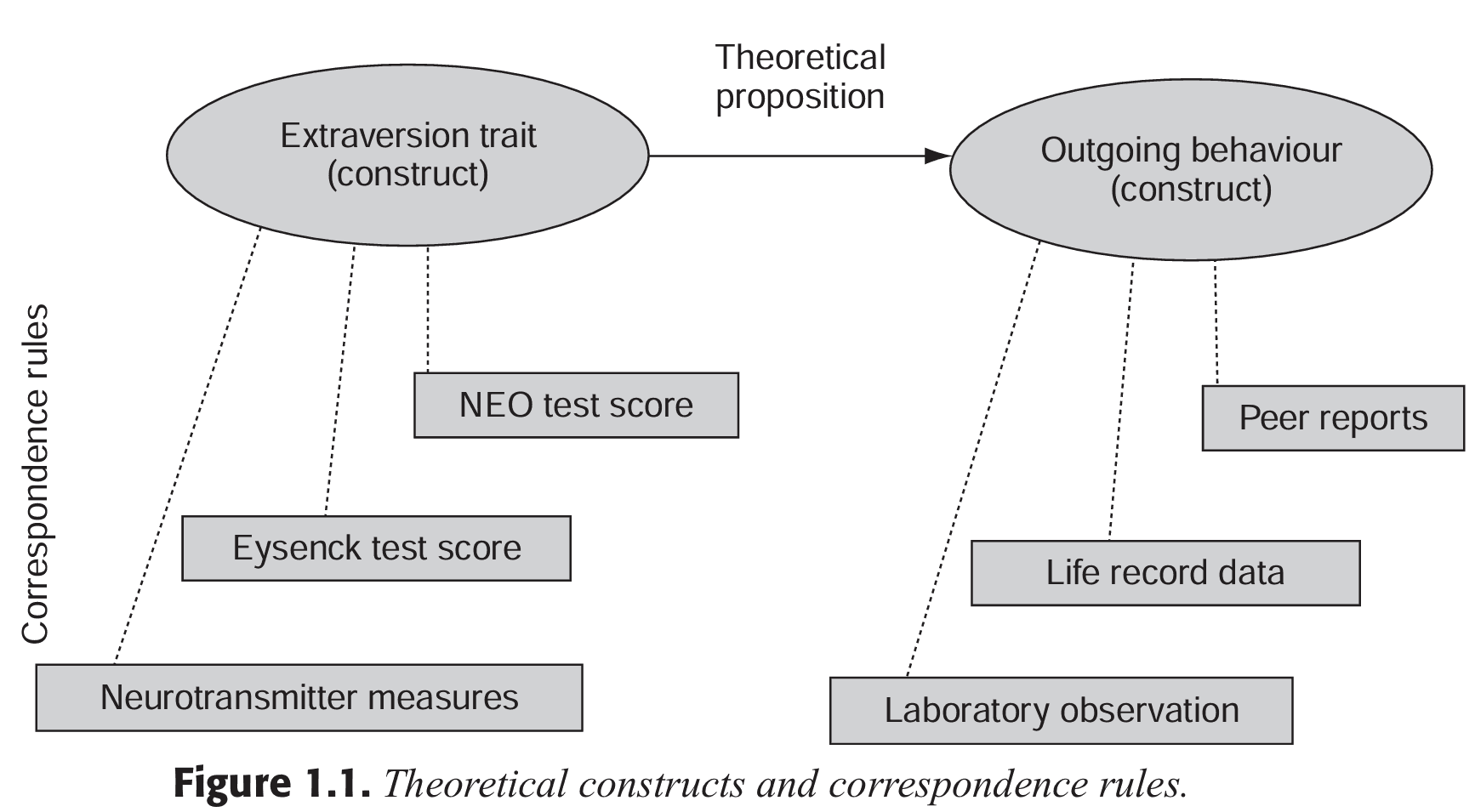
Figure 1.1 the relationship between theories, propositions, and empirical data (The Cambridge Handbook of Personality Psychology)
Explain the authors:
The classical view of theory describes a level of theoretical terms, which are abstract, and a level of observations, which can be empirically observed (Carnap 1956). The two levels are associated by correspondence rules.
At the abstract level, a theory includes concepts (or theoretical constructs, as described below) and statements about how they are related (propositions).
At this abstract level, a theory offers a framework for organizing knowledge. When the theory is translated into a format that can be tested, by means of correspondence rules, it can be accepted or modified, and scientific progress can occur.
(…)
Personality psychology has many concepts that cannot, themselves, be directly observed. Called hypothetical constructs in a classic theoretical description
Good theories:
- Make accurate predictions about observations
- Explain a large breadth of phenomena (more than competing theories)
- Are as simple as possible
To test the theories, the scientific approach clearly defines the correspondece rules and states them before the observations.
Measuring Non-Directly Observable Traits
Constructs like ‘adjustment’, ‘extraversion’ and ‘self-esteem’ cannot be directly observed.
So they are inferred by a network of correlations with various observations.
Take extraversion as an example.
First, it must be translated into a form that can be observed for empirical testing to be possible. This is implemented through correspondence rules, which specify observable phenomena that are manifestations of a construct.
For example, “speaking more”, “having more friends”, spending mroe time socializing”, etc.
Since no measure perfectly corresponds to a construct, it’s best to use many.
For example, self-report questionnaires, behavior ratings, peer nomination, responses to laboratory tasks, and so on
If the same person is then found to be extraverted with self-report, peer-report, by behavioral measures, then the construct of ‘extraversion’ is supported.
Say the authors:
Strong evidence for a construct exists if these various measures of a particular trait correlate highly with one another.
Lower correlations are expected with other traits, even if they are both measured in the same way (e.g. , self-esteem and achievement motivation both measured by self-report should not be highly correlated). These considerations inspired advances in personality assessment by using what is called a ‘multi-trait, multi-method matrix’ (Campbell and Fiske 1959) to demonstrate that abstract theoretical constructs, not measurement techniques, explain high correlations among observations
Traits VS Situations
Personality Psychology VS Social Psychology
Is the individual “more important” than the situation?
And if not, does the individual “cede power” to the situation?
The authors say it’s a false dichotomy, and more explaining power to one, doesn’t necessarily mean less for the other:
the underlying dichotomy is arguably false (Funder 2006; Roberts and Pomerantz 2004). While it is possible to identify and to compare statistical main effects of personal and situational variables, it is not true that one gains power only at the expense of the other.
Strong effects of situations and strong effects of persons can and often do coexist in the very same data, and the degree to which a given behaviour is affected by one of these variables may be unrelated to the degree to which it is affected by the other
Confounding Factors Between Personality & Situation
- People select (approach or avoid) situations according to their personality
- People passively evoke situations by their personality
- People manipulate (actively change or even create) situations by their personality
- Situational exposure can affect personality traits over the long run.
Kurt Lewin’s Formula
The formula is:
B = f (P, S)
Where:
- B= behavior
- P = person
- S = situation
Such as: behavior is a function of an interaction between the person and the situation.
It means that if one knew everything about a person and the psychological aspects of the situation, he would be able to predict that person’s behavior.
This formula gives rise to 2 additional formulae:
- P = f (S,B)
Meaning: If you knew what a person would do in any situation, you would know everything about that person’s psychology - S = f (P,B)
Meaning: If you knew what any person would do in a given situation, you would know everything about that situation
Traits Don’t Generalize Well Across Situations
Say the authors:
Is a dominant child in the familiar pre-school group also a dominant child in interactions with unfamiliar peers in the playground, with similar-aged siblings at home, with a clearly older sibling at home? Most people would assume that, but empirical personality research over the past eighty years has questioned such popular beliefs.
However, that’s a generalization, and it truly depends a lot on the trait we’re observing.
My note:
I suspect it also depends on the individual’s dominance and confidence levels. Higher power men tend to “be themselves” more than lower power men, who are more careful of their social environment.
Emotion and personality
Emotional dispositions that are stable and general are a species of personality traits.
Three main conclusions can be made:
- Individual differences exist when it comes to experiencing emotions: at least moderately stable, reliable inter-individual differences in the propensities to experience emotions seem to exist for all commonly distinguished emotions (anger, fear, etc. ) as well as for sub-types of these emotions directed at particular classes of objects (e.g. , fear of dogs, fear of exams, etc.)
- Disposition for both positive and negative emotions correlate with each other: people who are prone to sadness also tend to be prone to fear, anger and guilt
- The experience of pleasant and unpleasant emotions seem independent: people who get easily angry are about as likely as people who do not get easily angry to get quickly euphoric
Link Between Traits (Big 5) & Emotions
Of the big 5 personality traits, four are related to emotional dispositions (neuroticism, extraversion, agreeableness, and openness).
And neuroticism is primarily an emotional disposition.
Such as, the propensity to experience negative emotions, in particular fear, anger and depression.
Quickly reviewing them:
- Agreeableness: some of the best markers of agreeableness refer to emotional dispositions towards other people (e.g. , ‘affectionate’, ‘soft-hearted’ versus ‘cold’; John and Srivastava 1999); and empirically, agreeableness has been found to correlate negatively with trait anger (agreeable people are less anger-prone; e.g. , Kuppens 2005) and positively with the tendency to experience empathic emotions. Agreeable people also seem to try harder to suppress the expression of negative emotions
- Extraversion: high propensity to experience positive affect (measured, for example, with the Positive Affect sub-scale of the PANAS)
- Openness: more emotionally sensitive to art and beauty (capacity to experience aesthetic feelings), and to experience a wider range of feelings and emotions
Personality determinants of emotions
The two most researched are:
- Optimism/pessimism: general expectations for positive (versus negative) outcomes. Optimism correlates negatively with depressive symptoms and negative habitual mood, but positively with positive habitual mood
- Self-efficacy: the belief in one’s ability to reach goals and master difficult or stressful situations. Associated with lower anxiety during a stressful cognitive task and lower levels of depression and anxiety in medical patients
Other general beliefs that predict emotional reactions to events include:
- Interpersonal trust
- Hostility: a disposition with core general belief that others are unworthy and likely to be sources of frustration and aggression. Predicts state anger caused by negative interpersonal events
- Sensitivity to injustice: a disposition characterized among others by the belief that one is frequently the victim of unfairness. Predicts anger caused by a concrete unfair treatment
Emotional Intelligence
Salovey and Meyer proposed that emotional regulation should be viewed as one facet of a broader capacity termed emotional intelligence.
They defined it as:
To recognize one’s own and other’s emotions, to use the information contained in emotional experience to guide judgement and action, and to manage the experience and expression of emotions (Salovey and Mayer 1990; see also, Mayer, Salovey and Caruso 2004)
There has been some debates as to whether emotional intelligence is a new construct or if it has much predictive power.
The authors say:
Although measures of emotional intelligence also correlate substantially with measures of more traditional personality dispositions, including coping style (e.g. , Day, Therrien and Carroll 2005; Van Rooy and Viswesvaran 2004), they appear to retain some predictive validity even when these correlations to traditional measures are taken into account
And in terms of life utility, they say:
These studies found that emotional intelligence has a small to moderate positive correlation to performance (Van Rooy and Viswesvaran 2004) and to mental and physical health (Schutte, Malouff, Thorsteinsson et al.2007)
The 5 Factor Model (The Big 5)
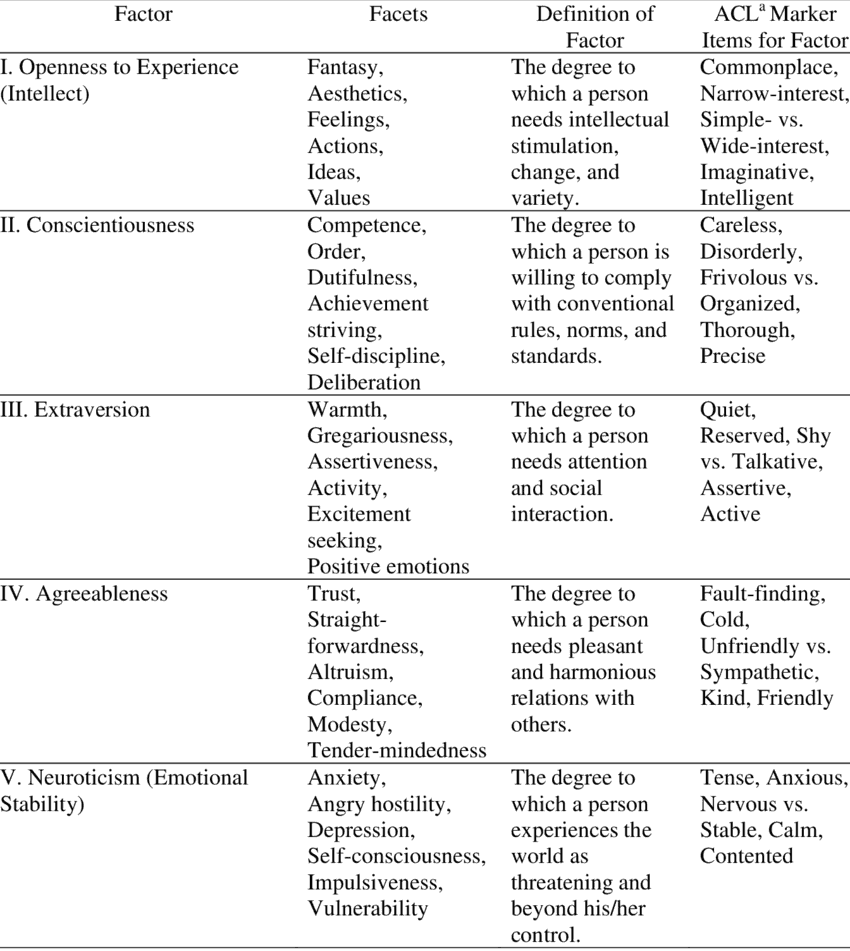
Hogan and Hogan, 2007, NEO-PI-R
Despite the criticism and revisions:
Remarkably, the FiveFactor Model (or, at least, four of its factors, with openness as a partial exception) does a fair job in accounting for variation in abnormal as well as normal personality (Markon, Krueger and Watson 2005).
Tools to Assess The FFM
The tools to assess people’s scores are:
- Self-Report Questionnaires
- Reports from Friends, Family, and Colleagues: Also known as informant reports, this method involves collecting assessments of an individual’s personality from people who know them well
- Observational Methods: This approach involves directly observing individuals in various settings. It can be more time-consuming and requires trained observers to ensure accuracy and consistency.
- Empirical Tests: These tests involve objective measures that may correlate with personality traits, such as reaction times in certain cognitive tasks or behaviors in controlled scenarios.
- Interviews: Structured or semi-structured interviews with trained interviewers asking questions designed to elicit behaviors and attitudes related to the Big Five.
- Psychobiographical Methods: analyzing extensive life records, writings, or other artifacts of an individual to infer their personality traits. This method is more commonly used in research or historical analyses.
Questionnaires are the most popular and validated tool for assessing the FFM.
Luckily, they seem work well:
Skeptics came to believe that self reports were nothing but a collection of errors and biases.
It was, therefore, an important advance when psycholo gists showed that there was substantial (though not com plete) agreement between descriptions from selfreports and those obtained when the same questions were put to knowledgeable informants – spouses, roommates, friends (Funder 1980; Kurtz and Sherker 2003)
(…)
The most used questionnaire is the Revised NEO Personality Inventory (NEO-PI-R) (Costa and McCrae 1992a)
Traits Tend To Be Relatively Stable Over Time

Summary of stability and change in the Big Five personality domains across the lifespan
longitudinal research showed that individual differences in all five factors are in fact remarkably stable (Costa and McCrae 1992b; Roberts and DelVecchio 2000).
However, there is always some change, and especially in the first part of life:
traits become increasingly stable after age thirty, but never reach the point where change no longer occurs; that is, no matter how old an individual is, it is possible that his/her standing relative to others can fluctuate with the passage of time
Importantly, across cohorts, there are important changes over time:
At the same time, there are gradual changes in the average levels of traits. Both cross-sectional and longitudinal studies suggest that between adolescence and old age, individuals generally decline in N and E and increase in A and C. O increases until some time in the twenties, after which it slowly declines.
There Are (Small) Gender Differences
The magnitude of difference is small:
Research on the FFM has shown consistent patterns in gender differences.
These differences are generally small, with substantial overlap between the distribution of traits in men and in women.
And in terms of differences:
At the level of specific facets, there are sometimes differences within domain. Thus, both Warmth and Assertiveness are facets of E, but women are typically warmer and men more assertive. Again, women are more open to aesthetic experiences, whereas men are more open to ideas
The Big 5 Are Heritable & Universal
There is a substantial degree of heritability of the Big Five traits.
And some traits are gene-related:
Warmth and Assertiveness are both definers of E because they are influenced by some of the same genes
And on the geographical universality:
We know that the human race is a single species, so the universality of the FFM is probably a reflection of the fact that variations on the same trait-related genes are found in Homo sapiens worldwide
In general, all personality traits are heritable:
reviews and meta-analyses of the twin study literature on personality traits have been published in recent years, and all consistently demonstrate heritability coefficients of approximately 50 per cent, with a range typically between 40–60 per cent.
The traits also have genetic origins, with biological neurotransmitters:
Neuroticism (reversed), Agreeableness and Conscientiousness form one higherorder factor or metatrait, labelled α or Stability, and Extraversion and Openness/ Intellect form another, labelled β or Plasticity. Behaviour genetic analysis has shown that the two meta-traits have genetic origins (Jang et al.2006), and evidence is accumulating that Stability is related to serotonin, whereas Plasticity may be related to dopamine (DeYoung 2006; DeYoung, Peterson and Higgins 2002; Yamagata, Suzuki, Ando et al.2006)
The Big 5 Is Not Enough Without Its Facets
I found my main criticism of the Big 5 to rarely be listed as a main concern.
And it’s that the “top-line traits” are not very telling without their facets.
As an example of the “hierarchy structure” for extraversion:

Hierarchical model of Extraversion (based on Eysenck, 1970)
The authors go into this here:
Although scores on the five factors give a general sense of what an individual is like, much more can be learned by assessing the specific traits that define the factors. For example, both cheerfulness and assertiveness are definers of E, because both reflect ways of interacting with others. But some people are cheerful without being assertive, and others are assertive without being cheerful, and knowing which is which is important to clinicians (Singer 2005) and researchers (Paunonen and Ashton 2001)
There isn’t yet much agreement on how to divide the sub-facets:
The problem at the facet level is that there is no generally recognized way of sub-dividing the factors into constituent traits. For example, Costa and McCrae (1992a) distinguished between Warmth and Gregariousness facets of E, corresponding to the sub-divisions of the need to belong: ‘ongoing mutual caring and concern’, and ‘a desire for frequent interactions’ (Baumeister 2005, p.112). By contrast, Watson and Clark (1997) thought this distinction was unnecessary, and combined them into a single trait of sociability
But the NEO-PI-PR seems to be doing a good job for now:
the meantime, the facets of the NEO-PI-R do provide one system that has been successfully used in many applications and in dozens of cultures. Researchers have documented the discriminant validity, heritability and developmental course of all thirty facets, and no obvious gaps in covering the scope of the FFM have been identified. At present, NEO-PI-R facets arguably offer the best available delineation of the FFM at the next-lower level in the trait hierarchy
Personality and intelligence
As an overview:
Modern intellectual ability theories (see e.g. , Carroll 1993) represent intelligence in a hierarchical fashion, with a general intellectual ability (the most general construct) at the top of the hierarchy (Strata III), and somewhat narrower ability content as one moves down the hierarchy
Some traits that correlate to general intelligence include:
- Need for Achievement (nAch) probably shows the most robust positive correlations among this group of personality traits, with correlations in the range of r = . 07 to .24
- Typical intellectual engagement (TIE) (Goff and Ackerman 1992) also fits at least partly into this general framework. TIE is defined as the individual’s preference toward or away from intellectual activities. Items on the TIE scale include statements such as ‘I would enjoy hearing the details about discoveries in any field’ and ‘I read a great deal’ and ‘The main reason I studied in school was because it was required of me’
An estimated correlation of . 35 was found for TIE and crystallized intelligence, but close to zero for fluid intelligence - ‘Test Anxiety’, which is associated with feelings of anxiety when confronted with test situations. In an extensive review and meta-analysis of several hundred studies, Hembree (1988) determined that significant negative correlations were found between measures of test anxiety and measures of intelligence (r = ‒.23)
- Neuroticism shows consistent negative correlations with an array of both general and specific intellectual abilities (e.g. , on the order of r = −. 15 with general intelligence). Even larger correlations with mathematical abilities
- Traits like Alienation, Aggression, Harm-Avoidance and Traditionalism all show small negative correlations with intellectual ability measures
Attachment Theory
Intro:
John Bowlby gradually created a more empirically oriented psychodynamic theory that could be integrated with the rest of scientific psychology
(…)
Attachment theory is now the leading theory of love and bereavement; it is a mainstay of both developmental and personality/social psychology, and its major constructs are still being measured and refined
We have several articles here with examples, see:
And:

Attachment styles on a matrix chart
Evolutionary Approaches
Evolutionary psychology is more concerned with the commonalities.
However, it can still add some important insights.
For example, different traits make one better suited to specific environments:
individuals who are less likely to trust others and more willing to exploit others may be best suited in environments where short-term encounters are the norm and immediate extraction of resources is necessary
Or that personality differences are an evolutionary win-win for selfish individuals and the species as a whole:
Personality differences allow different individuals to be suited to particular niches that others would not be suited for. This is adaptive because it leads to decreased competition, due to greater specialization, and renders the various personality characteristics optimal under differing local conditions.
However, this part was less empirical than other chapters.
For example, this was interesting but purely speculative:
Anxiety/Neuroticism represents the individual’s (partly unconscious) choice of strategy for handling social threats.
The anxious individual adapts to threat through anticipating and avoiding threats, whereas the emotionally stable person has a preference for more direct, task-focused coping.
The various processing attributes of anxiety support the overall adaptation (…)
Extraversion may be seen as an adaptation to socially demanding environments. Cognitive features of Extraversion such as efficient multitasking, verbal skills and rapid response work together to facilitate adaptation. Conversely, the various characteristics of Introversion support adaptation to solitary environments requiring self-direction
Also see:
Personality and performance
There limited connection between personality and performance:
Associations between personality, performance and individual differences in cognition are often rather unstable and sensitive to various moderator factors.
Furthermore, effect sizes are often modest (e.g. , Koelega 1992)
Which I was surprised to read.
- Anxiety has detrimental effects on performance
- Selective attention: some are better at quickly focusing on a stimulus, or resisting distraction from irrelevant stimuli
- Extraversion and low Neuroticism were associated with faster speed of visual search, when subjects were required to find a single letter target in a random display of letters
- Extraverts were more resistant to background noise than introverts across a range of tasks; extraverts may indeed prefer to study with music or other noise in the background.
- Anxiety and Neuroticism are associated with selective attention deficits, a result that may reflect a more general attentional impairment related to these traits. Anxious people tend to ‘lock onto’ potential sources of threat and are slow to disengage attention (Derryberry and Reed 1997, 2002)
- Extraverts may jump to conclusions: studies of problem-solving show that extraverts are prone to choose a solution impulsively, without due reflection
Work performance
Conscientiousness is one of the largest predictors of work performance:
second-order meta-analysis (that is, a meta-analysis of existing meta-analyses), which showed Conscientiousness to be a valid predictor for all work performance criteria (overall work performance (non-independent analysis (.24); independent analysis (.27); supervisor ratings (.31); objective performance (.23); training performance (.27); and team-work (.27)), and occupational groups (sales performance (.25); managerial performance (.25); professionals (.24); police (.26); and skilled or semi-skilled (.23)
Emotional stability was also a valid predictor of work performance, while neuroticism is a negative predictor.
Positive VS Negative Affect may be the biggest difference
Organ, Podsakoff and MacKenzie (2006) have suggested that personality may only be related to organizational citizenship behaviour through its relationship with job satisfaction, given the wealth of evidence that variance in job satisfaction can be explained by personality (e.g. , Judge and Bono 2001).Indeed, Ilies, Scott and Judge (2006) recently found that positive affect and job satisfaction predicted organizational citizenship behaviour, and secondly that cross-level interaction between Agreeableness and positive affect predicted organizational citizenship behaviour
Traits & Social Relationships
There seem to be strong ties between traits, and social life quality:
Extraversion, Neuroticism, Conscientiousness and Agreeableness all appear to have major influences on adult relationship outcomes (Berry, Willingham and Thayer 2000; Karney and Bradbury 1995; Lehnart and Neyer 2006; White, Hendrick and Hendrick 2004)
Low Agreeablness Is Not Power
Sometimes people confuse agreeableness with “too nice”.
And low agreeableness with “dominant go-getter”.
That doesn’t seem to be the case:
low agreeable children are more likely to use power assertion (e.g. , threats), which can ultimately harm or end a relationship. Disagreeable children are not only more likely to use power assertion, they are also more likely to be involved in more serious bullying behaviours (Bollmer, Harris and Milich 2006; Gleason, Jensen-Campbell and Richardson 2004).Indeed, low Agreeableness is associated with peer rejection and victimization (Newcomb, Bukowski and Pattee 1993; Jensen-Campbell, Adams, Perry et al.2002
Traits That Promote Healthy Relationships
Among adults, Conscientiousness has been associated with mate desirability, relationship quality and marriage stability (Botwin, Buss and Shackelford 1997; Gattis, Berns, Simpson and Christensen 2004; Kelly and Conley 1987; Roberts and Bogg 2004; Robins, Caspi and Moffitt 2000)
Agreeableness and Conscientiousness are negatively related to a friend’s annoyance with the individual; Conscientiousness and Extraversion are negatively associated with the number of conflicts in the adult friendships (Berry, Willingham and Thayer 2000)
Unsurprisingly, a predisposition for positive emotions also makes for good relationships:
One exception is a longitudinal study by Robins, Caspi and Moffitt (2002). They found that a personality profile of low negative emotionality, high positive emotionality and high constraint can predispose a person to become involved in relatively happy, non-abusive relationships. More specifically, negative emotionality at the age of eighteen predicted higher levels of conflict and abuse and lower levels of quality in romantic relationships three and eight years later. In addition, they found that the influence of negative emotionality on romantic relationships was quite stable
Social Support
There are 2 dimensions to social support:
- Functional support is the perception and actual support available from others
- Structural support refers to the degree of embeddedness of the individual within the social network
More Social Support Is Healthy
Unsurprisingly, more support makes for a better life:
research investigating the stress-buffering role of functional support has shown its effectiveness in predicting reduced mortality and physical health outcomes (Cohen 2003; Uchino, Cacioppo and Kiecolt-Glaser 1996), as well as lower levels of psychological distress
Relationships With Value Takers Are Unhealthy
On the other hand, as we often say here:
Interacting with others who are interfering, manipulative or even hostile has been shown to have a negative impact on psychological wellbeing (Harber, Schneider, Everard and Fisher 2005; Rook 1984).
Furthermore, the impact of negative interactions on the individual is often greater, compared with positive interactions
Personality And Social Support
Extraverted and agreeable individuals tend to get more social support.
As per social exchange theory, that is partly because they also give more support.
On the other hand, extraversion cuts both ways.
And extraverts can be “needier”:
extraverts do not receive an appropriate level of social support, then they appear to be more negatively affected by this reduced provision of social support, as compared to introverts
Highly neurotic people tend to report more negative social interaction, and tend to withdraw during times of stress.
Social pain and hurt feelings
HFP is the measure of “hurt feelings proneness:
HFP correlates strongly and positively with Neuroticism, anxious attachment, fear of negative evaluation, and self-reported behavioural inhibition system activity (Leary and Springer 2001; MacDonald 2008)
(…)
HFP is also related positively to the need to belong (Leary and Springer 2001; MacDonald 2008), a variable reflecting one’s appetite for social connection. Those higher in HFP have also been shown to place more value on true friendship and mature love (Leary and Springer 2001)
And:
Higher HFP was associated with both higher perceptions of potential threat and higher perceptions of potential reward.
Personality and politics
Right-wing authoritarians and conservatives are needy for certainty
meta-analysis of this extensive literature by Jost, Glaser, Kruglanski and Sulloway (2003a) makes a strong case for political conservatism as motivated social cognition. While the core ideology of conservativism stresses justification for social-economic inequality and resistance to change, its motivational dynamism centres around the need to manage uncertainty and threat
The difference between liberals and conservatives is openness
Openness to Experience is the personality trait that mostly distinguishes liberals and conservatives.
Psychopathology
Psychopathy
Hare asks whether psychopathy is categorical or dimensional:
Do psychopathic individuals differ from the rest of us in degree or in kind? There has been considerable debate, but little empirical research, on the topic.
On one hand, it seems to be dimensional:
psychopathy reflects, or emerges from, a combination of extreme variants of normal-range personality processes, many of which are antisocial in nature (Lynam and Widiger 2007)
On the other hand, “such a combination of extreme traits may be taxonic“.
Hare and Ruscio noted that psychopathy could be viewed as both:
within a nonpsychopathic group, a set of dimensions may capture individual differences on psychopathy-relevant traits, but hardcore psychopaths deviate substantially on multiple dimensions and form their own group.Certainly, it is not unusual for researchers and clinicians to describe those with very high PCL-R scores as ‘different’ from other individuals
Personality and crime
The authors suggest that the definition itself of psychopathy defines a criminal, so it’s not useful.
However, that’s not to say that psychopathy or personality traits are irrelevant.
They are relevant, but only at extreme levels:
In general, then, although many offenders are characterized by some form of mental disorder, a very small proportion of the mentally disordered population turn to crime
(…)
Thus, although there has been a tendency to look for mental disorder as a basis for criminality, careful study indicates that it is only at the extremes that such an aspect of a person may be considered relevant
Other personality disorders
Adapted from Beck and Freeman 1990, The Cambridge Handbook of Personality Psychology
There seems to be a high level of comorbidity among personality disorders.
For example:
- Eating disorders: as many as 60 percent of women with an eating disorder also meet criteria for a personality disorder (PD
- ADHD is positively associated with temperament dimensions reflecting impulsivity and reactivity (ie.: BIS, negative emotionality, Neuroticism, impulsivity and novelty seeking)
Treatment for personality disorders
The theoretical traditions of current treatment approaches can be divided into three main strands:
- medical model: including drugs. The evidence judged to be inadequate -but later in the book, they say the evidence “is improving”
- psychoanalytic/psychodynamic theory: There is a significant difficulty applying traditional, experimental, test of effectiveness to psychoanalytic treatment, not least because of the length of the treatment, but there is some evidence that psychoanalytic therapy may be helpful
- (cognitive-)behavioural theory
And then the authors seem to describe another one and I didn’t understand where it was placed:
- Group therapy
- Democratic therapeutic community: permissive and democratic, the members are active participants and part of rule-making and enforcement. They seem effective over comparison groups of non-treated referrals in borderline symptoms, other symptoms, and service usage and cost-effectiveness (Lees, Manning and Rawlings 1999)
The authors say that there isn’t enough evidence to pick a clear winner or a gold standard.
Personality and leadership
Leadership is related to:
Judge, Bono, Ilies and Gerhardt (2002) in a meta-analysis of the leadership and personality research found leadership to be positively related to Extraversion (.31), Openness (.24) and Conscientiousness (.28), and negatively related to Neuroticism
And the view that narcissism or dark-triad traits may favor the ascension to power in the workplace may be valid:
While Nicholson’s (1998) sample were CEOs of leading companies, no data was presented on leadership performance per se, therefore, the low Agreeableness scores may reflect traits that facilitate individuals’ rise into leadership positions, but are not necessarily an indicator of subsequent leadership success. Such a view would be consistent with those suggested in the literature on narcissistic leaders, i.e. that while some of the traits associated with narcissistic personality may help an individual attain a leadership position
Even more obvious -and almost shocking- evidence:
Board and Fritzon (2005) found that CEOs and senior managers of leading UK companies demonstrated similar levels of narcissism as a sample of patients at Broadmoor Special Hospital (a secure psychiatric hospital in the United Kingdom), and significantly higher levels of histrionic personality than the ‘clinical’ group
Also see:
PRACTICAL TAKEAWAYS
Obviously, these books aren’t meant to be practical.
My job is to go through the literature to then turn the empirical evidence into practical strategies and techniques.
Still, here are some possible takeaways:
Use Occam’s Razor: The Simpler Explanation Beats The Convoluted One
The author says that good theories are “as simple as possible”.
And in yet another salvo against psychoanalysis, they say:
In personality (more controversially), why add an elaborate psychoanalytic model of personality structures and defence mechanisms to explain forgetting of childhood memories, if well-supported, simple cognitive mechanisms can account for the same phenomena (Hassin, Uleman and Bargh 2005; Kihlstrom 1987)?
Cut out the takers from your life
It’s proven that manipulators, negative people and value-takers in general make you worse off.
MORE WISDOM
Why Psychoanalysis Has Been Marginalized
Say the authors:
Robert Bornstein (2005) explains what he terms the marginalization of psychoanalysis, which is often criticized for scientific failure, this way (p.325): the diminished influence of contemporary psychoanalysis is largely a product of theory mismanagement: Rather than looking forward (to the evolving demands of science and practice) and outward (to ideas and findings in other areas of psychology and medicine), many psychoanalysts have chosen to look backward (at the seminal but dated contributions of early psychoanalytic practitioners) and inward (at their like-minded colleagues’ own analytic writings). Theories evolve. Criteria for judging the worth of theories offer directions for their growth, not static rules for accepting or rejecting them once and for all
It’s the failure of “theory building upon itself”, without going back to empirical data from the real world, or to other scientific advances and findings.
And:
Psychoanalysts’ rejection of the scientific process of objective empirical verification leaves them isolated from the rest of the academic community and has been manifested in heated professional and sometimes personal criticisms
However, adds Bornstein, some psychoanalists are more open to the scientific method, so there are still hopes of reconciling psychotherapy with science.
Science May Beat Psychoanalist’s Judgment
outcomes of psychotherapy are predicted in two ways to see which is more accurate: by a mental health professional who has case material available, and by a statistical method in which data are used to make predictions…
A meta-analysis of such studies reports that the statistical method offers more accurate prediction (Aegisdottir, White, Spengler et al.2006), and such results have been interpreted to forcefully argue for the superiority of science over clinical judgement (Dawes 1994)
However, I wasn’t convinced by this.
“Case material” is very different from directly observing, engaging, or even personally knowing an individual.
And you can’t run “raw data analysis” on a flesh and blood individual.
People Can Change Over Time
Longitudinal research shows that:
Stability from childhood to adulthood, while significant in many cases, is low enough to suggest that significant change occurs, especially before adulthood (Caspi, Roberts and Shiner 2005; Hampson and Goldberg 2006
QUOTES
How to recognize psychology VS personality psychology, in simple terms:
According to a famous, albeit sexist, quotation, ‘Every man is in certain respects (a) like all other men, (b) like some other men, (c) like no other man’.
General psychology is concerned with (a), and personality psychology with (b) and (c).
CONS
- Wish it went deeper on negative affects, negative personality types, value-takers etc. That would have been very useful to TPM and my goals. Instead, it mostly insists on more popular and “neutral” constructs such as the Big 5
REVIEW
The Cambridge Handbook of Personality Psychology is a top resource for an overview of personality psychology from a scholarly research perspective.
I learned plenty from it and could take away several insights for TPM and Power University.
Check the best books to read or get this book on Amazon.


