Empowered individualism™ places identity, agency, and responsibility at the level of the individual, rather than the group.
While popular discourse frames people through collective identities—gender, race, nationality, ideology—psychology and power dynamics show that both individual empowerment and human progress emerge from individuals who prioritize self-directed goals and retain sovereignty over judgment and action.
This article outlines what empowered individualism is, how it differs from collectivist psychology, and why societies that treat the individual as the primary moral and decision-making unit outperform those that subordinate individuals to group identities.
TPM Framework: Empowered Individualism™
Empowered Individualism™ is a conceptual framework developed by Lucio Buffalmano for The Power Moves to describe an individual-first psychological orientation grounded in self-reliance, agency, and independent judgment.
The framework integrates findings from psychology, evolutionary science, and power dynamics to explain why individual-centered identity and decision-making outperform collectivist models in modern societies.

Empowered individualists are “ubermensch” In Nietzche’s philosophy, ‘sigma males’ in manosphere terminology (and ‘alphas‘ when in groups), and eagles in TPM’s parlance
Intro
Empowered individualism is an orientation in which the individual is the primary unit of identity, agency, and responsibility, pursuing self-chosen goals while engaging with groups voluntarily rather than subordinating judgment or action to collective identities or social trends.
| Empowered Individualism | Collectivist Psychology |
|---|---|
| Individual primacy and sovereignty | Group primacy |
| Independence and self-sufficiency | Dependence and interdependence |
| High agency, individual achievements first | High communion, harmony and group outcomes first |
| High perceived control & internal locus of control | Low perceived control & external locus of control; outcomes depend on group & leadership |
| Self-defined identity (personal values, choices, actions, and achievements) | Group-derived identity (group membership, role, and shared narratives) |
| Self-generated self-esteem, based on competence and integrity | Group-based self-esteem, based on group acceptance, conformity, and group-achievements |
Empowered individualism puts the individual before and above collective constructs such as groups, races, genders, nations, and ideologies.
In psychological terms, it’s a personality trait related to high self-reliance.
There are three undercurrents to an individual-first approach:
- Identify yourself as a distinct individual (salience of the self): considers yourself, and demand to be considered, as an individual rather than a member of a collective like nationality, gender, race, etc.
- Focus on yourself (self-focus): prioritize yourself, your rights, your goals and, when appropriate, your self-interest
- Look at others as individuals (others’ self-salience): think and treat others as individuals first, rather than members of groups
Levels of individualism range on a spectrum between the poles of collectivism and individualism.
Collectivism: Psychology & Costs
Collectivism has weaker self-boundaries and psychologically aligns and merges closer with the groups of reference.
While there may be more empowering forms of collectivism, in its weaker form collectivists use the group to prop-up a weak sense of self.
The canonical psychological mechanisms of collectivism are:
- Ego fusion: the merging of self and group identity (Swann et al., 2012)
- Basking in reflected glory: associating with a successful other for social and mental gains (Cialdini et al., 1976)
- Collective narcissism: an inflated belief in the greatness of one’s in-group, combined with resentment that others fail to recognize it. Leads to defensiveness and anger when the group is criticized (de Zavala, 2018)
External locus of control (Rotter, 1966) and low sense of perceived control (Skinner, 1996) are the psychological consequences of collectivism.
This article lists tactical-level examples of collectivist psychology to show how the same mechanism plays out in different areas of life.
Benefits of Individualism
Empowered Individualists enjoy better mental health and power, including higher self-esteem, sense of well-being, sense of control, and general positive affect.
Being less needy and dependent also boosts personal power (Emerson, 1962) and neutralizes known hooks for emotional manipulation. And individual accountability shields you against collective shame, guilt, and disempowerment (ie.: ‘humans are earth’s cancer’, ‘men are oppressors’, ‘women/minorities have been oppressed’, etc.).
Belief in their personal power also leads to more action, with higher odds of success.
8 Principles of Empowered Individualism
1. It’s Me, First, Before & Above Any Group
The core of empowered individualism is self-primacy, defining oneself based on self-originated values, actions, and achievements.
Individualists may love the various groups they’re part of, but their group belonging is not their primary identification.
Within groups, the individualist remains an individual first, constantly monitors the group dynamics, and always maintains the freedom to exit it.
1.2. I Choose What’s Best For Me, Without Falling Prey to Social Pressure & Expectation
Empowered individualists live by the motto of ‘I do me’, choosing to pursue what they want and like.
It’s perfectly fine to follow a rich society’s beaten path, but the empowered individualist only chooses that path IF it fits him, not out of pressure or fear.
Given that the odds that a beaten path is a perfect fit and the chances of trade-off are higher, many individualists end up with a more unique lifestyle.

🔎 Failure of The Law: Group Leaders Representing You
Collectivist psychology considers the group leader as a representative for themselves.
Example:
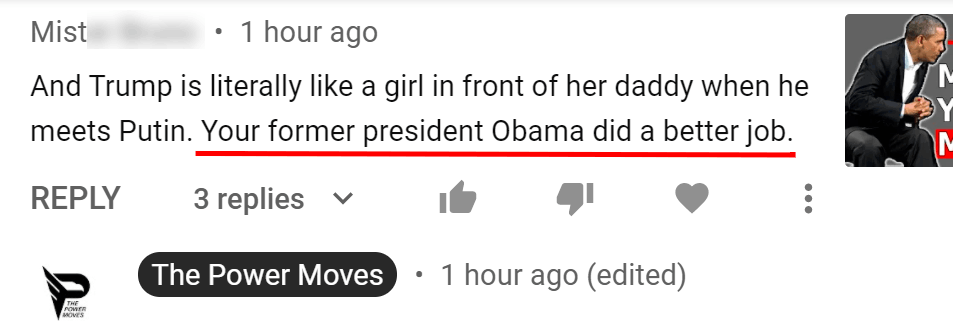
The empowered individualist believes that only he can represent himself.
2. I’m A Human, And No Other Human Is Above Me
You’re as worthy as a human being as anyone else.
Someone else may be more competent or more predisposed towards certain activities. But that has a little to do with overall competence, and nothing to do with worthiness as a human being.
2.2. Mindset: If Someone Can, So Can I
Whatever great things someone else achieved, you can also do the same.
Steve Jobs echoed this same belief when he said this:

Life can be much broader once you discover one simple fact: Everything around you that you call life was made up by people that were no smarter than you. And you can change it, you can influence it… Once you learn that, you’ll never be the same again.
Steve Jobs
Of course, record-breaking feats may require a lifetime of effort, and genetics and luck matter. But you could have done the same with the same conditions.
And at the higher level, you can have the same positive impact in your field of choice.
🙋🏼♂️ Lucio’s Mindset: the real test of a good life is not what you were born with, but what you do with it.
🔎 Failure of the Law: “Can you imagine flying a plane”?
A former boss had this trying question:
Would you rather fly a plane by yourself with 3 days to learn, or full of people with one week to learn?
His attitude framed both options as terrible, as if flying a plane were an impossible feat.
Me, I felt that flying a plane must be relatively easy. And if those pilots can, so can I.
And, I didn’t land a plane (yet), but flying is easier than driving a stick shift car:
2.3. Homo sum, nihil humani a me alienum puto: You’re part of all human greatness
This Latin motto stuck with me since I first read it as a kid, and it means:
I’m a human, and nothing concerning humans can be alien to me
It means that as a human, you are automatically part of all human magnificence, everything that the species has done and will ever do.
While that may also mean you’re also part of the worst of humanity, this is where empowered individualism takes over: YOU decide what to embody.
3. Only My Individual Achievements & Contributions Earn Self-Respect & Honor
Any pride for group-level achievement is secondary and contingent on your contributions.
And while you may be proud of groups you joined with your effort, you cannot be proud of groups you didn’t choose or earn (ie, being hetero/gay, white/black).
🔎 Failure of The Law: Appropriating The Group’s Achievement as Your Own
Over-nationalists waste their time promoting and defending their countries, while others promote or defend their gender. Worse yet, many attack other groups to feel better about themselves.
Example:

He rejoiced that a man beat a woman because he projected his identity onto the collective of men. Besides the poor sportsmanship, it shows possible signs of vulnerable narcissism and hypersensitivity to threats (ie, being ‘beaten’ by a woman).
Ego projections undermine self-development
Paradoxically, the better the group performs, the more the collectivist loses any reason for individual self-development, in a vicious circle of ever-decreasing under-achievement
3.3. Honorable Spin: Make Groups Proud With Your Contribution, Not The Other Way Around
Anything the group has done and you haven’t contributed to becomes your stretch goal to measure up to.
While weak collectivists bask in reflected glory, empowered agentic men focus on providing glory to the group.
Ultimately though, empowered individualists have a lower sense of obligation towards specific groups, and more of a drive for contribution in general, seeking to advance humanity and civilization.
🙋🏼♂️ Failure of The Law: The “Family Shame”
While an acquaintance of mine proudly shared that his father’s team was awarded a Nobel prize, another one felt ashamed for his humble family.
To an empowered individualist, a successful father says nothing unless you replicate that success. And humble beginnings only boost your achievements for having overcome the gap.
4. The Less I Control It, The Less It Represents Me
The more you influence the group, the more it can represent you. And the other way around. Ultimately, individualists put the self first because that’s where they control the most.
🔎Failure of The Law: Sports Fans
Some supporters and ultras feel and expect ‘their team’ to represent them and ‘do them honor’, while having no control over the team’s performance.
🙋🏼♂️ Lucio’s note: I speak from experience.
I used to get hyped up for “my team” or “my guy” winning, and distraught when they’d lose. I’m glad I largely outgrew that.
4.2. I Put My Interests Before Random People’s
Only invest in people with whom you have significant interests, or a two-way street relationship.
🔎Failure of The Law: Fandom
Many celebrated DiCaprio’s Oscar win as if they had won one.

5. I Put Myself & My Time Above Any Object
Inanimate objects are only valuable as long as they add concrete value.
Yourself—and your time—are always immensely more valuable.
🔎 Failure of The Law: Wasting Time to Own Status Symbols
When you feel defined by a brand, it’s the brand that owns you

Queueing for ‘luxury’ or ‘popular’ signals that impressing others is more important than living your life
The need to own any object lowers you below the object.
So never:
- ❌ Collect things
- ❌ Overpay for memorabilia or art
- ❌ Queue up for a popular restaurant or shop
Remember: you are bigger than any thing.
6. I Put Myself Above Man-Made Institutions
People build institutions, and since nobody is above you, no institution is above you, either.
The judgment criteria of people taking decisions in those institutions isn’t inherently more valuable than yours, so you shall not chase their approval to join their ranks.
People chasing big-name universities or employers are giving power away to both those institutions.
6.2. Respect For Religious Institutions, But Not Subordination
Empowered individualists tend to have a more direct, power-positive relationship with God.

Moby Dick’s symbolism can be seen as the (individual) empowerment against the disempowering Middle-Age representation of an over-controlling God.
6.3. Respect For Familial Institutions, But Not Subordination
Some cultures pressure children to serve their parents and household. Empowered individualists reject the psychological coercion and subordination.
7. It’s Me & My Decision-Making Above Any Values or Laws
Empowered individuals trust themselves to make the right call depending on the situation.
Written values or ‘laws‘ disempower you because they become rigid external impositions, dictating your behavior from outside the situation.
But in a complex and fluid world, values must originate from your situational self. Calibration is what makes you effective, and self-trust is what makes you confident.
Set a higher-level, honorable north star, like ‘being a value-adding man’, and trust yourself to adapt contextually.
No written values = higher integrity
Men who fall short of their values lose integrity because they’ll make excuses for themselves.
By contrast, non-rule-bound Machiavellians experience little dissonance (Christie and Geis, 1970). You can get the same benefit, while also being honorable.
7.2. I Value My Judging Criteria Before External and Social Criteria
The more empowered, honorable, and experienced you become, the more you want to trust your judgment.
This also protects you against undue influence from authority and ‘judge figures‘.
7.3. Whenever Possible, I Judge Others As Individuals
It’s mostly inexperienced men who judge others based on nationality or ethnicity. When it comes to people, the more experience you gain, the more you look at individuals.
🙋♂️Lucio’s Take: Judge characters, beware those who seek respect through titles

Lucio: If rank and character don’t match, the judgment of the man always takes precedence.
And introducing oneself through titles is often a red flag of entitlement, and possible smokescreen over substance.

A personal, non-work email with “dip.”, “ing.”, and “female architect” in the signature 🤔.
8. My Outcomes Depend On Me. I Can Succeed independently of My Group, Country, or Social Trends
The empowered individualist thinks ‘my life, my responsibility’, and rather than focusing on trends and groups, he focuses on how to achieve his goals.
Failure of The Law: Going Down With The (Social) Ship
Michael Franzese says in an interview:
Michael: I have a pessimistic view of where America is heading. I fear for my kids how America is going to look like
Tyrus: Unfortunately I agree with you. It’s already over. China won.
Both men turn pessimistic because they focus on group-level trends.
Even intelligent and self-development-focused guys can fall for this mindset.
For example, Charisma on Command founders say:
Charlie: (talking about China’s future troubles) We’re gonna be OK in America, it’s just not their century
Besides external and low sense of control, this leads to a scarcity mindset.
As Robert Sapolsky says, “It’s problematic when non–zero sum games are viewed as zero-sum”, because you can turn win-win into lose-lose.
If the same approach was applied to individuals, you’d think this was weak, or unnecessarily mean (ie.: imagine if Charlie said Charisma on Command does well if The Power Moves doesn’t).
But extrapolate the same exact mentality to groups, and many miss how disempowering it can be.
Individualism vs. Collectivism In Human Progress
Groups are not bad per se.
Collective effort multiplies output beyond anything any individual could achieve. Cooperation built and keeps building our civilization.
Even mild forms of group competitions provide extra motivation to innovate and move humanity forward.
However, getting the positives without the negatives is a question of balance and individual empowerment.
Quoting from the Routledge handbook on persuasion:
identification (with groups), by enabling us to communicate, organize, and decrease division, can be a worthwhile goal. However, we must be moderate in promoting it, because too much identification can be “too much of a good thing” (Seiter, 1998).
And Colquhoun in The Cambridge Handbook of Evolutionary Perspectives explains why it quickly becomes ‘too much’:
altruism within the group (…) simultaneously promote selfishness between groups.
Bowles (2009) looked at archaeological data (…) and concluded that between-group competition led to a large increase in mortality rates.
(it) really raises the question: Altruism toward whom?
From this perspective, suicide bombers may be thought of as altruists to the cause of their group by other group members, but to non-group members they are anything but.
1. Effective Cooperation In Larger Societies Requires Individualism
Psychologist Joseph Henrich explains that Western individualist societies cooperate better because they’re more pro-social, trusting, and cooperative with strangers.
Cooperation with strangers is a necessary prerequisite for cooperation among larger groups.
Contrary to what many may think, these more collaborative modern societies are based on individualism. Individualists adopt an ‘impersonal prosociality’ that rises above tribalism, values strangers, and cooperates on a large scale.
By contrast, strong small-group identification fosters within-tribe bonds at the detriment of larger cooperation.
Hence, it seems that cooperation is most effective with empowered individualists.
On the other hand, it’s very possible that tribalistic collectivism is a threat to human advancement.
2. Groups of Collectivists Amplify Conflict & Exact Heavy Cost On Humanity
Large-scale group animosity and conflict, including large-scale atrocities, all emerge from individuals suspending personal power and judgment in favor of collective identity.
One of the most powerful and universal human tendencies is to identify with a group of people, and to square off against rival groups (Baumeister, 1997).
In-group/out-group dynamics and social dominance theory are the psychological mechanisms that underpin these ‘hostile tribal tendencies’ (Tajfel & Turner, 1979; Sidanius & Pratto, 1999).
Groups also tend to amplify individual-level conflict.
The discontinuity effect suggests that groups are more competitive, antagonistic, and exploitive towards each other than individuals are towards other individuals (Wildschut et al., 2003).
Even individuals tend to be more antagonistic towards groups (Hoyle, 1989).
The Modern Costs of Intergroup Hostility
It’s true that we’ve come a long way from tribes but, in many ways, modern nations first and geopolitical blocks more recently still mimic these dynamics.
Inter-group hostility still absorbs an inordinate amount of effort, money, and lives. The opportunity loss of focusing on individual well-being is immense.
This is how much budget goes into the war apparatus:

Imagine what humanity could do if we could decrease antagonistic in-group vs out-group dynamics, and channel it into research and human progress
Read more:
Healthy ‘Group Pride’ May Not Be The Solution
The argument of ‘loving one’s group while having nothing against others’ may sound compelling, but may be simplistic.
For example, Baumeister says that ‘racial pride and feelings of superiority seem to go with violence toward others’.
Decreasing animosity towards one group may also only displace antagonism towards some other group.
For example a survey of American sentiment shows that as disapproval of interracial marriages decreased, the disapproval of cross-political marriages increased:

Chart by Kevin Drum
Empowered individualism may be the only solution.
Groups Unleash The Worst From People & Enable Idealistic Evil
Crowds allow people to lose their sense of personal responsibility and externalize their darkest drives, while feeling immune to any repercussions (see ‘dendividuation’ Zimbardo, 1969 and ‘diffusion of responsibility’, Darley & Latane, 1968).
Studies show that the larger the group, the larger the de-individuation and the consequent out-of-control violence (Mullen, 1986).
The largest genocides in human history are also based on group dynamics that promote extremist leaders, and then support their ideals with little pushback, a phenomenon Baumeister calls ‘idealistic evil‘.

It’s telling that only one man refused. A good representation of empowered individualism
Whether these leaders are putting on a persona or truly embodying their ideals their is a moot point.
What’s safe to say though is that groups facilitate ‘moral disengagement’ (Bandura, 1999).
The neat solution, once again, seems to be empowered individualism.
Prentice-Dunn and Rogers (1982) found that to decrease deindividuation you must increase a person’s private self-awareness.
Such as: move the focus from groups, to individuals.
🔎 Empowered Individualism: Hugh Thompson Against Evil Ingroup
Hugh Thompson intervened to stop the massacre of Vietnamese civilians, the outgroup, at the hands of the US army, his ingroup.
He paid a heavy price.
While the officers responsible for the massacre were acquitted or pardoned, Thomson was ostracized. One senator wanted him court-martialed, and he received death threats and dead and mutilated animals on his porch.

How Collectivism Disempowers Modern Men
Collectivist psychology is neither ‘all bad’, nor an evolutionary mistake.
We can hypothesize that it evolved for small, kin-based groups where individuals’ survival and reproductive fitness were tightly intertwined with the group. In this context, collectivist psychology was adaptive.
But the context has changed.
There are virtually no small-tribe societies left. Large and more impersonal societies won.
Modern empowered individuals can roam the world, and individual success is delinked from any given group.
In this new reality, collective psychology underperforms because it loses its upsides while maintaining its downsides.
Empowered individualism is the winning move.
1. Leaders’ Demand For Loyalty Undermines Individual & Social Interests
Many bosses expect loyalty.
Robert Jackall’s found that most managers believe that it is fundamentally wrong to go against the boss.
And psychologist Baumeister says that whistle-blowers are rare and often condemned, even when there were good ethical and moral reasons to speak up.
These dynamics are designed to advantage the boss and, at most, the group. But can undermine the individual’s interest and society at large.
At that point, you gotta ask yourself: what are you staying in the group for?

This quote resonates with many empowered individualists
2. Suppression & Distortion of Truth
Individual self-deception has limits (Kunda, Z. 1990), but groups are more effective at maintaining false narratives.
Sometimes the truth stays hidden even when most individuals know better, a phenomenon known as “spiral of silence“.
It takes empowered men to bring the truth back into ideological groups.
Quoting from the Routledge Handbook:
organizations and groups need members who will occasionally “rock the boat,”“blow whistles,” and “play devil’s advocate” ( Locke et al., 2001 ; Redding, 1985) (..) although such dissenters can be seen as troublemakers, they can also (…) promote innovation, creativity, and better decisions ( Jetten & Hornsey, 2014 )
The ‘boat rockers’ are empowered individualists with the courage to speak up.
3. A Toxic Crutch For Lost Individuals
Extremist groups provide a stronger sense of belonging and meaning that can be appealing to struggling men.
For example, Picciolini shares he was recruited in a neo-nazi movement as a struggling and directionless teenager. The group also encouraged him to quit smoking, but only replaced drugs, with toxic belonging and ideology.
4. Social Status Preoccupation Enslaves You
Status hierarchies form fast and automatically, and it’s almost impossible to be indifferent to one’s status.
While status-seeking is not an issue and often good, it can force men to play a game they may have nothing to gain from playing.
Instead, empowered individualists prioritize power over status.
Say status researchers Cheng and Tracy:
since status relies on others, concerns about maintaining one’s status will orient status-holders outward (…) monitoring where they stand (…)
As such, high-status parties (…) strive to fulfill others’ expectations (Blader and Chen 2012; Ridgeway 1978, 1982) (…)
status stands in stark contrast to the effects of power, which liberates people from social and normative pressures (Galinsky et al. 2008; Guinote 2007; Keltner et al. 2003).
The empowered individualist is that liberated man.
Read more:
5. Groups Offer Leaders Easy Manipulation Hooks
Men may have an inherent drive to form groups, scan for threats, and defend the group (McDonald et al., 2012).
That’s a potentially good thing.
But in modernity it can deliver a sucker’s trade where the only winners are politicians, top military brass, and arms producers.
In the movie “Born on the Fourth of July” the military recruiter leverages appealing ideals to persuade idealistic men.
In these cases, some ‘positive calculativeness’ helps.
Although Muhammad Ali had his own issues with racial tribalism, he answered with positive cynical individualism to the draft:

Charismatic Leaders Co-Opt “Loyalty” For Own Power
Fascist and populist leaders also leverage in-group dynamics to gain power.
Psychology researcher Laslam noted that the “great man leadership” benefits the leader first and foremost, and we only need to look at history to see real-life examples.
Even in modern times we can see some of these dynamics. Says for example Trump in this speech to Boy Scouts:
Trump: as the scout laws say, a scout is trustworthy and loyal. We could use some loyalty today
Boy scouts: USA! USA! USA!
Empowered individualism immunizes men from these disempowering calls to blindly offer loyalty to the leader of the collective.
Individualism & Other Schools of Thought
Concepts overlapping or feeding into individualism include:
Enlightenment & Humanism
Says Pinker in “Enlightenment Now“:
Humanism, which privileges the well-being of individual men over the glory of the tribe, race, nation, or religion. It is individuals, not groups, who are sentient
Pinker describes humanism in opposition to green movements that subordinate men to the environment, or to animalists that see humans as “invaders”.
Libertarianism
Libertarians put individuals’ freedom first, sometimes in opposition to the state.
Good central governance is helpful to overcome tragedy of the commons, externalities, and cartels, but libertarians offer insightful takes on political power dynamics.
Capitalism
Capitalism encourages individualistic pursuit of success, turning individuals’ selfish ambition to success into win-win.
Individualists tend to support capitalism while rejecting the forced collectivism of communism.
Meritocracy
Meritocracy goes hand-in-hand with the ‘weak prosociality’ of individualists, while tribal psychology supports kin and in-group instead of competence.
Even smart collectivists undermine psychology—see for example Madeleine Albright’s famous quote of ‘there is a special place in hell for women who don’t help other women’.
As well as:
- Rationalism
- Conservatism, more focused on individual freedom and agency
- Pragmatism, with positive cynicism and power-intelligent value-accounting
Individualism is Not…
1. Antisociality, or rejection of pro-social contributions
We’re a social species, sharing a common earth. Pro-social behavior to preserve shared resources is good and honorable behavior
2. Rejection of cooperation
There is power in cooperation.
Empowered individualism is about choosing, and being selective, of the people and groups to cooperate with.
3. Bashing or rejecting one’s background
Empowered individualists are glad or at peace with their ethnicity, nationality, gender, or culture.
Shame or rejection of one’s roots is not individualism; it’s disempowering.
4. Refusing any “sense of belonging”
Empowered individualists can join any group and even be proud to be in them.
Research calls this ‘in-group satisfaction’, a healthier form of belonging:
In-group satisfaction with collective narcissism partialled out can be interpreted as a confident, positive evaluation of the in-group, independent of external recognition and resilient to threats and criticism.
Contrary to projecting one’s ego into the group, it’s also higher self-esteem, more self-reliant, and more tolerant (win-win).
5. Rejection of love, friendship, or bonding
Relationships are important.
Individualists’ self-sufficiency makes for stronger relationships based on choice, rather than neediness.
6. Suspending judgment groups and collectives
Individualism judges groups to the full extent allowed by the information available.
Individualists look at individuals first because, in humans, individual variance is often greater than the average differences between collectives.
But there can be more homogeneous and low-variance groups, cases where group-belonging offers important insights, and situations where only group-level information is available.
Policies can be based on group-level assessments
Policies that apply group-level insights to improve outcomes can be perfectly valid (ie.: curbing immigration from specific regions).
7. Bashing pro-social sacrifice: respect to them
Empowered individualists may choose to risk their lives for a cause. They just don’t like being coerced or manipulated into it.
As Steven Pinker wrote:
it is genuinely admirable for one individual to sacrifice his or her interests for those of many individuals. It’s quite another thing when a person is forced to make the supreme sacrifice for the benefit of a charismatic leader, a square of cloth, or colors on a map. Nor is it sweet and right to clasp death in order to prevent a province from seceding, expand a sphere of influence, or carry out an irredentist crusade.
We agree. We encourage men to aspire for more than just serving themselves.
But to do so smartly, avoiding manipulation and serving good causes.
How to Be An Empowered Individualist
So, finally:
1. Destroy Your Heroes (Iconoclasm)
Fawners pedestalize; winners humanize
You cannot be empowered as long as you think someone else is “above you”.
You build the empowered you on the ashes of ‘positive iconoclasm’.
If helpful, find faults in the people you love the most. Not to disrespect the, but to humanize them.
Then, move to a more mature stance of positive admiration or respect, but without worship.
🔎 Example: They’re Great, But You May Be Better
Many men believed Tyson’s hype and thought he was invincible. Holyfield instead looked at Tyson and thought “If he can do it, so can I”. And he beat Tyson.
Similarly, when MBA players referred to Michael Jordan as “Black Jesus”, the one kid who brought the fight to thought he was ‘just Mike’.
Listen to him:
Average players: We call him black Jesus
Kobe: Black Jesus? WTF? I’m gonna call him Mike, and when I face him, we’re gonna go at it (as equals)
All underdogs must be empowered individualists if they even want to hope to one day be champions.
2. Adopt ‘Healthy Narcissism’
Once you have no more human gods above you, it’s time to build yourself up.
Many psychologists agree that an optimum balance of narcissism is healthy (see for example Luyten, 2014; Campbell, 2020)
Read more:
3. Adopt Positive Cynicism
Look at the material exchange and what’s in it for you.
Positive cynicism protects against groups’ and leaders’ manipulation.
🔎From the movie example we saw before, seen from a cynical point of view.
4. Strive For More Self-Sufficiency
Being alone and content is the ultimate power move in life.
It even makes you incorruptible.
5. Experience The World, Different People & Groups
The more you move and experience, the less dependent and tied you are to a specific group.
You’ll also realize that beside superficial cultural differences, most people are similar and want the same things.
This realization dismantles in-group/out-group dynamics.
Also helpful:
- Positive relativism & nihilism: empires rise and fall, borders shift endlessly, and every conqueror is gone and forgotten. Use your life for better goals than fighting little tribes’ wars.
In this video I share how I acquired hits mindset:
- 📽️ Explorer mode: becoming a global player ↗ (opens on YouTube)
6. Dispassionately Assess Leaders
Look at character and moral fiber, and never serve dishonorable leaders.
🙋🏼♂️ Lucio’s tip: avoid influencer-complainers, ‘social analysts’, conspiracy theorists
Some manosphere groups (and feminist equivalent) congregate around social analyses that are pessimistic and disempowering. These complainers are collective-focused: useless for a smart individualist. Focus on yourself.
7. Focus On Yourself, Your Goals, Your Area of Maximum Impact
Focus solely on what you can control and what’s relevant to your life.
Cut social media, news, and anything that doesn’t affect you in real-life and that you cannot affect.
The more you do this, the more your area of influence grows, together with your power and your achievements.

Anything that’s too far removed for you to affect or feel in real life is a waste of effort