
How do you build an empire?
On TPM we specialize in power dynamics and strategies and thousands of students say what we teach works.
So in this article, we’ll show you how to build an ACTUAL empire.

The “empire-building pyramid”, from most foundational to the top
Contents
- 1. Focus On The Economy
- 2. Attract Top Talent…
- 3. Foster Internal Cooperation, Banish Cheats & Clans
- 4. Master Politics & Strategy
- 5. Strengthen & Conquer With Culture
- 6. Build A Strong Military
- 7. Keep Liberalism & Socialism In Check
- 8. Mindset: Focus On Infinity & Human Development
- Avoid These Fools’ Traps
1. Focus On The Economy
Most people have it backward.
They start from the army.
Instead, economies produce strong armies that build empires.
Economy fuels everything:
- (Military) technology 🟰 military superiority
- Research 🟰 power projection into the future
- Industrial output 🟰 standing armies, win long wars
- International trade 🟰 international leverage, web of allies and supporters
- Abundance 🟰 stable and strong civil societies
- Job opportunities 🟰 everyone contributes to empire-building
- Safety nets 🟰 prevent internal rebellions
- High quality of life 🟰 attract top international talent
- Thriving culture 🟰 soft power (export language, education. Persuade others)

Germany won early WII battles with tank-driven “blitzkrieg”. Then lost the war being out-produced by 4 to 1. More of the same for planes and warships
🔎 Example: The Shopkeepers Who Humiliated Napoleon
Napoleon mocked the British as a “nation of shopkeepers”.
He, the great general, looked down on commerce.
Well… Guess who won?
The merchants won.
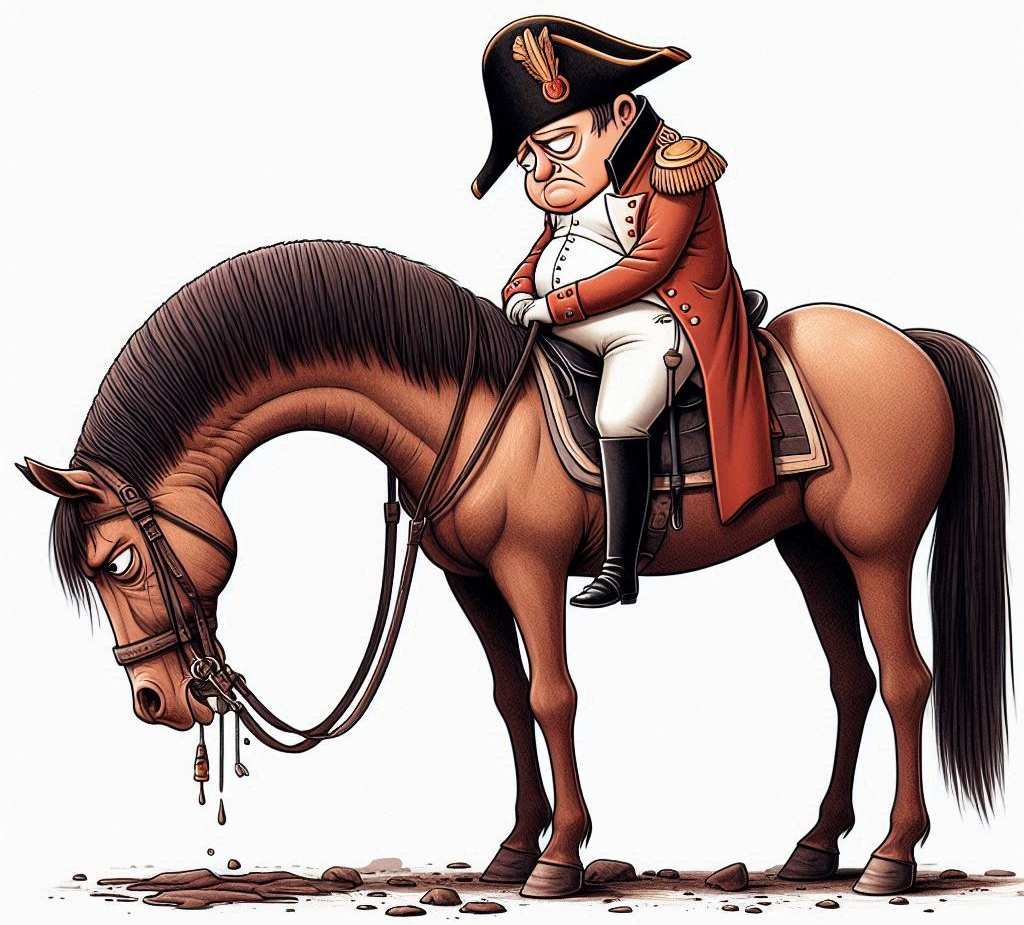
Napoleon’s costly wars led to his downfall. It’s a historical refrain
Economies fuel empires.
And it’s even more true since the Industrial Revolution.
2. Attract Top Talent…
The brain of smart and driven men fuels progress and maintains empires.
Including:
… To Build Your Technological Edge
It only took a slingshot for David to beat Goliath.
Who knows whether that story is even true.
However, the concept behind it is true.
And it’s even more true today.
Give a wimpy teenager a rifle, and he’ll beat any disarmed special op.
And it will be even truer in the future.
Give the wimpy teenager drones, and he’ll beat any platoon.
3. Foster Internal Cooperation, Banish Cheats & Clans
Pluribus Unum -“one from many”- is a traditional US motto, reflecting the importance of unity and cooperation in projecting power beyond the individual level.
An empire is nothing but a group of men cooperating to project power.
To support this view, evolutonary psychologists suggest that the secret to humans’ success is cooperation.
Henrich also provides compelling evidence that the better-cooperating groups out-compete the more fractured ones.
That’s how we superseded kin-based tribes and got to large nations and interconnected societies.
Similarly, greater empires cooperate more effectively, and at a larger scale than unsuccessful ones.
So you need to:
- Reward cooperators, and well-regulated capitalism partially does it
- Punish defectors, an important and under-appreciated aspect of fostering cooperation
Including:- Dark triads who disrupt cooperators, take, and escape taxes
- Toxic cooperators who form smaller cooperative gangs at the expense of the whole -mafia, cartels, etc.-
And:
3.2. Break Internal Clans & Promote Individualism
Clans and tribes break the empire’s unity and sap its power.
While clans are more strongly pro-social towards the in-group, they are less pro-social, trusting, and more competitive and aggressive towards the outgroup.
Plus, they divert allegiances:
⚖️ The stronger the allegiance to the smaller tribe, the weaker the allegiance to the larger empire
Clans also promote a ‘clannish psychology’, a threat to any empire -and to human progress and development in general-.
3.2.2. Punish Nepotism
Nepotism is a form of kin-based tribalism that undermines meritocracy and the functioning of advanced societies (Barkow, 1989).
3.3. Foster Individualism For ‘Impersonal Pro-Sociality’
Paradoxically for some, individualists support empires because they’re more pro-social, trusting, and cooperative with strangers.
This is a must because large empires are largely made of strangers and built with cooperation among strangers.
Individualism transcends kins to embrace a weaker but universal pro-sociality that empowers larger cooperation and progress.
It’s no coincidence the two latest empires and the West are the most individualistic countries:
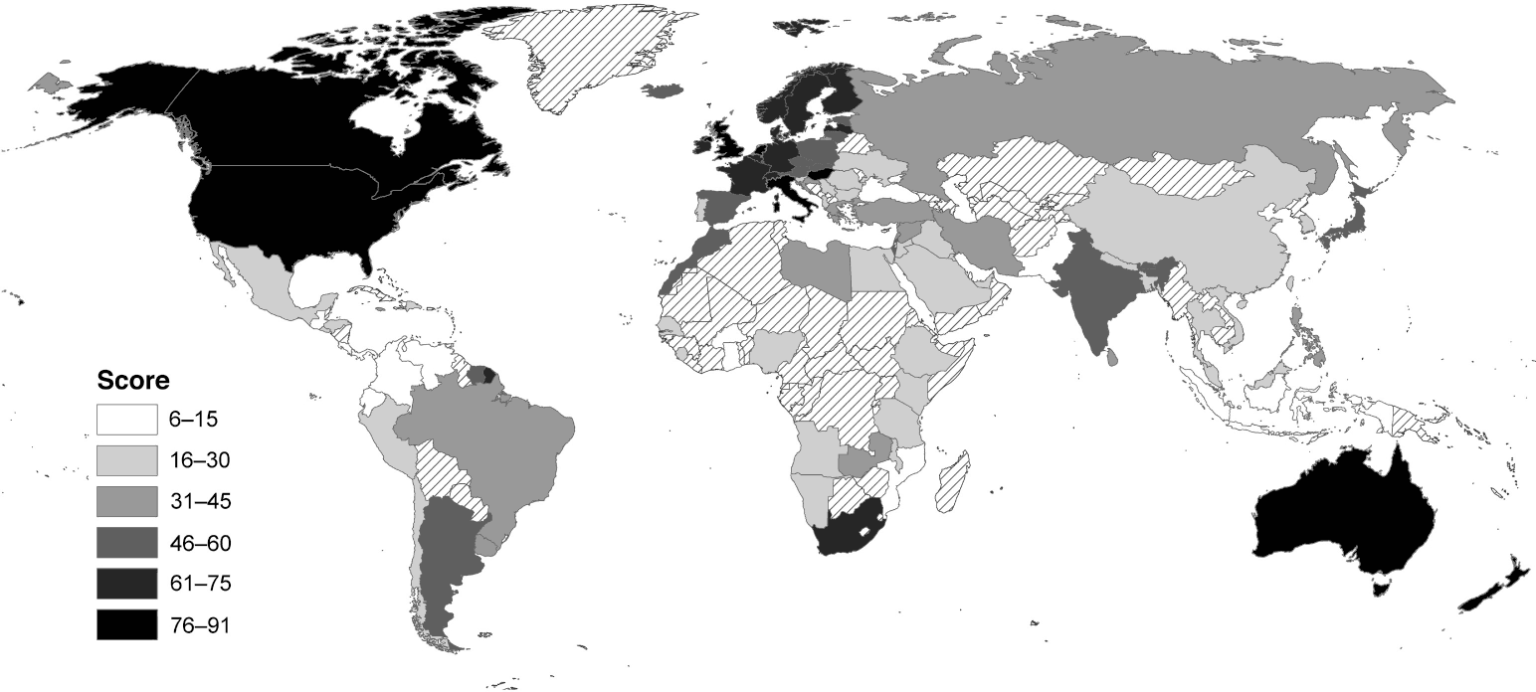
The most individualistic countries are the richest and most powerful
Individualism is also good for you, and it’s our approach to self-development:
PRO Tip: Enforce Monogamy For Social Stability
Researchers show that monogamy ‘brings with it societal rewards’ (Campbell, 2022).
Quoting from Joseph Henrich:
By suppressing male-male competition (…) monogamous marriage (…) reduce crime, violence, and zero-sum thinking while promoting broader trust, long-term investments, and steady economic accumulation.
Monogamy as part of a ‘conservative package’ with religion, honor, and country service also forms the backbone of empire-making culture.
4. Master Politics & Strategy
There are two aspects to politics:
- Good governance, internal-looking, with strong, impersonal, and meritocratic institutions
- International politics, including making allies and strategies
We’ll focus on the external part here.
4.2. Make Allies, Not Enemies
Allies extend the empire’s reach.
Plus, trade among allies enriches all participants.
And if allies empower, the opposite is also true.
Enemies dis-empower.
Also see:
🐍 … But Build-Up Weak Enemies to Galvanize The Populace
While you make powerful real-world allies, use external threats.
Intergroup competition dynamics maximize internal cooperation, solidarity, and output.
In the absence of an enemy, people may get lazy and politicians move to seek rent-seeking.
An enemy instead aligns selfish interests with the empire.
The ‘enemy’ can also be an ideal.
For example, capitalism VS communism.
🔎 Example: Militarist Germany VS Successful Empires
By Prussian tradition, Germany prided itself on military prowess.
And like proud warriors, it focused less on alliances and more on… Wars.
Germany entered both world wars as the strongest military power in Europe.
And it lost both of them.
Why?
Too many enemies, too many fronts, and poor alliances.
Instead of making high-power allies, Germany made high-power foes.
Compare Germany with successful empires:
- Rome
- England
- U.S.A.
The US is the most powerful country in the world.
And which allies did it pick?
The most powerful countries in the world:

The richest and most powerful country, allied with the richest and most powerful countries. Is it any wonder the USSR lost?
Says The Routledge Handbook of Great Power Competition:
Conventionally, smaller powers—and middle powers—can add to the capabilities available to great powers through participation in alliances which often play a key role in great power competition, as seen in the countervailing blocs during the Cold War (O’Riordan, 2023).
Russia’s allies are Belarus and ex-USSR satellites who’d love to join the West.
No wonder the US is the sole superpower.
Edit: the landscape changed slightly with China growing closer to Russia and Trump acting out, but the concept holds.
🔎 4.3. Make Your Allies Stronger (& Dependent): US Example
Empowering others is a risky endeavor.
But do it right, you multiply your power.
The US made its partners stronger and richer.
It funded reconstruction after WWII.
Richer Europe remained capitalist, friendly… And ‘conveniently divided 🐍’.
Global trade made the whole free world better.
Everyone wanted to join the US-led free and rich world.
That’s proper win-win power dealing on a world stage.
To learn more:
4.3. Pick Your Battles
Now let’s be real:
Wars are part and parcel of empiring.
Strategic war-making means:
- Pick easier-to-beat enemies. Think quick battles, not protracted wars
- Attack with coalitions. Even if you can go alone, coalitions are better PR. And you dilute their terrorist revenge instead of focusing the hornet’s nest on you
- Limit wars with other major powers. If unavoidable, ensure you have better allies, and do:
- Proxy wars, help other countries fight back
- One at a time, never open multiple fronts
- Limited scope. For example, England fought France over distant colonies, rather than near home
- Provide win-win after the invasion. Or, at least, “not so bad” conditions
Even in the harsh BC days, Rome was generous to former foes.
It granted freedom, and made them better off with trade.

Rome lifted the territories it conquered
Same for England and the Commonwealth.
5. Strengthen & Conquer With Culture
Culture has two aspects:
- Internal, to sustain the empire with:
- Hard work
- Patriotism
- Righteousness & pride for the empire
- Institutions standing above any single individual
- Meritocracy
- External, for soft power:
- Language
- Worldviews, a sort of “frame control” at global level
- Economic system
- International goodwill
Let’s review some aspects:
5.2. Foster patriotism & hard work, punish the defectors
Libertarians see states as opposition systems.
I don’t fully agree, but they’re not wholly wrong.
Internal coercion is part and parcel of empire making, which needs:
- Your money to fund politicians, redistribution, infrastructure, research, military
- Your service and, in time of war, personal sacrifice
- Your obedience or, at least, your acquiescence to the empire’s institutions
The USA even forces Americans to pay taxes no matter where they move.
And the USA’s web of allies stretches those long IRS tentacles around the world.
Empire making isn’t cheap :).
🐍 Culturally Insulate Your Populace
So they feel and remain empire citizens instead of growing into ‘world citizens’:
- Imperial system instead of metric
- Develop your unique sports
- Nascar instead of F1
- AMA Superbike instead of MotoGP
- Football instead of rugby
- Snub international sports
- Soccer/football
Result: Americans feel ‘different’ and remain tied to ‘home’.
🐍 Empire Tactics to Override Self-Interest
Individuals gain with an empire.
But they gain more focusing on themselves.
The empire may hence manipulate the population to go against their rational best self-interest.
Enter the various:
- Flags and salutes to the flag
- Public schooling for shared chosen values
- Veteran reverence -largely lip service-
- Parades
- National sports teams to make individuals ‘fuse’ their ego into the collective
- Etc. etc…
Also see:
- Business manipulation, where organizations see employees like politicians see citizens
- Politicians’ manipulations. Politicians profit the most from running powerful states
- Great leadership is great manipulation
Internal Threats
Some internal threats to empires include:
- 1️⃣ Anti-capitalists who reduce output.
Capitalism is a superpower that harnesses self-interest into empire-sustaining revenues. The most dangerous opposition weakens capitalism - Libertarians who want to do without central power
- Machiavellians who don’t buy imperial sacrifice and focus on the self
- Various extremist factions, that oppose the government
- Etc. etc.
Special Cultural Threat: Lazy Citizens Losing Their Drive

Escapism and hedonism threaten the empire’s vigor. Digital empire-building doesn’t count
A lazy population produces less.
It starts a vicious cycle.
Poorer economy, less talent coming in, less innovation, less technological advances, and less military power.
Some pundits say it’s happening to the West right now.
I’m not convinced.
But I do remember a Chinese fling years ago explaining why she worked so hard.
To “become like you guys”, she said.
5.3. External: Export Culture For Soft Power
“We’re all living in America“, sings the German band Rammstein.
They have a point.
The Routledge Handbook on Persuasion says that cultural products like movies exported American values.
The power of soft power is that it attracts.
Consumers want more from the cultural hegemon, facilitating alliances, trade, and ‘brain gain’.
6. Build A Strong Military
The military is necessary for empire-making.
But remember it’s the tip of the pyramid for a reason.
Empire-building military is the consequence of strong foundations.
From a calculative empire point of view, good entrepreneurs are worth more than good soldiers.
Especially as tech progress replaces humans.
Eventually, it will be robots fighting.
Now we’ll focus on socio-cultural elements that support the top 6:
7. Keep Liberalism & Socialism In Check
Liberals and socialists are good people, but don’t build empires.
Extreme liberalism with its egalitarian tendencies undermines the ‘achievement psychology’ of competition, hierarchies, social identities, and pride of being part of the empire.
In contrast to egalitarianism, an empire needs a high ‘social dominance orientation’, or the belief that different classes of people and countries are part of a status hierarchy.
Socialists in turn use wealth to build comfy and egalitarian societies.
Great for quality of life, but empire-making needs a sharper edge.
Socialism blunts the drive for entrepreneurship and exceptionalism, and that undermines the empire’s progress.
The truth is: an empire may need a lower struggling class. It pushes everyone hard not to be in that class.
To keep lower classes still integrated, focus on positive ideologies:
7.2. Foster ‘Protestant Ethic’ & Internal Locus of Control
All surplus-producing societies produce group-based hierarchies (Sidanius and Pratto, 1999).
Hierarchies facilitate redistribution, limit internal strifes, and increase cooperation.
However, they pose a risk.
If lower classes feel alienated they may ‘check out’, stop working and producing, or rebelling.
Everyone bears the costs, and the pie/empire shrinks for all.
Social dominance theory refers to a ‘hierarchy-enhancing ideology’, but they also serve to preserve the system healthy for all.
Here are the most powerful ones:
- Internal attribution of success to encourage individuals’s striving for success
- Individualism over groups: everyone can succeed, no matter their class or birthplace
- Discourage external attribution of failures as excuse-making, especially when related to classes or races
- Meritocracy, not just in facts, but in culture and ideology
- Protestant work ethic: the hard-working man is not only more likely to succeed, but also spiritually superior
- Self-made men’s stories, especially from lower-class individuals to increase buy-in into the system
These ideologies keep everyone engaged and producing, making the pie bigger for all.
8. Mindset: Focus On Infinity & Human Development
The real test of empire-building are endurance and global leadership.
Think Infinite
Smart empire builders think long-term.
They widen the technological gap in good times, and conserve resources in bad times.
Enlightened empire builders also think about the world, and humanity.
They think in terms of “passing the best possible baton” to the next generation.
And they focus on culture as much as military -Medici docet-.
Culture always out-lives physical borders.

Even without an empire, Renaissance city-states such as Florence ensured lasting influence with arts and culture
Also see:
Do It For Humanity: Become Prestigious
Psychology research shows two paths to influence:
- Dominance
- Prestige
Prestige boosts your soft power and make people want to follow your lead.
Get into the mindset that humanity needs strong but good leadership to carry us forward.
Greece developed democracy but failed to export it.
It was the Roman Empire that set the foundations of the West. European empires with UK leading exported Western culture and psychology globally.
And the US took up the baton from the UK to lead with growth and innovation.
Make ‘leading for all’ the ethical basis of your empire-making.
It’s more motivating for the empire’s citizens, and gives you ‘prestigious leadership’,
Finally, we need an empire for humanity.
The modern states are just bigger clans.
We need a ‘borderless empire’ for humanity to colonize the universe.
Avoid These Fools’ Traps
Common empire-busing traps:
1. Keep It Civil-ian: Don’t Let Generals Lead
Generals over-focus on the military.
And the economy suffers.
🔎 Example: Napoleon
Napoleon is hip these days.
Entrepreneurs read his biographies and popular American authors tout his strategic genius.
Me, I find it amusing.
Americans, who revere Napoleon’s genius… In the English language.
NOT in French.
Does that tell you anything?
England won the empire-making war. Not France.
I slightly rephrase a quote from a good historian who gets it:
It’s the glorification of dramatic failure at the expense of endurig empire dominance.
Albeit a great general, Napoleon was a failure at empire-making.
England had no equivalent charismatic leader.
But their stronger economy, institutions, strategies, and allies won the war.
And exiled Napoleon like a parent grounds the naughty kid.

Napoleon won battles to lose the war
Lesson learned: build strong institutions and never rely on individual charismatic men.
For every enlightened Caesar, there are a thousand disastrous generals.
Similarly:
2. Strong Military, Without Militarism
Men can easily fall for the allure of military might.
Parades of tanks and missiles make men feel strong and proud.
It’s an easy ego boost.
But militarism diverts attention and resources away from the foundations.
Remember: militarism is the toxic extreme of a healthy, strong military.
Historical Examples
- Assyrians. You never heard them? Now you know why they’re losers :)
- Sparta. Only beat Athens with a bigger ally -not “300-style military prowess”.
Democratic and cultured Athenians still dwarfed them in world impact, empire size, and duration - Nazi Germany. Their war ethos was their downfall -their vaunted Aryan superiority apparently didn’t extend to smart brains-.
The same can be said of all fascist regimes.

Despots and militarists pound their chests. But their weak countries and economies are always outgunned by rich democracies
3. Wars: Only On A “Strictly Necessary” Basis
Carrying a gun tempts you into using a gun.
Similarly, strong militaries -and defense contractors- tempt you to use them.
This is true today, as it was millennia ago.
Example: Hannibal – Focus On Effectiveness & Lasting Victory
Hannibal’s feats are impressive.
But he represents ultimate failure.
While his life goal was to destroy Rome, he precipitated the exact opposite.
He died suicide, a fugitive, escaping the Romans.
Roman general Scipio Africanus won the war.
Famous Hannibal war-mongered all his life and destroyed an empire.
Little known Scipio built one.
Ignore the glitz, focus on ultimate victory, and pick your heroes wisely.
4. Prevent Charismatic Dark Triads From Gaining Power
Dark triad leaders portray an image of power.
They are great at attracting a large flock of sheep.
But economies suffer with them.
They focus on themselves –and their kin & cronies-.
They cling to power and attack opposition and democracy.
Meritocracy suffers, and top talents choose freer countries.
Finally, the big military is too tempting for the egomaniac dark triad.
Sychophant generals assure the despot of a swift victory.
At the best, their wars sap the empire’s resources.
At worst, their dreams of empire-making destroy the empire -and become yet another history’s dark page-.

“Il Duce” knew how to work a crowd. (Dominance and confidence, and sheep follow). He dreamed of rebuilding the Roman Empire. If he focused on economy and alliances…
Remember: for every enlightened Lee Kuan Yew, there are a thousand disastrous despots.
This is our mission
We’re keenly aware of the danger posed by high-power dark triads here.
So much so, that we made it our mission.
We help good men advance, so we all gain.
Are you a good man who needs to empower himself?
Then it’s your responsibility to empower yourself.
Stick with us.
And build your little -or big- empire.


