
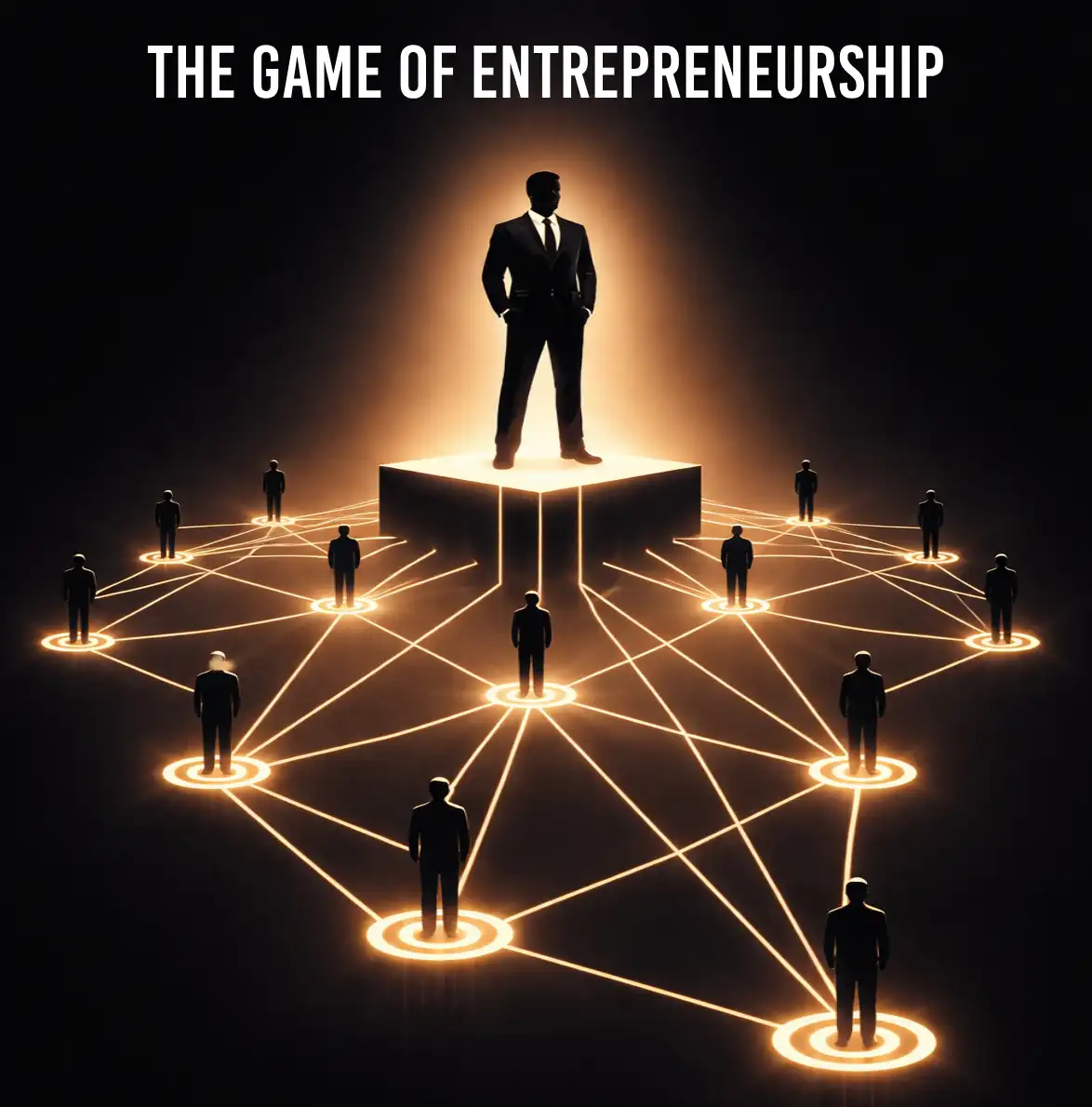
Entrepreneurship is an economic, relational, and production system for gaining power, disproportionate value capture, and affecting change at scale.
From a self-empowerment perspective, entrepreneurship offers the largest leverage and control over resources, decision-making, and time. And insulates you from the vulnerabilities of being at someone else’s mercy, a replaceable node in someone else’s hierarchy.
This guide breaks down the power dynamics of entrepreneurship while providing ambitious men with tools and strategies for leverage and durable influence.

The Power-Exchange Model of Entrepreneurship™
The Power Exchange Model of Entrepreneurship™ states that to get high value from high-value individuals within voluntary exchanges, entrepreneurs must give back high value (extrinsic or intrinsic), exert personal influence (leadership, charisma), or strategically manipulate the exchange.
Value pertains to classical social exchange model (Blau, 1964), to which we add personal influence, and strategic persuasion/manipulation.
This model applies to all entrepreneurial relationships, from investors to business partners, to the general public and employees.
Core Problem: ‘Value-Control Tradeoff Model™’
The value–control tradeoff™ states that the more value a person holds—ie., competence, capital, network, etc.—the more value they can provide, but the less controllable and more demanding they become. Entrepreneurs win by increasing their ability to exchange or extract performance from high-value, low-control individuals.
Lower value individuals tend to be less power aware and have fewer options, making them easier to control, but with lower added value.
Conversely, competent individuals add more value but are less manipulable, increasing entrepreneurs’ costs.
Since not all forms of value are the same, entrepreneurs perform best when saving extrinsic resources, meaning that the topmost entrepreneurs may self-select to be high-IQ Machiavellians, hypercharismatic believers, or high-quality men that others genuinely look up to.
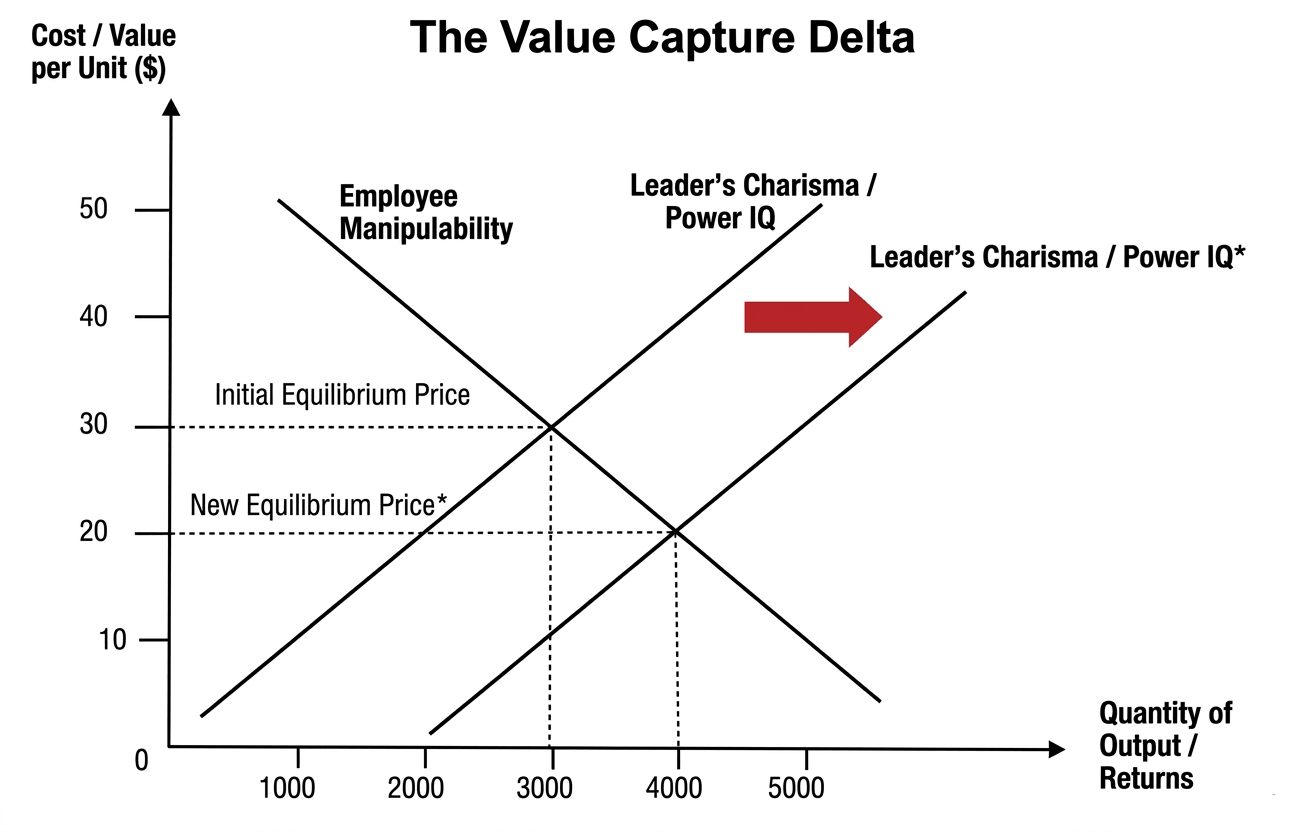
Entrepreneurs’ competence allows for greater value extraction, boosting margins and business success
Let’s explore their secrets to ensure you’re more of the latter.
Solution 1: Entrepreneur’s Personal Power
Personal power, which some refer to as ‘charisma‘, ‘character’, or ‘leadership’, is a person’s social value to others. And the more valuable the entrepreneur becomes, the more he can cooperate with high-value others.
In leadership, Maxwell called this the ‘law of the lid’, with the entrepreneur’s level of leadership being the ‘lid’ to his effectiveness. Higher value entrepreneurs , can attract, retain, and influence top performers.
TPM Note: It’s one of the most win-win and honorable approaches
While personal power can be abused, when it includes character and prestige, it tends to be win-win, lower risk, and stable. This is soft power per excellence, and the entrepreneur’s equivalent of high mate value in dating.
1.2. Mindsets
Mental empowerment is a foundation of personal power, and key mindsets include:
| Non-entrepreneur | Entrepreneur |
|---|---|
| Threat-focus, seeks safety and moves away (avoidance-oriented) | Opportunity-focus, seizes and moves towards (approach-oriented) |
| Consumer: Wants to buy | Producer: Wants to create and sell |
| Seeks entertainment | Seeks knowledge & skills: Uses media to extract mental models and promote |
| Passive: Waits for permission | Hyper-agency and action-taking |
| Follower: Comfortable in existing hierarchies. | Leader/disruptor: Driven to command |
| Naive nice guy: believes in the ‘fairness of the system’ and that giving is always rewarded | Power aware: sees power dynamics and trusts power above ‘fairness’ |
Producer Mindset
Consumers look at a new cool gadget, want it, and ask ‘how much does it cost’. Producers ask how it can help them create and sell better.
Entertainment vs. Education (Information Intake)
Consumers used media as escapism from their lives. Producers use it for informational acquisition, or customer acquisition.
High agency
Sense of control, the belief in one’s ability to effect change.
Strategic Thinking
Strategic thinking helps across the full spectrum of entrepreneurship, from prioritizing opportunity, to social strategy.
Good entrepreneurs are also effectively calculative. As high-value men, they must protect themselves against the many takers who seek their time, employment, or companionship.
Time = Most Precious Resource
Entrepreneurs constantly assess what’s the highest ROI on their time, and constantly protect it against takers and time-wasters.
Employees sell time for money, while entrepreneurs leverage other people’s time.
Risk-taking
Employees seek stability, while entrepreneurs take bets.
Seeking Permission vs. Hyper-Agency
- The employee waits for approval, turning to those with the title, certifications, or degrees to be told what to do.
Entrepreneurs have a bias for results and fast action.
Realism & Pragmatism
Realism is a necessary tool for anyone who seeks to enact change in the world.
Ray Dalio is a good example. Dalio enjoyed philosophical discussions, but he made ‘hyperrealism’ a key principle at work.
1.3 Power Awareness
| Non-entrepreneur | Entrepreneur |
|---|---|
| Naive nice guy: misses power moves & status negotiations | Power aware: sees power dynamics |
| Trusts fairness and ‘karma’; ‘give and you will get’ | Trusts power above ‘fairness’ |
Effective entrepreneurs are power aware.
Rao’s interesting ‘Gervais Principle‘ posits that entrepreneurs capture the lion’s share of employees’ added value because they’re power aware, and employees are clueless.
Power awareness and skills are crucial through the ‘entrepreneurship value chain’ (networking, VC pitching, partner selection, selling, hiring and retaining, etc.).
Some key articles on power-awareness:
- Power intelligence
- Social investment model, and how it relates to interpersonal power dynamics
- Naive self-help, covering what’s missing in most entrepreneurship resources
1.4. Social Power
Positive dominance and a minimum of masculinity are important to gain respect, especially with other men.
This is the power component of our power and warmth framework, without which a man may pass too much for a ‘nice guy’, but fail to gain the respect he needs to lead.
Read more:
1.5. Character
With a reputation for competence, fairness, and honor.
This is the equivalent of prestige-based social status.
Read more:
Solution 2: Power Asymmetry (Greater Power-Greater Value Capture™)
This principle states that the greater the Power Gap between entrepreneurs and employees, the more value the entrepreneur can, and often does, capture
Can often turn into does because most living organisms seek maximum returns. It’s a law of nature, and returns maximization can turn coercive with absolute power.
However, the greater value capture must not necessarily be win-lose.
In free markets, value capture often remains win-win, and both are better off. Plus, entrepreneurs could re-invest the larger share into the business, and grow it for everyone.
But alas, it’s best to never have to hope in someone’s magnanimity.
Extreme power gaps can push value capturing to extremes that some may consider unethical. This is why government regulations setting a floor on value capture can be effective.
One example from the book ‘Shoe Dog‘:
| High power = small capture | Low power = extreme capture |
|---|---|
| Phil Knight took pride in treating sponsored athletes well, and made many wealthy | Many considered Nike’s sweatshop working conditions appalling |
Thus, entrepreneurs may use several strategies to keep others lower power, including:
- Geo-arbitrage, outsouring to poorer countries
- Automations
- Scripts and manuals to systematize and diffuse best M.O.
Solution 3: Strategic Exchange (& Manipulation)
Rational players are incentivized to give the least and take the most, without breaking the active cooperation.
However, note that in free exchanges ,even strategic and calculative exchanges often remain win-win.
For example, giving what’s less valuable to you but more valuable to someone else is not underhanded, but smart.
However, there can be an element of manipulation.
Social Exchange Manipulation
One may inflate one’s giving, while deflating others’ giving (‘social exchange scalping’).
Often, entrepreneurs’ ‘gives’ are framed as out love, towards ‘members of the tribe’, without mentioning the self-serving motive.
Some examples from the resources we studied:
| Strategic Give | Strategic Take |
|---|---|
| Sam Walton called employees ‘associates’ and started a revenue-sharing scheme, aligning incentives and long-term cooperation | Long-term employees gained, but had to commit their working lives to Walton while still on minimum wage |
| Howard Schulz called baristas ‘partners’ and provided revenue share. | Baristas were blocked from joining unions and were first to be fired during downturns |
Strategic exchanges are give-and-take with plenty of grey area framings
Cynics focus on the right side, and naives only see the left side. Smart cooperator look at the bottom line: if both stay in the exchange, it’s fair to conclude it’s win-win
Solution 4: Influence (& Manipulation)
Good entrepreneurs tap into intrinsic motivation to inspire others, boost their sense of belonging, and move them from a natural self-focus, to team players.
This is the true essence of leadership, maximizing output and minimizing costs, while also boosting morale.
For an overview on these topics see:
Manipulative Dynamics
The line between good persuasion and manipulation is often blurred, but given people’s incentive to maximize returns, it is crossed more often than people wish to admit.
For example, genuine pro-social missions tend to attract believers who work hard for less. But they may also be used as covers to maximize value capture.
Some examples of superficially persuasive but potentially manipulative attempts:
| Manipulation | Effect |
|---|---|
| Share the ‘tough journey’ of entrepreneurship | Discourage entrepreneurship. More employees = more bargaining power |
| ‘Change the world’ missions framed as prosocial | Attract believers who work harder and ask less |
| Teamwork as a value, which is ‘good’ and prosocial | Shames calculativeness, pursuing individual credit, and strong salary negotiation |
Manipulative attempts don’t need to be mean-spirited or calculated. Often, they work best when they’re subconscious.
Indeed, sociobiologist Trivers theorized that self-duping is the highest form of manipulation.
Read more in:
Corporate manipulation, a list of common business-to-employee manipulation
The Bigger the Sacrifice, the Bigger the Manipulation
A principle of manipulation dynamics is that manipulation festers in the areas of diverging interests, and that the more obviously interests diverge, the greater the manipulation must be.
See more in:
- Great leadership is great manipulation: Ultimate sacrifices call for ultimate manipulation
Manipulation… Or Team’s & Mission Win? Perspectives Matter
If one believes the ultimate goal is good, or the good of the company supersedes that of the individual (‘collectivist psychology’), then he would see entrepreneurs’ manipulation as positive persuasion.
Solution 5: Execution
This is the only part that entrepreneurship resources focus on, largely ignoring all preceding aspects.
Across the resources we’ve analyzed, the following are recurring key concepts:
- Define a problem, instead of starting from ‘great idea’
- Build the offer: Alex Hormozi proposes that value = dream outcome x odds of success / time delay x sacrifice. Make your offer good & proven, and fast & simple
- Define the avatar, your ideal customer, and pitch to him (see example below)
- Systematize and automate: Sources like Gerbner’s The E-Myth Revisited suggest switching from working in the business and working on the business to scale and gain independence
- Hire slow and fire fast, hire based on experience or you’ll be offering free training paid by you. Consider the ‘No asshole rule‘, or they’ll drive away any other competent person
- Scale: dominate one single channel, market, and product first, and only later expand (example: Amazon first dominated books, then everything else).
Worked Example: Power University’s Avatar
Max is 32.
He is intelligent, disciplined, and ambitious.
But he feels he could operate at a higher level—strategically, socially, and professionally—but he lacks a unifying framework.
His main constraints are blind spots in power, strategies, and attraction.
Max could read on his own all TPM’s articles and figure it out. But Power University or coaching saves him time, and gives him invaluable extra insights not publicly available.
Learning Entrepreneurship: Literature Overview
Most entrepreneurship literature focuses on execution and mindset, while largely ignoring power dynamics, incentives, and value extraction.
- The Millionaire Fastlane & Unscripted The ‘anti rat-race manifesto’ <—🙋🏼♂️ Lucio’s note: a favorite
- ✅ Pros: Power-aware, takedown of ‘compound interest myth’ and ‘paradox of practice’
- ❌ Cons: Dismissive of employment, which can be by choice or strategy
- Zero to One. Monopoly = maximum power asymmetry → maximum value capture. But focused on VC and lacks how-to
- The Lean Startup: A classic that introduced the ‘Build-Measure-Learn’ feedback loop and ‘Minimum Viable Product’ approach
- $100M Offers
- ✅ Pros: A hyper-practical, tactical manual
- ❌ Cons: The ‘price high’ is a generalization that won’t apply to everyone
- The E-Myth Revisited
- ✅ Pros: The main reference to transition from self-employed labor to systems engineering.
- ❌ Cons: Simple concept, ‘how to’ is simplistic
- Rich Dad Poor Dad: Entry-level with foundational mindset shifts, but too simplistic for our audience
- Biographies
- ✅ Pros: First-hand experience
- ❌ Cons: Inherently biased. Reputation management, self-promotion, and potentially marketing
- Principles
- ✅ Pros: Organizational engineering.
- ❌ Cons: For big and stable businesses only. Potentially impression management (see our ‘Machiavellian principles‘ take)
- Start With Why: Deep-sounding, but speculation based on survivorship bias. Apple’s success may also come down to Jobs’ personality, as per our model
Courses & Limitations of Practicality
Most courses I’ve analyzed were too basic or too generic to significantly move the needle for TPM. Common issues:
- Motivation over practicality
- Passion over marketability, but nobody buys your passion if it doesn’t add value
- Naivete, skipping the power dynamics (predatory partners, manipulative negotiations, and manipulation)
- Marketers without experience: Most courses’ sellers are marketers; their only business is selling those courses
Dark Triad Traits & Entrepreneurship
Here’s to the crazy ones. The misfits. The rebels. The troublemakers
Apple’s ad
While many popular texts highlight positive entrepreneurs, the truth is that there are also ‘darker’ traits associated with it.
And a 2021 meta-analysis shows that all 3 dark triad traits are associated with entrepreneurial intentions.
Dark triads may be driven towards a shortcut to status and power, and moving away from positions of low power.
While Apple’s quote is inspirational, one may ‘rebel’ against starting at the bottom. And a ‘misfit’ may not fit because of high antagonism, or lack of inhibitory controls.
Calculativeness
More selfish and calculative individuals are more likely to resent and reject an entrepreneur’s greater value capture. They’d rather do the greater capturing than be at its receiving end.
Selfishness & Motivation
The research literature on narcissism suggests that narcissists are less motivated in positions of followership, and more concerned about their interests when they’re project resources rather than project managers (Benson, Jordan, & Christie, 2016).
Entrepreneurship, with its high returns and visibility, may be their only path to thrive.
Grandiosity

Grandiosity, a trait associated with narcissism and factor 1 psychopathy, may be one source of the (over)-optimism required for entrepreneurial risks.
Several entrepreneurial slogans of ‘changing the world’, ‘disrupting’ and ‘denting the universe’ may suggest grandiose thinking.
For example, Diamandis’ rules in Bold read:
- If you think it is impossible, then it is for you.
- Start at the top, then work your way up.
- The best way to predict the future is to create it yourself!
Learn more here:
- Antifragile grandiosity: getting the grandiose boost, without the downsides
Spectacular Cases
Among the entrepreneurs that some suggested may have dark triad traits:
- Sam Bankman-Fried
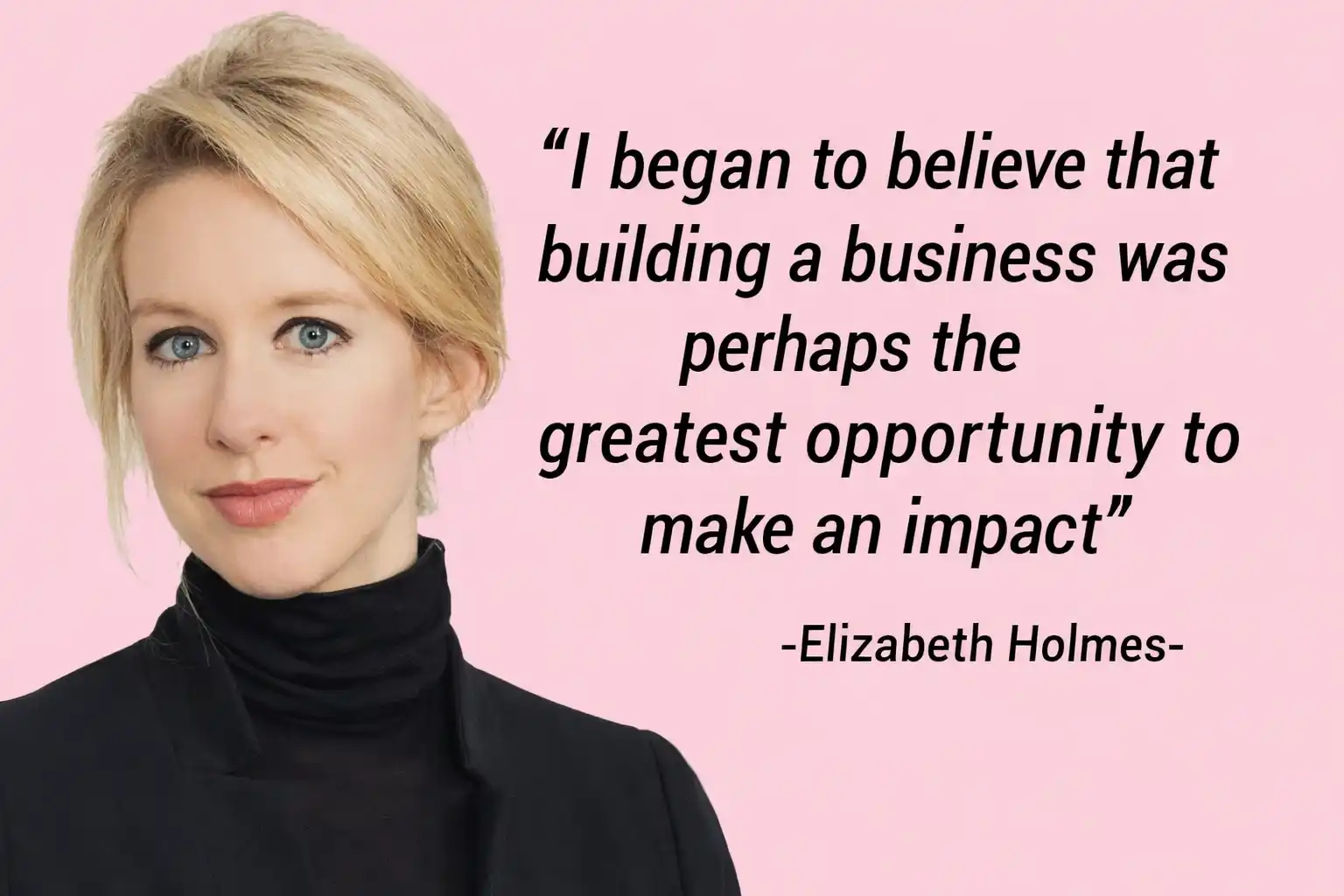
- Elizabeth Holmes
- Bernard Madoff, mentioned in The Handbook of Psychopathy as a possible example of ‘successful psychopaths’ (until he got caught).
Elizabeth Holmes created and leveraged her status and fame to recruit an A-list board of directors and secure billions from top VC firms. She also allegedly, and likely, lowered her voice, a cue of authority and social power.
The Entrepreneurial Tetrad Hypothesis™
The Entrepreneurial Tetrad Hypothesis™ proposes that four personality dimensions—grandiose narcissism, Machiavellianism, Factor 1 psychopathy (boldness), and autistic traits—may be disproportionately associated with entrepreneurship for the advantages provided in ambition, will to power, strategic thinking, risk tolerance, and systemization.
Looking at the history of entrepreneurship, especially including modern successes, it seems that, besides the dark triad, autism may also provide some advantages.
Autism may have become more relevant with the rise of technology, science, and the digital age.
And although it may be a potential limiter in pure social power and leadership skills, it may provide the drive to tireless work in scientific and technical domains that may bore more neurotypical men.
| Trait | Entrepreneurial advantage |
|---|---|
| Grandiose narcissism | Ambition, status drive, belief in one’s exceptional destiny |
| Machiavellianism | Strategic thinking, political skill, goal-focus |
| Factor 1 psychopathy | Fearlessness, stress resistance, willingness to take risks |
| Autism | Systemization, obsessive focus, deep specialization |
Looking at some examples:
- Jobs → narcissism + psychopathic boldness
- Zuckerberg → autistic traits + Machiavellian strategic thinking
- Musk → autistic traits + grandiosity
- Holmes → grandiosity + factor 1
Different Solution: Solopreneurship
Solopreneurship may skip this game, appealing to more freedom-loving, independent, and potentially less extroverted men (a ‘sigma type’ in popular talk).
Resources for solopreneurs include The 4-Hour Workweek, Sivers’ Anything You Want, and The $100 Startup.
There are two types of solopreneurs:
| Missionary/artist | High Power |
|---|---|
| Loves his job | Doesn’t love or even dislikes his job |
| Stays on his mission and systematizes the rest (admin, support, etc.) | Systematizes everything to stop working |
But they share in common:
- Sovereignity over ‘scaling’: Personal autonomy and mobility over scaling to maintain full control over one’s time and mobility
- Independence over status, living outside of status hierarchies
TPM’s Contribution to Entrepreneurs
Most entrepreneurship advice focuses on tools.
But entrepreneurship is not only about ideas or execution, but also swaying exchanges, incentives, and power asymmetries in your favor.
Entrepreneurs are net value-givers. They move society forward, and we’re happy to help them.
Our alumni entrepreneurs found Power University helped them expand their influence and achieve their goals:


