Body language is one of the most powerful tools for projecting power, status, and confidence.
It shapes how others perceive you before you say a word.
At The Power Moves, we teach men advanced social dynamics to achieve goals and win at life.
This article gives you the foundations to master body language.

Contents
What Is Body Language
Body language is a form of nonverbal communication in which physical cues, rather than words, convey meaning.
Body language skills are foundational to a successful social life because they allow you to sub-communicate value and confidence without saying a single word.
Improving your body language will significantly improve your social life, career, and dating.
We can divide body language skills into two main categories:
- Reading from others (decoding). It supports social intelligence and provides the ‘intel’ to strategize and achieve goals
- Communicating to others (encoding) is more active, linked to agency, and supports power, and goal achievement.
They’re two sides of the same coin, both supporting one another.
Channels of Nonverbal Communication
Nonverbal communication happens through channels like gestures, eye contact, and posture.
Channels, sometimes called domains or modalities, refer to how the message is sent.
The APA Handbook lists eight channels, and we add artifacts and chronemics for completeness:
- Kinesics 🙋🏼♂️ – Body movements, gestures, posture, and expressions (part of body language)
- Oculesics 👁️ – Communication through eye contact and gaze (part of body language)
- Proxemics 🧑🤝🧑 – Physical space and distance (part of body language)
- Haptics 🫂 – Physical touch (part of body language)
- Appearance 🤵🏼 – Physical characteristics and attire
- Paralanguage 🗣️ – Aspects of speech like tone, pitch, volume, and rate
- Chronemics ⌚ – Use of time, especially punctuality
- Artifacts 💍🎩 – Objects or items like jewelry and accessories
- Olfactics 👃🏼 – Scent, odors, and smells
- Environment 🏛️ – Physical setting influences like lighting or décor
📖 Body language is a category of nonverbal communication
Body language, an often misused term, includes several sub-channels and is only one element of nonverbal communication. We use ‘body language’ here as it’s generally referred to in everyday language.
Dimensions of Body Language
The dimensions, sometimes called ‘domains’, refer to what the message conveys, regardless of what channel it came through.

These are the four most important body language dimensions for men
The literature tends to recognize four core dimensions of body language:
- Dominance–Submission (AKA Agency or Power)
- Affection–Hostility (AKA Affiliation/Communion or Warmth/Coldness)
- Calmness–Nervousness (AKA Relaxation/Stress or Composure/Tension)
- Engagement-Withdrawal (AKA Immediacy/Nonimmediacy)
🙋🏼♂️ Lucio’s note:
As per infographic above, I consider openness/closeness as important as the top 3 for men, and more important than engagement/withdrawal.
For an overview:
| Dimension | What It Measures | Examples |
|---|---|---|
| Dominance vs. Submission | Power, status, control vs. yielding, deference | Dominant: expansive, upright, raised chin, hands on hips Submissive: slouching, bowed head, closed |
| Affection vs. Hostility | Liking, warmth vs. disliking, coldness, negativity | Affectionate: smiling, leaning in, nodding Hostile: glaring, frowning, eye rolls |
| Calmness vs. Nervousness | Ease and composure vs. stress or discomfort | Relaxed: smooth moves, reclining, steady gaze Nervous: fidgeting, clenched jaw, hesitations |
| Engagement vs. Withdrawal | Closeness, interest, participation vs. detachment, distance | Engaged: Open posture, leaning in, direct gaze, facing Distant: Closed off, leaning back, turning away |
Let’s dig deeper:
1. Dominance vs. Submission
This dimension relates to power and status.
Dominant cues signal power and control, while submissive cues signal yielding and defeat.
It’s one of the most important body language domains for men because it’s foundational to respect, status, and attraction.
But it’s also relevant for personal safety because predators pick victims with submissive body language (Gunns et al., 2002; Wheeler et al., 2009). Strong body language makes you a harder target.
| Trait | Dominant | Submissive |
|---|---|---|
| Posture | Upright, chest out, shoulders back; head level or chin up | Slouched or rounded; chin tucked down; constricted (e.g. legs together) |
| Gaze / Eye Contact | Steady, direct gaze; holds eye contact | Avoids eye contact or glances downward |
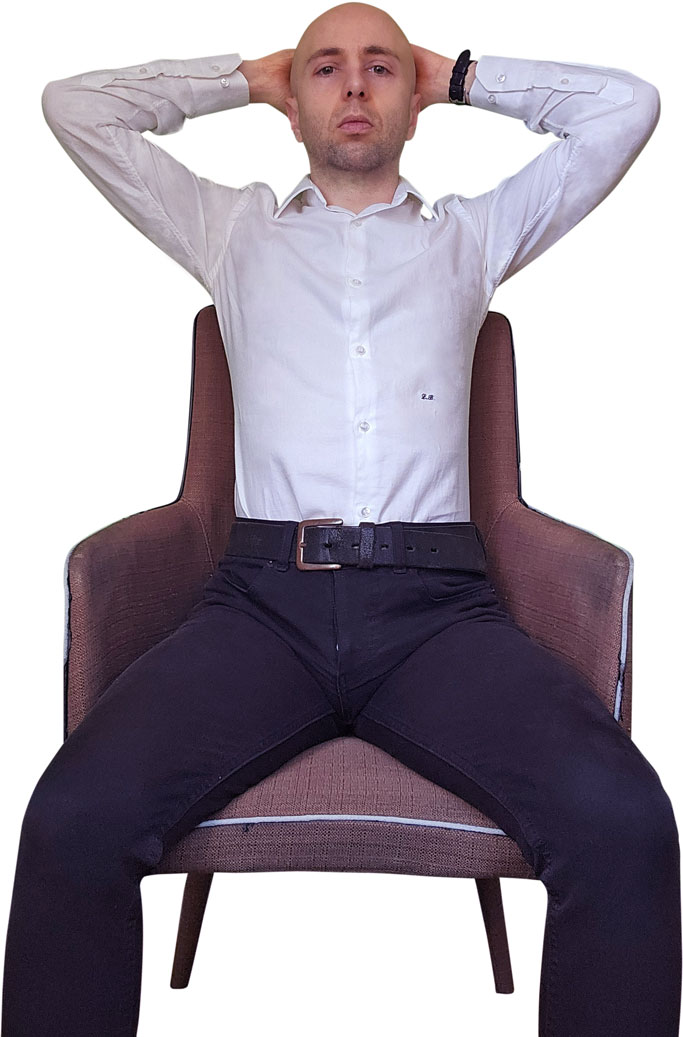
| Use of Space | Spreads out—arms on armrests, feet apart; center of a group | Keeps limbs close; gravitates to edges; yields way |
| Voice & Tone | Louder, steady, moderate-to-slow pace | Softer, higher pitch; faster or uneven pace; hesitations |
| Proxemics | Moves into others’ space when appropriate; initiates touch | Maintains distance; rarely initiates touch |
A good principle is:
⚖️ Display dominance that’s appropriately calibrated to the given context and to your goals


Two important sub-dimensions of dominance are:
- Positive dominance: associated with prestigious status and adding value
- Taking up space, without overdoing it
- Open body language
- Genuine pride
- Domineering: associated with a value-taking approach to socialization, and more extreme cues
- Encroaching on personal spaces
- Staring down to intimidate or looking away to sub-communicate superiority
- Barging through or walking away with little consideration
🙂👉🏼 PRO Tip: smile with closed lips, and when you feel like
Drawing parallels with apes, van Hooff differentiates two uses of smiles: laughs for fun, and friendly smiles to appease. In humans, high-power men decide when to smile (Hecht and LaFrance, 1998)
Dominance and Open Body Language
Dominance is associated with open body language, but it’s contextual, and a domineering approach may also adopt closed body language.

Closed body language can be high in dominance. Cues are contextual
2. Affection vs. Hostility
This dimension signals warmth, liking, or closeness versus distance or negativity.
| Trait | Affectionate | Hostile |
|---|---|---|
| Posture | Leaning in and facing torward; relaxed openness | Rigid; body pulled back or turned away; Full frontal for aggression |
| Gestures | Gentle, flowing gestures; open palms; mirroring; nods to signal rapport | Pointing; clenched fists; head shakes; glaring, eye-roll, or looking away |
| Proximity | Moves closer, respecting comfort zone; | Keeps or increases distance; closes distance for aggression |
| Touch | Light, reassuring touches (hand on arm, shoulder); consensual and warm | Pushes away; abrupt or no touch; may use touch to intimidate |
Principle:
⚖️ Display an appropriate level of warmth, and remain warm with those who reciprocate


👉🏼 Takeaway: be dominant and warm.
High dominance and high affection are equivalent to our power and warmth approach, or what we’d refer to as ‘positively dominant’
3. Relaxation vs. Nervousness
This dimension reflects ease under pressure vs. stress or discomfort.
Research indicates relaxation influences observer trust, and nervousness is a possible sign of deception (but don’t jump to conclusions: it’s not a reliable cue!).
| Trait | Relaxed | Nervous |
|---|---|---|
| Posture | Upright but loose; open chest; shoulders down; | Hunched or stiff; shoulders raised; rigid spine; muscle tension |
| Gestures | Smooth, fluid movements; purposeful hand motions; natural nods | Fidgeting, leg bouncing, tapping (displacement signals); self-soothing; rapid nods |
| Facial Expression | Soft, neutral smile; relaxed jaw and forehead; steady eye contact | Tight jaw; furrowed brow; forced smile; rapid blinking; darting eyes |
| Voice & Tone | Even, moderate pace; consistent volume; clear articulation | Shaky voice; uneven pace; variable volume; hesitant speech |
Principle:
⚖️ Be relaxed most of the time, in most safe situations
But be alert when safety and results are important.


4. Engagement vs. Withdrawal
Principle:
⚖️ Be appropriately engaged, without forcing or faking interest
| Trait | Engaged | Withdrawn |
|---|---|---|
| Posture / Orientation | Torso and feet toward speaker; leaning in; moves closer | Torso and feet turned away; leaning back; stays away |
| Facial Expression | Responsive expressions (nods, smiles, raised eyebrows); sustained eye contact | Blank or neutral face; limited smiling; looks away |
| Vocal Tone / Prosody | Warm, varied pitch; responsive intonation; backchanneling (“mm‑hmm,” “yes”) | Monotone or flat tone; few back‑channeling |
| Touch | Light, validating, appropriate touches (e.g., tap on arm) | Not initiating touch |
5. Additional Dimensions
We can add several sub-dimensions and expressive/non-expressive and open/closed body are the most significant:
- Open–Closed: It relates to dominance and relaxedness, two dimensions it’s sometimes confused with
- Openness signals receptiveness and confidence with arms uncrossed, chest open, palms visible
Studies associate it with higher dominance, attractiveness, and persuasiveness - Closed signals defensiveness or discomfort with arms folded, hunching, hiding the palms
Studies suggest it’s less persuasive
- Openness signals receptiveness and confidence with arms uncrossed, chest open, palms visible
- ⚖️ Principle: Adopt appropriately open body language


- Expressiveness vs. Reserved: Animated facial expressions, and dynamic voice on one hand, and deadpan faces and flat tonalities on the other
- Too Expressive: Emotional, needy, anxious, and generally low-power
- Unexpressive: Rigid, uninterested, psychopathic, or ‘socially off’
- ⚖️ Principle: Be appropriately expressive, without overdoing it
🔎 Example: Think of Joe Rogan. Masculine and socially dominant, but very expressive
6. Bonus: Masculine Body Language
While not an official dimension and while individuals vary, consistent gendered patterns have been observed.
The differences are partly biological and partly socialized.
And the socialized part is even more important for status, respect, and attraction.
Avoid overly feminine body language because men pay a price for adopting behavior deemed as ‘feminine’.
For a general overview:
| Aspect | MASCULINE | FEMININE |
|---|---|---|
| Posture | Broader stance (feet shoulder-width, chest out). | More constricted stance, especially with legs. Feet closer together. |
| Gestures | Fewer, but larger and more expansive. | More frequent, smaller gestures |
| Facial Expressions | Less expressive, suppressing more emotions, fewer smiles | More expressive, smile more often (even when listening) |
| Touch | Less casual touch, but may use it for dominance; purposeful handshake | Lighter, friendly touches; ‘resting hand handshake’, no ‘pumps’ and little tension |
| Proximity | Larger personal space (especially with strangers) | Willing to stand or sit closer to during conversation, reflecting affiliative behavior |
These are general trends, not rules. Exceptions and nuances apply.
For example, in professional settings, women tend to adopt more male-typical scripts, especially in high-power roles and male-dominated industries.
Some general tips to project masculine poise:
- ✅ Stand with feet shoulder-width apart
- ✅ Sit and stand for comfort: think ‘comfortable, without being a caricature’ for a good balance
- ✅ Cross legs in figure-four
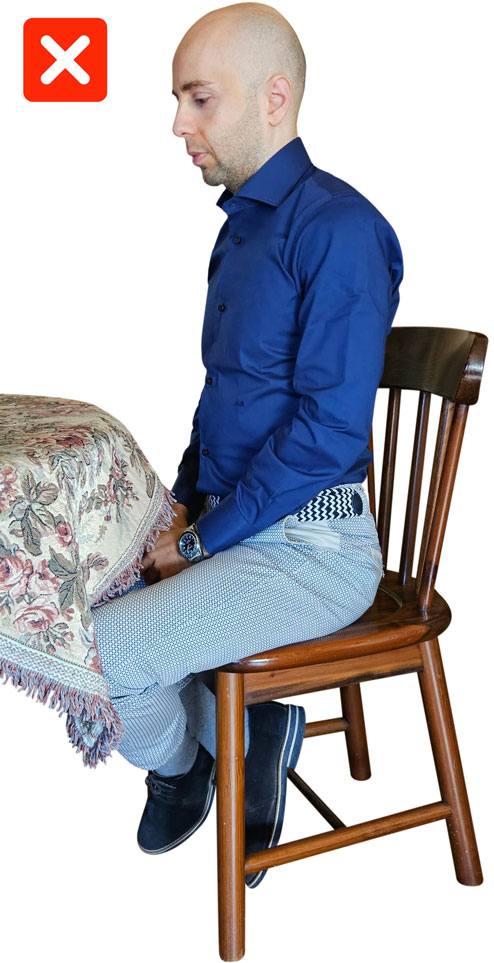
- ❌ Avoid leg-over-leg
- ❌ Avoid excessive smiling


Remember that it’s all about calibration.
Calibration reads the room’s power dynamics, allowing you to dominate or connect as necessary, without looking weak.
Finally, advanced players are fluid.
For example, leaning towards femininity puts nervous women at ease during first approach. And moments of strategic vulnerability can help bonding.
Learn more:
Improving Body Language Skills
Here are some practical tips to improve your body language skills:
Improve Your Decoding
- Look at ALL signals (holistic approach): Avoid the common pitfall of body language tunnel vision. Consider character, reputation, incentives, context
- 👉🏼 Use context to predict future behavior
🔎 Example: Domineering body language in a group signals status ambition with an ‘as*hole approach‘. Expect some power moves from them
- 👉🏼 Use context to predict future behavior
- Establish a baseline based on typical behavior. Deviations from this baseline are more telling
- Look at clusters and patterns that point to the same conclusion
👉🏼 Discordant cues may signal a conscious effort to project a certain image. Or the intention to deceive - Consider alternative explanations. Gestures mean different things in different contexts. Crossed arms may simply one is cold
- Disheveled looks may suggest low ambition… Or total freedom of someone who’s already made it
- Sculpted muscles may suggest ambition, but also narcissism or body dysmorphia.
- Watch Face, Torso, Feet: Notice fake smiles, a sign of low confidence and low-power
👉🏼 Lead the interaction with nervous people, talk more, look away. Be chill and they will relax
👉🏼If feet and torso point away, end it and move first before they end it themselves
Finally, beware of ‘body language experts’.
A meta-analysis showed that people overestimate the significance of individual cues. ‘Experts’ tend to over-analyze and over-emphasize cues, sometimes missing the holistic picture:
Lucio: This body language expert got it all wrong.
Looking for individual cues, she missed the overall dynamics of high attraction
Finally, remember to look at social dynamics, not just individual body language.
For example, a good strategist sits beside his boss, rather than in front:

Sitting besides sub-communicates ‘in-group cooperation’, while sitting in front predisposes for a more competitive dynamic
Also see:
Improve Your Body Language: The ABC
Improving your body language is a process of replacing negative habits with positive ones.
- Increase self-awareness: Pay attention to your body language in different situations. E.g.: How do you stand when nervous vs. comfortable?
- Mindfulness: Be present in your interactions, notice how your body language
- Maintain Good Posture: Look at yourself in the mirror, note your areas for improvement, and address them with correcting exercises
- Prefer open postures: Keep your hands visible, your shoulders relaxed, and your chest open
- Relax: Keep your facial muscles and body relaxed. Pay attention to shoulders and jaw
- Control Nervous Habits: Remove ‘displacement signals’ like self-touching, tapping fingers, playing with your hair, or rubbing hands
- Hold Eye Contact. If you’re a beginner, think about ’60-70% of the conversation’, breaking away to the side, during pauses, or while nodding
- Command Your Space: Aim for a ‘positively dominant’ balance. Sit and recline comfortably, without becoming a caricature
- Manage Your Voice: Vocal tone, pitch, and pace are crucial nonverbal cues. Speak clearly, at a moderate pace, and with a confident tone.
⛏️ How to speak with power
Check this:
How to Master Body Language
Many resources recommend men to ‘take more space’, ‘say less than necessary‘, or ‘move slowly’.
While these generalizations are well-meaning and valid for many, they’re also vague and mostly aimed at beginners.
Instead, maximum effectiveness requires that you calibrate your body language to the context and to your goals.

Great body language is calibrated to context and goals—usually between the two extremes of weak and try-hard
Contextual Calibration
For example:
- Spread out more than your date, but less than your boss
- Lean in towards your boss explaining something, less to your employee reporting
- Hold your beer to the side in a nightclub, not a champagne at a gala
The more advanced you become, the more calibrated you become.
Body Language Golden Balance

The ‘golden balance’ for body language almost always strikes a balance between extremes.
Where that balance falls depends on context and goals.
But to give you an idea:
⚖️ Men maximize body language on the more dominant, more relaxed, more open, and less expressive side of the spectrum.
As per the ‘high-power and high warmth‘ model, go slightly more affiliative as well.
FAQ
Body language is often misunderstood, so let’s clarify common myths and misconceptions:
Is body language like an actual language?
Body language is not a true language in the linguistic sense — it has no formal grammar or fixed structure. It’s more fluid, context-dependent, and influenced by culture.
Still, body language plays a major role in communication, and there are many foundational universal patterns that people recognize and respond to.
What is the 7 38 55 rule?
The 7-38-55 rule refers to Albert Mehrabian’s research that 93% of communication is nonverbal and only 7% is verbal.
This idea comes from Albert Mehrabian’s research, but it is widely misunderstood and misapplied. The findings were based on highly specific lab conditions, with single words or short phrases combined with mismatched facial expressions or vocal tones—and only when communicating feelings or attitudes (Mehrabian & Ferris, 1967; Mehrabian & Wiener, 1967).
It is not a universal communication rule, but rather a simplified pop-psychology trope.
What are the 7 types of body language?
The 7 types of body language are facial expressions, body movement, posture, gestures, eye contact, touch, and proxemics.
However, there is no definitive list, and the ‘types’ to include depend on the level of chosen granularity.
Is body language actual science?
Body language is a legitimate area of study within nonverbal communication and psychology, and there is substantial research linking physical expressions to emotions, intentions, and social dynamics.
That said, some popular teachings on body language drift into pseudoscience, exaggerating or fabricating claims that lack any solid empirical support.
Learn More
Want to own body language and master social dynamics?
Power University provides the full blueprint—pics, vids, drills—to make you unstoppable.