

The 48 Laws of Power (1998) by Robert Greene is a provocative self-help classic that delves into power dynamics, Machiavellian strategies, and manipulation.
Contents
Quick Summary
The 48 Laws of Power shares one overarching theme: power belongs to people who understand human psychology, manage perception, and navigate hierarchies with power intelligence, agentic goal pursuit, and amoral strategy.
Greene shows that success in competitive environments does not go to the most moral, hardworking, or talented. It goes to those who apply key laws like these:
Key Laws
- Don’t make your superiors feel threatened to avoid jealousy and defensive retaliation
- Conceal your intentions in competitive settings; it’s better to mislead the competition
- Don’t embolden your enemies: win decisively, never wound
- Make others come to you to maintain leverage and frame yourself as the higher value ‘prize’
- Calibrate to the situation, never take the laws as commandments (‘assume formlessness’)
Summary of the Laws
This infographic shares all the laws at once:

Law 1: Never Outshine the Master
Make your superiors feel superior.
Outshining your boss or mentor risks resentment, and they may undermine you to protect their power.
Use flattery, give them credit, and ‘power protect‘ to make them feel good.
- ✅ Flatter subtly and let superiors take the spotlight.
- ✅ Show talents in ways that benefit them.
“Making others feel powerful makes you indispensable.”
For a summary of all 48 laws:
Law 2: Never Put Too Much Trust in Friends, Learn to Use Enemies
Friends turn frenemies and betray out of envy, while enemies, with more to prove, can be loyal allies.
- ✅ Work with competent enemies over familiar friends.
- ✅ Create enemies strategically to sharpen your edge.
“Friendship is emotional; power thrives on pragmatism.”
Law 3: Conceal Your Intentions
Keep them guessing.
Hide your plans to avoid interference. Use misdirection to mask your true goals.
- ✅ Employ red herrings to distract others.
- ✅ Stay unpredictable to maintain control.
“Secrets are the currency of power.”
Law 4: Always Say Less Than Necessary

The Social ROI quadrant™: powerful men get highest return, with less effort
Speaking less creates mystery and reduces the risk of revealing weaknesses.
- ✅ Be a deliberate speaker to command respect.
- ✅ Use silence to let others reveal their intentions.
“Powerful people don’t waste words.”
TPM Note:
This is contextual, and the opposite is true in many contexts. See video here.
Law 5: So Much Depends on Reputation—Guard It With Your Life
Your reputation precedes you.
A strong reputation is your greatest asset, boosting influence. Neutralize threats and undermine rivals subtly.
- ✅ Build a reputation for excellence.
- ✅ Counter attacks on your credibility swiftly.
Law 6: Court Attention at All Costs
“Obscurity is the enemy of power.”
Invisibility is death in the power game. Stand out through boldness or mystery.
- ✅ Craft a memorable persona.
- ✅ Use spectacle to stay relevant.
Law 7: Get Others to Do the Work for You, But Always Take the Credit
Let others handle the work while you claim the glory.
- ✅ Delegate strategically to save energy.
- ✅ Position yourself as the mastermind.
TPM Note:
This can backfire long-term because top performers will leave your team. Effective long-term leadership requires a more balanced approach, including acknowledging contributions to attract and keep motivated talent.
Law 8: Make Other People Come to You—Use Bait if Necessary
Lure others into your domain to gain the upper hand.
- ✅ Set traps or opportunities to draw people in.
- ✅ Project calm authority to disorient others.
“Power flows to those who control the game board.”
Law 9: Win Through Your Actions, Never Through Argument
Show, don’t tell.
Actions prove power more than words. Avoid debates; let results speak.
- ✅ Demonstrate through outcomes, not arguments.
- ✅ Let effectiveness silence doubters.
“Action builds credibility.”
Law 10: Infection: Avoid the Unhappy and the Unlucky
Negativity is contagious.
Steer clear of those who drain energy or bring misfortune.
- ✅ Surround yourself with optimistic, successful people.
- ✅ Distance yourself from chaos.
TPM Note:
Helping those seeking improvement can be rewarding, but avoid chronic complainers. See this reel.
Law 11: Learn to Keep People Dependent on You
Make others rely on your skills or resources to secure their loyalty.
- ✅ Be indispensable by controlling key assets.
- ❌ Avoid empowering others to outgrow you.
“Dependence ensures loyalty.”
TPM Note:
Seeking dependence signals neediness, and it often creates toxic, co-dependent dynamics that limit freedom (Beatty, 1986).
Law 12: Use Selective Honesty and Generosity to Disarm Your Victim
Strategic honesty or generosity lowers defenses, creating opportunities for influence.
- ✅ Use selective truth to build credibility.
- ✅ Give calculated gifts to create indebtedness.
“When others trust you, they miss your traps.”
TPM Note:
Sophisticated scams, like Madoff’s, do the opposite. They rely on consistent honesty to conceal the underlying, major deception.

Law 13: When Asking for Help, Appeal to People’s Self-Interest
Self-interest rules the world.
Frame requests to align with others’ desires, not their mercy.
- ✅ Show how helping you benefits them.
- ✅ Make it feel like their idea.
TPM Note:
Intrinsic motivations often provide more influence than extrinsic ‘what’s in it for me’; see criticism here.
Law 14: Pose as a Friend, Work as a Spy
Knowledge is power.
Appear friendly while gathering information to exploit weaknesses.
- ✅ Use harmless conversations to uncover secrets.
- ✅ Leverage intelligence strategically.
Law 15: Crush Your Enemy Totally
Leave no threats behind.
A defeated enemy can recover. Eliminate their ability to retaliate.
- ✅ Destroy their influence completely.
- ✅ Ensure unchallenged dominance.
“Half-measures invite revenge.”
Law 16: Use Absence to Increase Strength and Honor
Scarcity creates value.
Strategic withdrawal makes your presence more desired.
- ❌ Avoid overexposure to maintain respect.
- ✅ Return when your absence is felt.
TPM Note:
Absence doesn’t create value, it can only boost it after value has been created, often, with presence first.
Law 17: Keep Others in Suspended Terror—Cultivate Unpredictability
Controlled chaos intimidates.
Unpredictability keeps others off balance and fearful.
- ❌ Avoid predictable patterns.
- ✅ Use surprise to maintain control.
TPM Note:
This high-risk strategy, it alienates potential allies and encourages plots against you. Despots frequently meet an early demise (de Mesquita, 2003)
Law 18: Do Not Build a Fortress—Isolation is Dangerous
Connection is strength.
Isolation cuts you off from allies and information and makes you an easy target.
- ✅ Stay engaged with your network.
- ✅ Build alliances for power.
Law 19: Know Who You’re Dealing With—Do Not Offend the Wrong Person
Understand others’ temperaments to avoid costly conflicts.
- ✅ Study people before acting.
- ❌ Avoid provoking those with nothing to lose.
Law 20: Do Not Commit to Anyone
Independence is leverage.
Stay neutral to maintain flexibility and power.
- ❌ Avoid predictable alliances.
- ✅ Be courted by all sides.
Law 21: Play a Sucker to Catch a Sucker—Seem Dumber Than Your Mark
Feigned weakness disarms.
Pretending to be less competent lulls others into revealing their plans.
- ✅ Appear harmless to flatter egos.
- ✅ Exploit their overconfidence.
“Let their arrogance be their downfall.”
Law 22: Use the Surrender Tactic—Transform Weakness into Power
Yield to gain.
Strategic surrender buys time and confuses enemies.
- ✅ Use temporary retreat to plan counterattacks.
- ✅ Leverage patience for victory.
“Timing turns weakness into strength.”
Law 23: Concentrate Your Forces
Focus is power.
Channel energy into your strongest opportunities.
- ❌ Avoid spreading resources thin.
- ✅ Prioritize intense effort.
“Concentration overcomes obstacles.”
Law 24: Play the Perfect Courtier
Charm influences subtly.
Master court politics with adaptability and grace.
- ✅ Use charm to influence superiors.
- ✅ Advance goals discreetly.
Law 25: Re-Create Yourself
Define your identity.
Craft a persona that commands respect and attention.
- ✅ Build a powerful image.
- ❌ Avoid being defined by others.
“Self-reinvention maintains power through changing contexts.”
Law 26: Keep Your Hands Clean
Reputation is your shield.
Stay above reproach by using proxies for controversial actions.
- ✅ Use scapegoats to avoid blame.
- ✅ Protect your image zealously.
Law 27: Play on People’s Need to Believe
Tap into desires for purpose to build a following.
- ✅ Use simple, emotional messaging.
- ✅ Create an us-versus-them dynamic.
“People crave a cause to follow.”
Law 28: Enter Action with Boldness
Hesitation breeds doubt. Act decisively to intimidate and inspire.
- ✅ Move with confidence.
- ❌ Avoid timidity at all costs.
“Boldness is the lifeblood of power.”
Law 29: Plan All the Way to the End
Foresight is control.
- ✅ Plan for all contingencies.
- ✅ Control events through vision.
“Power demands preparation.”
Law 30: Make Your Accomplishments Seem Effortless
Ease inspires awe.
Hide the effort behind your successes to look more powerful (law of social effort).
- ✅ Present work with grace.
- ❌ Avoid revealing toil.
TPM Note:
In modern contexts, showcasing dedication can also inspire respect.
Law 31: Control the Options—Get Others to Play Your Game
Frame the choices.
Manipulate options so all paths lead to your goal.
- ✅ Offer controlled choices.
- ✅ Ensure outcomes favor you.
“Control the game, control the power.”
⛏️ Read more on frame control techniques.
Law 32: Play to People’s Fantasies
Dreams bind followers.
Offer idealized visions over harsh truths to gain loyalty.
- ✅ Tap into desires and dreams.
- ❌ Avoid blunt realities.
Law 33: Discover Each Man’s Thumbscrew
Weaknesses are leverage.
Find others’ vulnerabilities for control.
- ✅ Study insecurities carefully.
- ✅ Use weaknesses to gain influence.
“Know their flaws, own their actions.”
Law 34: Be Royal in Your Own Fashion—Act Like a King
Confidence commands respect.
Carry yourself with pride to be treated as powerful.
- ✅ Set high standards for yourself.
- ✅ Demand respect through demeanor.
“Act the part, and others believe it.”
TPM Note:
Once powerful or famous, this law often inverts. See for example Steve Jobs’ career: formal as a junior employee, then casual to signal agentic focus.

Powerless Jobs (left) and powerful Jobs (right)
Law 35: Master the Art of Timing
Timing is everything.
Know when to act and when to wait for maximum impact.
- ✅ Be patient but ready to seize moments.
- ❌ Avoid rushing or delaying.
Law 36: Disdain Things You Cannot Have
Dismiss what you can’t have to reduce its hold over you.
- ✅ Ignore insults or unattainable goals.
- ✅ Show detachment to maintain control.
“Indifference is the ultimate revenge.”
Law 37: Create Compelling Spectacles
Use dramatic displays to amplify your power.
- ✅ Employ symbolism and rituals.
- ✅ Make your presence larger than life.
“People believe what they see.”
Law 38: Think as You Like, But Behave Like Others
Blend in outwardly while keeping your true thoughts private.
- ❌ Avoid standing out too soon.
- ✅ Strike when the moment is right.
“Blend in, then dominate.”
TPM Note:
Strategic nonconformity can signal independence and status.

One cue of going against the crowd captures attention and signals a sense of superiority
Law 39: Stir Up Waters to Catch Fish
Chaos creates opportunity.
Disrupt rivals’ composure to gain the upper hand.
- ✅ Provoke emotional reactions.
- ✅ Exploit disarray for control.
Law 40: Despise the Free Lunch
Independence is power.
Avoid obligations by paying your own way.
- ✅ Reject gifts with hidden costs.
- ✅ Maintain self-reliance.
“Free gifts come with strings.”
Law 41: Avoid Stepping Into a Great Man’s Shoes
Forge your own path.
Create your legacy instead of imitating others.
- ✅ Build a unique identity.
- ❌ Avoid living in shadows.
“Innovation trumps replication.”
Law 42: Strike the Shepherd and the Sheep Will Scatter
Target the source.
Neutralize leaders to dismantle their followers.
- ✅ Focus on the source of influence.
- ✅ Weaken opposition through strategic strikes.
“Take out the head, the body follows.”
Law 43: Work on the Hearts and Minds of Others
Charm over force.
Win loyalty through emotional appeal, not coercion.
- ✅ Use empathy to build alliances.
- ❌ Avoid force to prevent resistance.
Law 44: Disarm and Infuriate with the Mirror Effect
Reflect others’ actions to confuse or unsettle them.
- ✅ Use imitation to unsettle rivals.
- ✅ Reveal weaknesses through reflection.
Law 45: Preach Change, But Reform Slowly
Revolutionary zeal sparks backlash.
Introduce reforms gradually to avoid resistance.
- ✅ Respect traditions while innovating.
- ❌ Avoid radical overhauls.
Law 46: Never Appear Too Perfect
Minor flaws make you relatable and reduce envy.
- ✅ Show small vulnerabilities.
- ✅ Disarm jealousy with humility.
“Perfection isolates; imperfection connects.”
Law 47: Do Not Go Past the Mark—Know When to Stop
Stop at the height of success to avoid overreaching.
- ✅ Exercise restraint in victory.
- ❌ Avoid greed or overconfidence.
“Overreaching leads to downfall.”
Law 48: Assume Formlessness
Calibration is ultimate power.
Be flexible and unpredictable, like water, to stay powerful.
- ❌ Avoid rigidity in strategy.
- ✅ Embrace fluidity to outmaneuver.
“Formlessness is the ultimate strategy.”
Quotes
On resentment, jealousy, and frenemies:
When you display your talents, you naturally stir all kinds of resentment, envy, and other manifestations of insecurity… you cannot spend your life worrying about the petty feelings of others
On leading with confidence:
If you are unsure of a course of action, do not attempt it.
Your doubts and hesitations will infect your execution. Timidity is dangerous: Better to enter with boldness
On work and friendship:
Keep your friends for friendship, but work with the skilled and competent
On the dangers of victory:
There is nothing more intoxicating than victory, and nothing more dangerous
On wasting time on other people’s business:
Never waste valuable time, or mental peace of mind, on the affairs of others—that is too high a price to pay
👉🏼 For more, see ‘best quotes on power‘.
Criticism & Limitations
⚠️ Applying these laws without calibration backfires
The 48 Laws is a valid entry point for the ‘darker side’ of human nature and socialization, yet it’s not a how-to guide for life success, and can be misleading for beginners.
These dark psychology maxims are not laws but generalizations that, without intelligent calibration, may harm more than they help — leading to loss of power, leverage, and relationships instead of gains.
| PROS | CONS |
|---|---|
| Valid maxims and effective in certain contexts | Lacks true power principles and lacks required calibration |
| Dark realism | Over-cynicism: cooperation & quality relationships matter |
| Tactical examples and case studies | Lacks frameworks and strategies to provide deeper guidance |
| Wake-up call for naive and too-nice guys | Doesn’t build skills to deliver results and lacks how-tos |
| Captivating storytelling | Unscientific |
Unscientific and Anecdotal
The laws rely on historical anecdotes, not empirical data. Several of these laws are contradicted by scientific research.
Power Principles & Calibration Are Missing (Maxims, Not ‘Laws’)
While Greene lists good and bad examples, the book prioritizes catchy generalizations over effective calibration.
For example, ‘say less than necessary’ fails during group formation, where talkativeness affords leadership (MacLaren et al., 2020).
The maxims also don’t map to general principles but are either too specific or too abstract.
Examples of principle-derived ‘laws’ would be:
- ⚖️ Calibrate your dominance level to your target’s dominance, for optimum balance between disempowering or overpowering others (from the ‘Net Effect Principle™ of interpersonal power dynamics)
- ⚖️ Never give too much without getting back, or you self-frame as lower value (from the Compensatory Investment Principle™ of Social Investment Theory)
Over-Cynicism is Ineffective
A healthy dose of cynicism is helpful, but over-cynicism is ineffective because it can lead to cooperation breakdown.
No Skills & ‘How Tos’ = Little Results
While it can provide an important wake-up call and kickstart power awareness, it doesn’t install necessary ‘modules’ like calibration, calculativeness, or strategic thinking.
Even valid laws, like ‘assume formlessness’, offer philosophical flair but not actionable advice.
Examples of ‘how tos’ woud be:
- How to handle a manipulator
- How to prepare for betrayal with self-defense strategies
- What to do when someone makes you wait, a common power move
Frameworks Are Missing: It Lacks Foundational Guidance
The book provides many tactics, but it’s not a guide because it lacks unified frameworks for acquiring power.
Key frameworks would be:
- Smart cooperation: get the benefits of win-win, minimizing risks
- Power and warmth as a baseline approach to socialization to get the best from both dominance and agreeableness
- Foundational strategies of social success as guiding principles for strategic decision-making
Mentally Low Power in Some ‘Laws’: Not For Top-1%
Beginners may fail to see that several laws can put them in a low power mental frame.
See the different mindsets:
| Law | Low-Power Signal | High Power Mindset |
|---|---|---|
| Never Outshine the Master | The master determines your destiny | I can leapfrog the boss or become an entrepreneur |
| Never Appear Too Perfect | It’s important others like you | I don’t need others to like me to win |
| Play the Perfect Courtier | Be yielding because staying in the court is crucial | I want to be my own king |
| Avoid Stepping into a Great Man’s Shoes | You’ll look bad by comparison | I can be greater than my predecessor |
Some others are covertly low power. For example, ‘keeping others dependent on you’ in relationships matters most to men who feel lower value and are low in self-sufficiency.
This is important because high-power men are approach-oriented and don’t think defensively.
For example, studies in narcissism show that unsuccessful narcissists are threat-focused while successful ones are rewards-oriented.
Read more:
See a deeper analysis of some laws here:
Dive deeper here:
- 48 Laws of Power Criticism, a deeper critical review of The 48 Laws of Power
- 🙋🏼♂️📽️ How I broke the 48 laws and won ↗: a video example of breaking the ‘laws’ and winning
About the Author: Robert Greene
Robert Greene, trained in classical studies, is a bestselling author of books on power and manipulation dynamics.
Greene works primarily as a historical curator of power stories, and not as a behavioral researcher. The historical angle has its merits, yet the lack of empirical grounding can be a limitation.
Some of Greene’s laws draw on The Art of Worldly Wisdom, which may reduce their originality for readers familiar with Gracián’s work.
| ✅ Strengths (Pros) | ❌ Limitations (Cons) |
|---|---|
| Power aware | Limited real-life experience in seduction and power |
| Well-read | Unscientific: history & non-empirical psychoanalysis |
| Intelligent author | Lacks frameworks to go from insightful tactics to achieving goals |
Lucio’s Take: Can a Geek Teach You Power?
Lucio:
It’s an uncomfortable question we must ask.
Before this book, there is little evidence that Robert Greene had much experience or succes with power or seduction, and his work has little empirical evidence.
However, his power awareness helps make up for those limitations.
Paradox of Practice: The Laws Didn’t Work for the Author?
Much of the author’s success appears to have come from writing about the laws rather than successfully applying them.
Mj DeMarco calls this ‘paradox of practice’. If the author himself couldn’t successfully use the laws, can you really trust the ‘laws’ practical efficacy?
Learn more:
- Robert Greene: how authoritative is he?
- 📽️ Analyzing Greene’s Modern Change: Morality vs Real-World Power (video)
48 Laws FAQs
What are The 48 Laws of Power?
The 48 Laws of Power is a list of strategic maxims authored by Robert Greene in 1998. The “laws” are derived from historical anecdotes involving figures like Machiavelli, Sun Tzu, and P.T. Barnum. While presented as immutable rules for success, many of the laws function as Dogmatic Maxims—simplistic shortcuts to complex social problems that require careful calibration in modern, high-stakes environments.
What is the 48 Laws of Power book about?
The 48 Laws of Power is a book on “amoral” social strategy. The book is about the mechanics of gaining, observing, and defending in competitive hierarchies. Unlike traditional self-help, it focuses on Dark Psychology and offensive maneuvers. However, the book’s primary value is as an “eye-opener” to social predation; for actual mastery, the anecdotal “laws” must be upgraded to Evidence-Based Principles and Calibrated Nuance.
What is the most important law in The 48 Laws of Power?
Law 48 (Assume Formlessness) is the most important because it warns the reader that all the previous laws are contextual and require strategic sophistication to be applied successfully.
The book sold well because it’s engaging and easy to read while addressing uncomfortable truths about human nature that most self-help books long avoided.
What books are similar to The 48 Laws of Power?
Robert Greene’s The Art of Seduction and The 33 Strategies of War are similar. The Art of Worldly Wisdom is most similar, Influence is more scientific, and Power University, although not a book, includes a full module on dark triad strategies and provides a clear framework for men’s success.
Full list of books like the 48 Laws ↗
TPM Review
The book is an excellent beginner’s entry point into power awareness, but it’s far from a complete or reliable manual.
Greene curates stories brilliantly, yet many laws are generalizations that backfire without social calibration and strategic predisposition.
It’s a book we loved and highly recommend to the right audiences, but we add the caveat that it’s not an equally effective guide for real-world success, and it may set beginners off-path.
We rate it high not because it’s a perfect manual—it’s often flawed and unscientific—but because it is captivating, valuable for the right audiences, and one of the most popular primers for power awareness.
Who Should Read The 48 Laws
| For | Not For |
|---|---|
| Beginners as a first step into strategy and power dynamics | Beginners who stop here (they’ll misapply the laws) |
| Naive men as a wake up call | Cynical men who must prioritize their cooperative game |
| Too nice-guys | High-IQ Machiavellians who are already beyond this book |
| The Power Moves readers will find similarities and know how to put it in perspective | TPM critics will find The 48 Laws equally or more unappealing |
48 Laws of Power: Mastery Hub
We’ve personally analyzed every law and tested and studied their real-world application.
This Mastery Hub gathers our complete ecosystem of summaries, scientific critiques, and advanced resources for applying—and outgrowing—the 48 Laws of Power.
Quick References
Applying the Laws
Similar to the Laws
Achieving Results with the Laws
- Why the 48 Laws don’t work (and what does)
- Why the 48 Laws are wrong: a scientific and advanced power drill-down of the laws
FAQs About the laws
Beyond The Laws: Real-World Power Skills That Work
The 48 Laws of Power is an excellent primer, and several members of our community successful used it as springboard to TPM’s offering:

Like most people I started by reading Robert Greene’s books 48 laws.., 33 strategies.., etc. which albeit gave me a good mindset didn’t really help me in my day-to-day as much, and I made a lot of social mistakes trying to apply these laws such as becoming way to quiet (to say less than necessary) and trying to seek too much attention (court attention at all cost). For me, PU has been unbeatable in its practicality of power dynamics and learning how to be an overall high quality value-adding individual.
PU alumnus introduction
Check it out for yourself:
The 48 Laws of Power: Lucio's Take
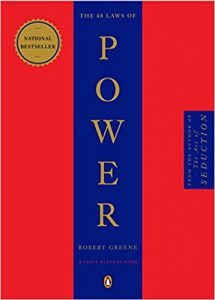
Popular book on power dynamics and the "darker side" of human nature. Greene lists 48 Machiavellian-sounding "laws" with historial anecdotes and superb prose. WARNING: it's NOT a guide. Most of these maxims have specific and limited applications and endless exceptions.
URL: https://thepowermoves.com/48-laws-of-power-summary/
Author: Robert Greene
4





The 48 Laws of Power is old school common sense, it’s an easy read, but there is not much to learn for anyone with just OK social skills.
Well, you’re not fully wrong.
People with higher EQ, people with good social skills and those who approach life with a critical mind might not find nearly as much new ground broken.
Still, some of the examples are good and you can learn at least something from those.