Power dynamics shape every interaction — from your career to your relationships.
They decide who leads, who follows, who gets respect, and who gets ignored.
Understanding them isn’t optional — it’s the difference between being effective or being outplayed.
The Power Moves pioneered power dynamics as a foundational branch of men’s self-development, advanced social skills, and life strategy.
This guide explains what power dynamics really mean, shows real-life examples, and reveals how mastering them gives you an edge in status, attraction, and success.

Contents
Power Dynamics Definition
Power dynamics is the study of power negotiations between individuals or groups
Power includes but is not limited to, influence, resources, and achieving specific goals and outcomes.
In academic terms, power is commonly defined as the capacity to influence others or control resources (Keltner et al., 2003).
However, we find that listing sources of power often gives a misleading sense of precision. Lists of power sources cannot provide a definitive list, while still adding complexity. To cut through the academic noise, we use a definition that focuses on effectiveness:
Power is the ability to do and get what you want
As such, power dynamics includes the study of:
- Strategies to reach goal
- Negotiations, including of conflicting interests
- Cooperation among individuals to reach goals
- Influence and persuasion, as well as manipulation
- The negotiation of status between individuals and within groups
- The formation and acquisition of rank within structured hierarchies
Application of Power Dynamics
Here is how power dynamics are applied to some of the major areas of human socialization.
TPM Power Dynamics Framework
The TPM Power Dynamics Framework, developed by Lucio Buffalmano, is a systematic model for understanding and intentionally navigating power in human interactions to achieve goals and life-relevant outcomes.
While power dynamics have long been studied in sociology and psychology, TPM was among the first self-development frameworks to treat power dynamics as a foundational discipline for men’s empowerment, translating abstract theory into concrete, real-world principles and strategies for achieving goals and life-relevant outcomes in dating, work, leadership, and everyday life.
The TPM Power Dynamics Framework is organized across two primary levels of analysis:
- Interpersonal Power Dynamics (TPM Model): The structural analysis of how power operates between individuals in one-to-one interactions such as dating, negotiation, conflict, competition, and leadership
- Social Power Dynamics (TPM): The analysis of power at the group level, including status, hierarchy, coalitions, reputation, and institutional influence
1. Interpersonal Power Dynamics
While social and interpersonal are often used interchangeably, they refer to very different levels of analysis.
Social power dynamics refers to social groups and social classes. Interpersonal power dynamics refers to 1:1 interactions, or one-to-many interactions seen from the individual’s perspective.
Social Skills vs. Power Dynamics
Power dynamics and social skills overlap, but we can recognize a slightly different focus:
- Social skills is getting along, as it has historically focused on the more communal aspect of socialization, like getting along, and being liked
- Power dynamics is getting ahead, it’s the more agentic aspect, focused on status, influence, dominance
| Power | Social Skills |
|---|---|
| Get ahead | Get along |
| Status | Inclusion |
| Influence | Communication |
| Independence | Interdependence |
This distinction is helpful for a first basic-level conceptualization, but it’s of course simplistic. For example, getting ahead also means getting along enough not to be ostracized.
And even getting along requires some power-intelligence (e.g., avoiding power-related pitfalls like unwittingly disempowering others).
In general, we believe that true social skills include power-awareness, and social skills without power are hollow. Especially for a man.
But everyone is well advised to pay some attention to power dynamics. To quote one of this website’s mantras from “The Prince“:
A good person is ruined among the great numbers who are not good
Also read:
- Should beginners start with power? Or with basic social skills?
- Interpersonal power dynamics: an intro
2. Leadership Power Dynamics
Power is central to leadership.
The process of becoming a leader is a process of status acquisition, status being a form of power, and sometimes of competition among leadership candidates.
The job of a leader also largely rests on the influence he exerts over his followers, influence being a form of power.
Finally, power dynamics also help differentiate between good leaders, and not-so-good ones.
Social psychologist John Turner refers to influence, authority, and coercion, which also aligns with Cheng and Tracy’s two-model approach to status. Leaders who rely solely on rank and dominance tend to disempower followers, while prestigious leaders who gain followers’ admiration tend to empower followers.
Also read:
3. Dating Power Dynamics
Men and women have both converging and diverging interests, which also vary depending on individuals and context.
The converging and diverging interests create opportunities for cooperation, but also for possible defection and cheating.
This is why it is so crucial to understand dating power dynamics.
Also read:
Or get the full overview (plus more than what’s in any single article):
4. Relationship Power Dynamics
Contrary to what some may think, power dynamics are present in all relationships, including the best relationships.
Healthy relationships start with mutual respect, accepting influence, and a willingness to negotiate win-win outcomes. These all have to do with power.
Conversely, it’s sometimes a lack of power that creates issues.
For example, a lack of personal power in the form of no assertiveness leads to poor communication, bottling up grievances, and growing resentment.
Also read:
- Phases of power in intimate relationships
- How women control relationships
- How to maintain power in LTRs
5. Workplace Power Dynamics
The study of power dynamics in workplace environments, including the strategies to gain unofficial status and win official promotions
Workplaces are a hotbed of politics and hidden power moves.
Power dynamics are hidden and sometimes Machiavellian because workplaces operate under two contrasting forces.
On one hand, there are company values, teamwork and ‘company first’ as the ultimate values to display publicly.
On the other hand, people must pursue their selfish interests to advance, and that often diverges from what’s best for the team and the company.
Also read:
- Career strategies: start here
- Mastering office politics
- Executive skills
- Women’s guide to reaching the top
Power Dynamics in The Social Sciences

There is no individual branch of social sciences called “power dynamics”.
And, as the APA Handbook suggests, it hasn’t been heavily investigated by empirical research:
Given its paramount importance, one might expect power would hold a privileged place in the field of social psychology (…) Although there are (…) isolated pockets of research (…) power has never been a hotbed of theoretical or empirical activity.
On the other hand, since power is embedded in personal relationships, one could say that any research on human interactions already includes power.
In that sense, power dynamics are embedded in the very fabric of social science research.
🙋♂️Lucio’s Take: How TPM Started Using Power Dynamics for Self-Development

Lucio:
I was an avid student of self-development, and I felt that something was missing.
Even the limited, non-naive literature on power, never provided practical guidance on achieving power-related goals.
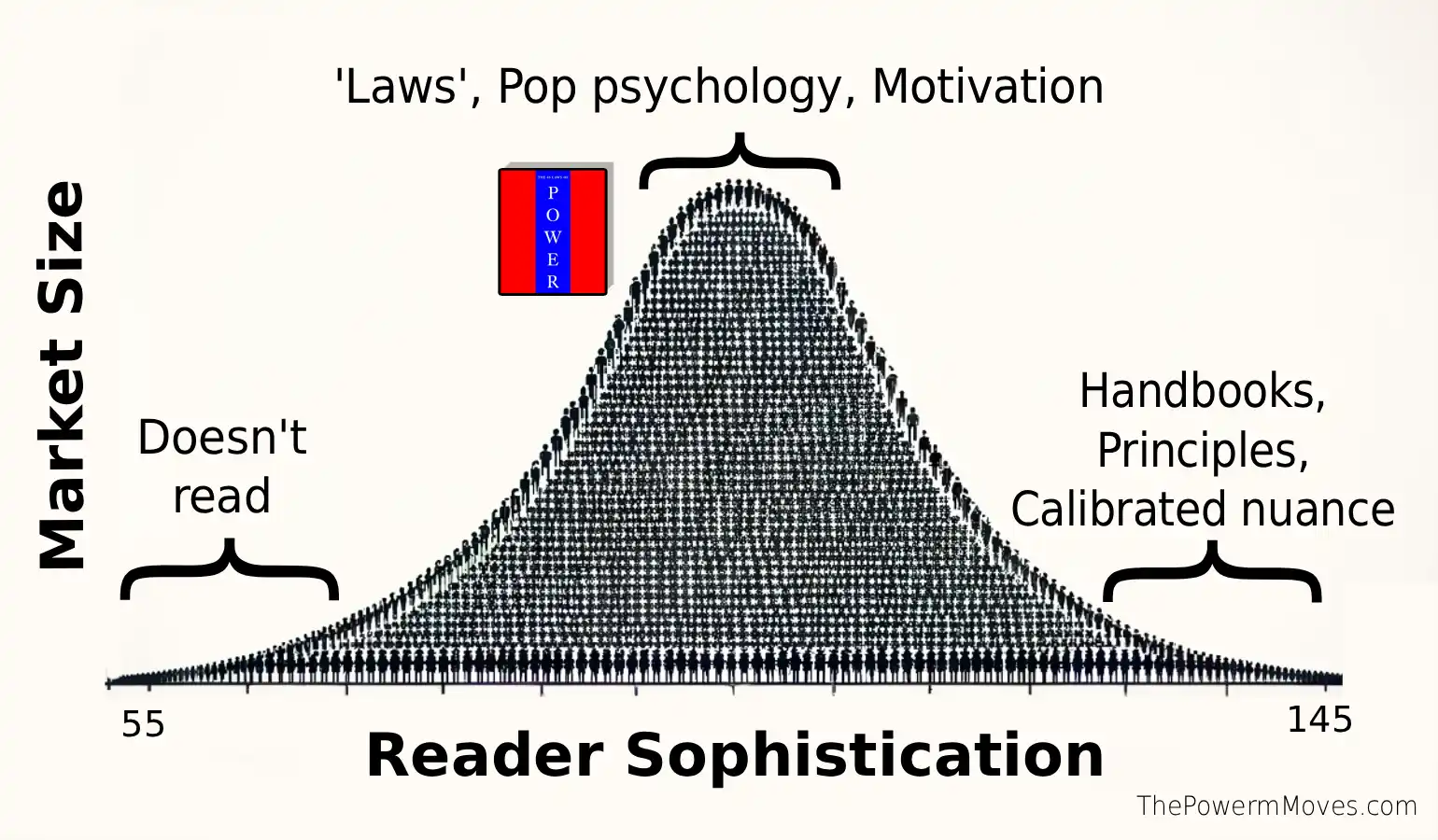
Even best-known authors (like Robert Greene) offered great principles but not a cohesive, practical framework for daily encounters — the moments where status, influence, and attraction are negotiated.
So one day, as I reflected on an ‘office power move‘ and how to best respond to it, it dawned on me: it was on me to create such a resource.
Measures of Power Dynamics
Many measures have been developed over the years to measure different aspects of power dynamics in various disciplines.
We handpick some that we believe to be most significant:
- Need for Power (nPow): Classic motive measure capturing a desire to influence, lead, control, or impact others.
- Status Motive / Need for Status: Measures how motivated someone is to seek higher social rank, respect, visibility, and prestige.
- Personal Sense of Power (SOP / POW): Measures how powerful a person feels in their relationships and daily interactions. Captures subjective interpersonal power.
- Leadership Self-Efficacy: Measures a person’s belief in their ability to lead, influence, direct, and coordinate others — a form of functional power.
- Interpersonal Power Inventory (IPI): Measures how people use power in relationships across different bases of power (reward, coercion, legitimacy, expertise, etc.).
- Dominance–Prestige Scale (Cheng & Tracy) Measures two core strategies of status: dominance (force, intimidation), and prestige (skills, respect)
- Social Dominance Orientation (SDO): Measures preference for hierarchy, inequality, and dominance of one group over another. It’s a social construct, but also significant for personality psychology
- Communion / Agency Scales: Measure focus on agency (assertion, influence, leadership) versus communion (warmth, cooperation). Agency is directly tied to power.
Why Power Is Hidden From Public Discourse
As important as power dynamics are… Why so few people (openly) talk about it?
The reason can be well explained by power dynamics itself:
1. Reputational risk
You may be branded as “power hungry” or “dark triad”.
Someone “bad”, or to be careful around.
And few people want that.
2. Strategic misguidance
If you can pass for naive, others may lower their guard, or compete less hard.
Lower competition makes life easier for the strategic player who feigns disinterest in power.
3. Virtue signaling
Public dismissal of power-relevant pursuits may display kindness and prosociality. If one virtue signals against someone else he may catch two birds with a stone: disempowering the attacker, and look better by comparison.
For example:

Him: (attacks Lucio for writing about power) <— Funny thing, the attack for writing about power is in itself a power move, with the sometimes unconscious goal of acquiring power.
4. Public scorn, private consumption
People may publicly profess disinterest in power, only to seek it privately.
Publicly, it’s a virtue signal to look better and a manipulation attempt to discourage others from learning a crucial life skill.
Then, privately, they double down to gain an edge.
Early on this website’s existence, I used to share articles on Facebook.
A connection wrote a scathing message on a post. But a few days later wrote privately that it was ‘interesting’. And a few days later asked for coaching.
Why Learning Power Dynamics
Power dynamics is a foundational skill and knowledge because life itself demands it.
The goal of life is to survive, advance, and reproduce.
And these basic functions require both cooperation, often under the constant threat of defection, and competition. Both of them are grounded in power dynamics (not just competition!).
Achieving any challenging goals also requires power and strategies.
And achieving them with an honorable approach, giving while also not being taken advantage of, may require even more power mastery (‘enlightened giver‘). Including knowing how to spot and handle bullies, takers, and various manipulation tactics.
The Positive Contribution of Power Dynamics
We believe that society gains from the empowerment we seek to provide.
There are different reasons why:
- Predators and takers intuitively understand power dynamics, so they gain comparatively less
- Good people gain more than bad people because they often lack an intuitive feel for power
- Empowered people decrease predation across the board: predators prey on easy prey. The fewer easy prey, the less abuse in this world
- Less scum and more cream to the top (more meritocracy): power-aware and bold players can sometimes advance with little competence. The more good people learn the game of power, the more competence will make the difference
- Less naive idiots follow bad leaders. Dominance complementarity theory suggests that submissive followers better fit with dominant and narcissistic leaders (Carson, 1969; Kiesler, 1983; Grijalva & Harms, 2014); and research suggests that the weaker vulnerable narcissists tend to elect populists (de Zavala, 2018)
And, now we can revisit Machiavelli’s quote:
A good man is ruined among those who are not good.
But a good man who has learned power dynamics is armed and ready.
True that.
When you don’t need power dynamics
Power dynamics become less relevant when:
- You’re OK languishing at the bottom of society
- You achieved all that you wanted to achieve
- You’re a hermit
- People in your life are absolutely, 100% good, honest, and value-giving
Beyond those extremes, you may need it less if you deal with mostly good people and are fully satisfied. But caution is necessary: life circumstances—and people—can change fast
For everyone else, in competitive environments — careers, dating, leadership, influence — power dynamics isn’t optional.
The only choice is whether you understand the game or get outplayed by those who do.
If you’re an ambitious man, Power University teaches you that game, so you can win it: