

Robert Greene is one of the most influential modern authors on power, strategy, and human nature. His books blend historical storytelling with psychological insights, offering lessons on influence, competition, and mastery.
At The Power Moves, we’ve studied Greene’s work in depth — using his ideas, challenging them where needed, and integrating them into our own power-centric approach to personal development.
This guide reviews all of Robert Greene’s books in order, explains the best order to read them, highlights their pros and cons, and shows how to apply (and adapt) his ideas in real life.

Contents
Intro: Robert Greene Books
These are Robert Greene’s books in chronological order:
- The 48 Laws of Power (1998)
- The Art of Seduction (2001)
- The 33 Strategies of War (2006)
- The 50th Law (with 50 Cent) (2009)
- Mastery (2012)
- The Laws of Human Nature (2018)
- The Daily Laws (2021)
| Book | Theme | Key Concepts |
|---|---|---|
| The 48 Laws of Power | Power dynamics, strategy, self-preservation | Conceal intentions, don’t trust friends, maintain a good reputation |
| The Art of Seduction | Influence, attraction, psychological manipulation | Seem an object of desire, mix pleasure with pain, escalate with a bold move |
| The 33 Strategies of War | Military principles, psychological warfare, social games | Pick your battles, use covert warfare, frame your war as holy and just, negotiate while advancing |
| The 50th Law | Fearlessness, realism, self-reliance | Embrace the inevitability of death to overcome fear |
| Mastery | Achieving expertise, life’s task, intuition | Find your passion, pick a great mentor, expand your knowledge in related fields to innovate |
| The Laws of Human Nature | Understanding human behavior, self-awareness | Become self-aware, learn and integrate your dark side, learn to read people’s characters |
| The Daily Laws | Daily wisdom, distillation of previous works | Practice daily to internalize good habits and thinking patterns |
And now let’s deep dive into each of Greene’s books:
1. The 48 Laws of Power (9/10)

Greene’s breakout work — a compendium of 48 “laws” distilled from history. Each law is illustrated with examples of leaders, generals, and schemers, mostly from the ancient world.
✅ Pros
- Memorable rules and historical vignettes — highly readable and quotable. It didn’t become a best-seller by chance
- Compelling page-turner, probably the most compelling and entertaining book on power and strategies
- Practical examples that make abstract power concepts concrete.
- Top intro to power dynamics and advanced social skills like interpersonal power dynamics, strategy, manipulation, etc.
❌ Cons
- Unscientific: Heavy on anecdote, light on academic rigor — some patterns are persuasive and some less so, but not scientifically validated
- Uncalibrated: Although the laws are supposedly ‘universal’, they’re not. And without calibration, they backfire
- Sneaky 🪱: Sometimes described as amoral or “Machiavellian”, some laws are just sneaky and low quality.
- Cynicism is costly, and the laws’ focus on the dark side can turn readers into overly cynical men.
- Lowers life quality. Some readers who are too young, beginner, or socially unskilled to understand that humans are both good and bad may overly focus on the negatives, missing out on life
- Cynicism undermines cooperation, a necessity for power. Cooperation and defection co-exist, so you must be careful. But humans dominated the world with cooperation, you can’t succeed without it
Our review
The single most influential Greene book, and the one that defines his reputation. Use it to sharpen your ability to spot manipulation and strategic moves, but pair it with ethical reflection and strategies that include cooperation and win-win.
👉🏼 Takeaway: Read for pattern recognition and strategic polish, not as a guide for life
Learn more:
- 48 Laws concise summary
- Modern 48 Laws to apply the laws in the modern world
- 48 Laws vs. Power University: our students weigh in on which one is better
2. The Art of Seduction (9.5/10)
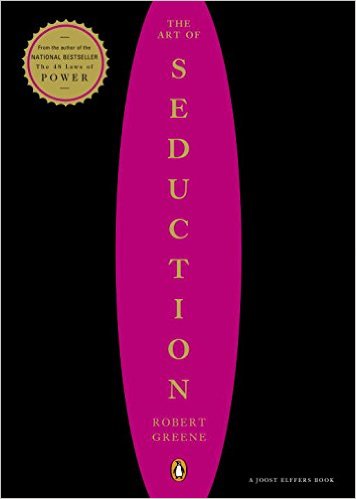
A deep dive into seductive archetypes and strategies, framed with historical and literary examples.
After his successful debut, this second Greene book extended his reach into dating power dynamics and established him a renowned expert in the ‘darker arts’ of influence and control.
✅ Pros
- Advanced psychology of love and emotional and seduction dynamics
- Useful beyond seduction, including for marketing, politics, influence, and social strategies
- Dark psychology at its seductive finest
- Some helpful dating tips for advanced players and some for beginners on avoiding some ‘anti-seducer’ traps (e.g.: tight wad, brute, suffocator)
❌ Cons
- Unscientific, without empirical evidence, and sometimes contradicted by research (for example, ‘vanity’ listed as ‘anti-seductive’ isn’t necessarily a death knell when you consider narcissists’ dating success)
- Lacking experience and relying on third-party accounts and texts. The author doesn’t seem to have or leverage his own real-world experience
- Impractical for modern dating where masculine leadership, dominance, and faster action determine success.
- Potentially counterproductive for beginners, since ‘chasing with abandon’ is more likely to make you a simp than a successful seducer
- Downplays mate value, which is crucial to seduction. Psychology without positive dominance and mate value rarely leads to seduction
See our short on this topic:
Lucio: Psychology makes an advanced seducer, but power and attractiveness what make for effective dating
Our review
Less about effective dating than about control, seduction, and leverage. Excellent for advanced strategists and seducers.
Beginners looking to improve their dating lives may want to first start with different dating books.
👉🏼 Takeaway: Learn the psychology, but remember that seduction ultimately hinges on the masculine ‘bold move’, from leading to escalating
3. The 33 Strategies of War (8.5/10)

Applies principles of military strategy to business, politics, and personal life.
✅ Pros
- From military to life strategies with many principles that transfer to everyday life
- Advanced psychology analyzing the war for influence and framing
- Entertaining read
❌ Cons
- No military experience, military experts may have some reservations
- Competition above cooperation, same for Greene’s previous books. But true grand strategies develop alliances first. Only later, they even take on any enemy when victory is assured
- Selective historical examples, rather than a coherent narrative on waging war
Our review
A strong competitive strategy playbook and another book gem by Robert Greene.
👉🏼 Takeaway: Prioritize wealth and alliances as the backbone of winning wars, rather battles. That’s how you build empires.
4. The 50th Law (8/10)

A blend of memoir and motivational guide, built around the theme of fearlessness. Uses 50 Cent’s life and business career as the central case study.
✅ Pros
- High-energy, short lessons on risk-taking and resilience.
- Interesting tactics more related to intimidation and street posturing that you wouldn’t find in other Greene’s books
- Street power dynamics through the history of a famous rapper and former dealer. Although some may wonder how truly open 50 Cent was
❌ Cons
- More motivational than strategic
- 50 Cent’s not an ideal role model, and not for his dealer’s past, but by looking at his closest relationships
- Celebrity PR piece, or that’s how it may feel to some readers
Our review
Punchy and inspirational, and I loved it.
But although I like and respect 50 Cent, I’d rather avoid the fate of his personal relationships. A bitter divorce and a son who hates you doesn’t seem the peak of success to me.
👉🏼 Takeaway: Learn fearlessness from this book. But pick better women and develop better relationships with your children.
5. Mastery (7.5/10)

Focuses on the process of becoming world-class in any field through apprenticeship, practice, and long-term dedication.
✅ Pros
- Power-aware guide on mentoring, covering the psychological aspects that many others leave aside. That alone can make a huge difference to learners the whole world over
- Competence is power, or at least a foundational component of it. This was a major missing part in Greene’s previous books
- Life satisfaction from hard work, the peak of life experience. This was also missing from Greene’s previous work, more focused on manipulation tactics and various games
❌ Cons
- Unscientific, with no empirical evidence for Greene’s method of ‘finding one’s passion’ or ‘developing skills’
- Superseded by empirical books like Peak, written by a researcher, or Ultralearning, where the author experimented firsthand with the best learning methods
Our review
Greene’s Mastery is his least manipulative book and it’s a unique, bright light in the literature of skill acquisition. Robert’s distinctive approach blends psychology and power dynamics—an important reality rarely addressed in this field—and some of his insights reach true Greene-level genius.
👉🏼 Takeaway: Admit and accept that mentors are ahead of you. Accept a lower status role while you learn, but remember that your goal is to surpass him.
6. The Laws of Human Nature (9/10)

An ambitious attempt to map recurring human motives, patterns, and social behaviors, using psychology and history.
✅ Pros
- Golden nuggets on human nature
- Unique take on self-development as one of the very few books that challenges readers to tackle the dark side of human nature both in others and in ourselves
- Useful for self-awareness, social intelligence and, like most of Greene’s books, for power intelligence
❌ Cons
- Unscientific and Freudian/psychoanalytic psychology, which is not exactly the most empirically supported
- Lacks evolutionary psychology, a field that many believe provides the true foundations to understand ‘human nature’
- Non-coherent narrative that sometimes reads as a list of observations
Our review
A unique take on self-help that stands out in a field often too aspirational—and too naive to explore humanity’s darker nature.
Not Greene, fortunately, and not this book. This is a much-needed, ‘power-aware’ approach to men’s self-improvement.
While we don’t agree with everything, we appreciate, enjoy, and largely support Greene’s approach to self-development—in many ways similar to our own at TPM.
👉🏼 Takeaway: true self-development requires that you look deep not only into people’s darker motives, but also your own darker side
7. The Daily Laws (7/10)

A collection of daily meditations drawn from Greene’s books, each paired with a practical prompt.
✅ Pros
- Short, consumable lessons for daily reflection.
❌ Cons
- Mostly recycled material.
- Shallower compared to his other books.
Our review
A helpful companion to Greene’s main works, best used as a daily reminder rather than a primary source.
Books Like Robert Greene’s Books
Books similar to the ones written by Robert Greene include:
- The Prince (Machiavelli): The Godfather of realpolitik
- The Art of Worldly Wisdom (Baltasar): The blueprint of The 48 Laws, almost too similar for comfort
- The Dictator’s Handbook (Bueno de Mesquita): A more empirically sound guide for dictators and a lucid analysis of political power dynamics
- Games People Play (Berne): Analyzing some common dysfunctional patterns of interpersonal relationships
- Influence (Cialdini): The Godfather of modern persuasion books, based on social exchange dynamics and its practical applications
- Meditations (Marcus Aurelius): The OG of ‘enlightened power’, combining power and life philosophy
- The Social Strategist (Scarlett & Buffalmano): A beginner-friendly introduction to more advanced social skills like positive dominance and frame control
Although strictly not books, also consider:
- The Power Moves, this website, which applies power dynamics to men’s self-development and self-advancement
- Power University: a multimedia course providing a proven and scientific hands-on blueprint for men’s social and life success
And:
- Best books on power, for a full reading list on power
For a deeper dive on books like the 48 Laws of Power, see:
FAQ
Which Robert Greene book should I start with?
For beginners, The 48 Laws of Power (1998) is the best Robert Greene book to start with. It’s his most iconic work, introducing power dynamics and strategy through 48 principles explained with historical examples. Its engaging style makes it highly accessible as well as entertaining to read.
Are Greene’s books based on research?
Robert Greene’s books are not based on empirical scientific research.
Instead, they rely heavily on historical examples, classical works like Machiavelli’s The Prince, and older psychoanalytic thinkers like Freud and Jung, which are less empirically sound due to their lack of experimental validation.
What are all Robert Greene’s books, in order?
Robert Greene’s books, in publication order, are: The 48 Laws of Power (1998); The Art of Seduction (2001)
The 33 Strategies of War (2006); The 50th Law (2009, co-authored with 50 Cent); Mastery (2012); The Laws of Human Nature (2018); The Daily Laws (2021).
These books reflect Greene’s focus on power, strategy, and human nature, though some critics note later works may revisit earlier themes, reducing originality.
What are Robert Green’s books about?
Robert Greene’s books explore power, strategy, and human behavior using historical and psychological insights. Greene’s books share overlapping topics and all deploy the same proven Greene method: distill patterns from history, package them as sharp rules, and illustrate them with vivid stories.
What’s Robert Greene’s best book?
The best Robert Greene book depends on your goals. The 48 Laws of Power is often considered his masterpiece for its broad appeal and insights into power dynamics, ideal for professional and social strategies. Alternatively, Mastery excels for those seeking personal growth and skill development, with a less controversial tone.
What books are similar to Robert Greene’s books?
Similar books include: The Prince (Machiavelli), The Dictator’s Handbook (Bueno de Mesquita & Smith), Games People Play (Berne), and The Art of Worldly Wisdom (Baltasar).
For a practical next step, Power University applies a similar power-centric approach in a coherent system for succeeding in life and gaining status, respect, and attraction.
Best Robert Greene Books: Lucio’s Top 3

These are the best Robert Greene books:
- 48 Laws as the most practical and eye-opening
- The Art of Seduction is Greene’s most advanced and refined work. But too advanced for most and less practical and effective for modern dating
- The Laws of Human Nature is a gem of self-development, finally bringing some power dynamics and realness to the self-help industry
And divided by themes:
- For power & competition: The 48 Laws of Power
- For human nature & self-development: The Laws of Human Nature
- For social cunning: The Art of Seduction
How to read Robert Greene: best order
Defensive & practical:
48 Laws of Power → 33 Strategies → Art of Seduction
Strategic & competitive:
48 Laws → 33 Strategies → The 50th Law
Skill-building & mindsets:
Mastery → Laws of Human Nature → The Daily Laws


