
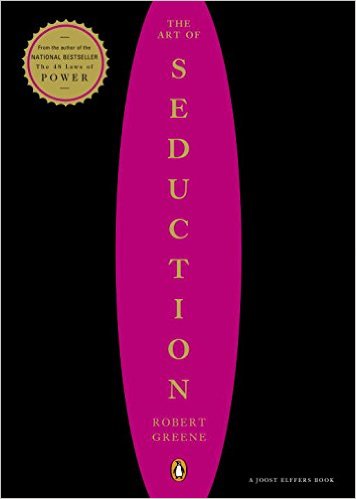
The Art of Seduction (2001) by Robert Greene is one of the most influential books on the psychology of attraction and seduction power dynamics. It treats seduction not as romance, but as strategy — a psychological game where emotion, fantasy, and control decide who leads and who follows.
Below is a complete summary and review with The Power Moves insights, examples, and modern applications.
The Art of Seduction Summary
- “Seduction is a game of psychology, not beauty.” Confidence, attention, and timing outweigh physical looks.
- Pick targets you can move emotionally, not just people you like. Seduction is strategic selection.
- Make them fantasize. Fantasies beat reality. People fall for what you represent, not who you are.
- Power is magnetic: confidence and status attract
The Nine Seducer Archetypes
Greene divides seductive power into nine archetypes. Each represents a timeless way humans attract and influence others:
#1. Siren
Sirens are raw sexual energy.
They use voice, allure, and sensual presence to promise pleasure and danger. They have slow movements, and are sexually self-assured.
Cleopatra and Marilyn Monroe seduced through irresistible femininity.
Power play: Overwhelm senses, promise release.
❌ Dangers: Jealousy from same-sex peers and frenemies
- Case studies: 3 female seductresses
#2. Rake
Lives for passion, and with his passion he makes women feel uniquely desired.
His intense desire flatters and disarms. He symbolizes escape from boredom, he’s a guilty pleasure. Pure fun plus risk is perversely attractive.
Modern version: the charming bad boy who acts on impulse yet makes women feel seen.
❌ Dangers: Reputation backlash if overplayed.
#3. Charmer
“Charmers seduce by focusing on others, not themselves.”
He masters social grace and empathy. He listens, mirrors emotions, and makes people feel safe and understood. His warmth builds trust before attraction.
❌ Dangers: Seen as fake—switch to firm when needed.
- Learn: How to be charming.
#4. Charismatic
He radiates confidence and lifts people up with his energy. Charismatics combine faith, mystery, and magnetism; they lead crowds through belief rather than logic.
Examples: Joan of Arc and Rasputin <— 🙋🏼♂️ Lucio’s note: while Joan of Arc was socially seductive, I have doubts about her sexual seductivity
❌ Dangers: Volatile—emotions flip fast and charismatic leaders can become scapegoats.
#5. Ideal Lover
The ideal lover tailors his romance to his target’s fantasies and romances them hard.
Casanova’s method was to study what each woman lacked and become it.
Power lesson: project what other wish they had. Beauty, mystery, or adventure people crave but can’t find.
❌ Dangers: Flaws can shatter the illusion of the ideal lover’s dream.
#6. Dandy
He rebels through style and ambiguity, including gender fluidity: he is neither masculine nor feminine. But he embodies both female and male energy.
Dandies embody freedom from convention and the power of individual expression. They are artists, poets, and composers.
❌ Dangers: Becoming “too much”, too weird, and being attacked for being different.
#7. Natural
Naturals are spontaneous, joyful, and childlike. They disarm cynicism and rekindle wonder. He spellbinds targets by reminding them of their childhood.
Power lesson: genuine enthusiasm seduces more than technique.
❌ Dangers: Pure childishness annoys. Mix it with adult’s wisdom.
#8. Coquette
“People only value what they can’t fully possess.”
Coquettes provoke with their sexuality and prod their targets to chase with their withdrawal. Emotionally, they alternate warmth and distance to keep others off-balance.
They are empowered and self-sufficient, making their target crave their possession.
❌ Dangers: Overdoing withdrawal can cause targets to move on. And this game can turn love into hate.
#9. Star
Larger-than-life, surrounded by myth. They glow with mystery and distance; people fall for the fantasy, not the person: they are objects of desire.
In modern culture, celebrities and influencers play this role daily.
❌ Dangers: Fade when novelty wears off and a new star becomes ‘hip’.
For the full list and ‘how to’ see here:
- Art of Seduction Seducer Types
- Male seducer types, more scientific and real-world practical
Anti-Seducers: Traits That Repel
Greene also lists the opposite types — the Anti-Seducers — whose insecurity, self-centeredness, or moralizing destroys attraction.
These are the anti-seducers:
- Brute: No patience, skips seduction.
- Suffocator: Clings too soon.
- Moralizer: Forces their standards.
- Tightwad: Cheapness screams insecurity.
- Bumbler: Awkward, spreads discomfort. Fix social awkwardness.
- Windbag: Endless talk.
- Reactor: Ego-fragile.
- Vulgarian: Ignores rules, expects wins.
- Greedy: Obvious agenda. Goal diggers exposed.
Pro Tip: Ditch anti-seducer vibes with Power University—become top 1% in life and dating.
The Eighteen Victim Types
Seduction succeeds by filling emotional gaps. People reveal what they lack — admiration, adventure, validation, or freedom — through subtle cues. Greene categorizes common targets such as:
- The Disappointed Dreamer: longs for passion and escape from monotony.
- The Pampered Royal: expects adoration and fantasy treatment.
- The New Prude: fears judgment but secretly craves release.
- The Rescuer: wants to save someone from chaos or darkness.
- The Beauty: tired of surface praise, yearns to be seen for intellect or depth.
- The Conqueror: needs challenge; make them chase you.
- The Crushed Star: misses attention once freely given.
- The Lonely Leader: powerful but isolated; treat them as equal, not follower.
Power lesson: Never seduce your own type. The more different your strengths and their lacks, the stronger the pull.
The Four Phases of Seduction
Greene structures seduction as a four-stage process — psychological warfare wrapped in pleasure. Each stage deepens emotional dependence until the target willingly surrenders.
1 — Separation: Entering Their World
Targets live consumed by routine. The seducer’s first task is to break that rhythm and appear as something new. Approach indirectly, study their weaknesses, and make them feel chosen. “There is nothing more effective than making the target think they are seducing you.”
- Approach sideways — intrigue, don’t demand.
- Use mixed signals: warmth one moment, distance the next.
- Appear desired by others; triangles amplify status.
- Subtly remind them of what’s missing in their life.
2 — Lead Astray: Creating Pleasure and Confusion
Once attention is won, the goal is emotional intoxication. Use surprise, storytelling, and small vulnerabilities to humanize yourself while maintaining mystery. “Dogs are reliable; a seducer is not.”
- Keep them guessing; unpredictability sparks obsession.
- Use poetic, suggestive words instead of direct propositions.
- Pay attention to detail — scent, tone, and setting matter.
- Show selective weakness to lower defenses, never full neediness.
- Blur fantasy and reality so they forget where imagination ends.
3 — The Precipice: Intensify Emotion
Here the seducer deepens attachment through extremes — devotion, guilt, conflict, and transgression. Pleasure without risk bores; tension makes it addictive. Greene notes: “The lower the lows you create, the higher the highs will be.”
- Prove yourself through effort or symbolic sacrifice.
- Tap childhood emotions (regression) by nurturing or being nurtured.
- Break taboos — forbidden equals unforgettable.
- Alternate affection and distance to create craving.
- Use spiritual or artistic frames to elevate physical desire.
4 — The Kill: Sealing the Seduction
At the peak of tension, reverse the chase. Withdraw slightly and let them pursue. “When the pursued becomes the pursuer, the seducer holds total power.” Physical connection now feels inevitable rather than forced.
- Back off to let desire build in your absence.
- Use touch, voice, and eye contact as cues for release.
- Be bold when the moment arrives — hesitation kills momentum.
- End cleanly; mystery must remain or attraction fades.
This is how you reverse the chase in advanced mode, after you seduced them:
Lucio: She turned to make out with me, and she asked if she could spend the night over
Pro Move: Seductive Environments
Theatrical spaces block reality and allow your targets to let go.
Go for mystical vibes and role-play opportunities.
See how:
- Seductive environments guide.
- Playlist: Romance tunes.
Lucio Buffalmano’s Review
The Art of Seduction is brilliant for its understanding of emotional power dynamics and social influence, but of limited effectiveness as a modern dating guide.
Greene’s framework shines at explaining emotional control, yet many tactics belong to the bygone era of slow-moving courtly love, not twenty-first-century relationships.
And even if you’re planning on a time machine and turning into a knight in shiny armor, you’d still need the foundations of dating power dynamics.
In brief, The Art of Seduction:
1. Some good psychology, weak practicality. His advice on letters, mystery, and “therapist seduction” works only if you already have status. In today’s fast-paced dating, leadership and initiative outperform prolonged intrigue.
And heterosexual men have less to gain from non-heterosexual seduction.
2. Lacks science or personal experience. And we believe both are important to teach others. For example, Greene claims powerful men secretly want to be dominated. That feels like a Freudian-psychotherapy approach, but modern data-driven sources and research suggest the opposite — high-power men often maintain dominance in sex as in life.
3. Ignores basics: status, dominance, and SMV. None of his archetypes captures the high-value, dominant man who leads naturally. Seduction divorced from sexual market value and man’s confidence becomes hollow and ineffective. Even Casanova’s ‘ideal lover’ charm was backed up by confidence and dominance (and a narcissistic streak, probably)
4. Less effective in today’s age. The book relies on royal courts, poets, and saints — fascinating but detached from real, modern social dynamics. Some emotional truths remain useful, yet the scenarios feel theatrical rather than actionable.
5. No win-win, mixes seduction with abuse. Greene’s steps are standards abuser modus operandi, his manipulative tone can encourage deceit; he refers to ‘victims’, and he never considers that seduction can be a gift to the seduced. Not only does it raise ethical concerns, but it’s also less effective in many contexts.
Despite these flaws, the book’s brilliance lies in revealing that attraction is a social exchange of power. As Greene writes, “Every seduction has two elements: yourself and what is seductive about you; and your target, the actions that will penetrate their defenses.” Understanding that duality is timeless.
Modern Takeaways & Applications
- Seducers break the rules and conquer hearts and souls: learn psychology but add power… And you won’t need crazy looks, six figures, or a six-pack
- Power and confidence matter more than lines or looks.
- Balanced polarity — masculine leadership with emotional warmth outperforms one or the other.
- Real power is when others chase your validation, not your approval.
Final Verdict
Rating: 8.5/10 — A masterclass in dark psychology and social strategy. Great read for students of advanced social arts to develop strategic thinking and power awareness. Use it to deepen your understanding of attraction, but not a as manual for modern-day effective dating. For that, including for modern seduction, address the basics of high-value men, dating power dynamics and sexual marketplace realities.
Seduction Reading:
- Top male seducers: the modern archetypes
- The Art of Seduction: our in-depth review
- Best Dating Books for Men
And if you want to develop real-world confidence, respect, and true modern seducer’s power — that actually work — start here:
Consider Seduction University if your focus is on effective, high-value dating for modern men:
The Art of Seduction by Robert Greene: Summary & Review

The Art of Seduction (2001) by Robert Greene is one of the most influential books on the psychology of attraction and seduction power dynamics. It treats seduction not as romance, but as strategy — a psychological game where emotion, fantasy, and control decide who leads and who follows.Below is a complete summary and review with The Power Moves insights, examples, and modern applications.
URL: https://thepowermoves.com/the-art-of-seduction-summary/
Author: Lucio Buffalmano
4.2


